
Grout can look failed because it holds soil and residue, or it can actually fail because the joint is weak, moving or exposed to ongoing moisture. The five common causes worth checking are porous grout holding contamination, unsuitable cleaning, weak installation or curing, tile movement, and unresolved moisture. The right fix starts by telling those problems apart. Lazona Tile Care's approach is clean, repair, protect: assess the surface, correct eligible defects, clean safely and protect suitable grout with color sealing backed by our 15-Year Warranty on the sealer itself.
First, Is Your Grout Dirty or Actually Breaking Down?
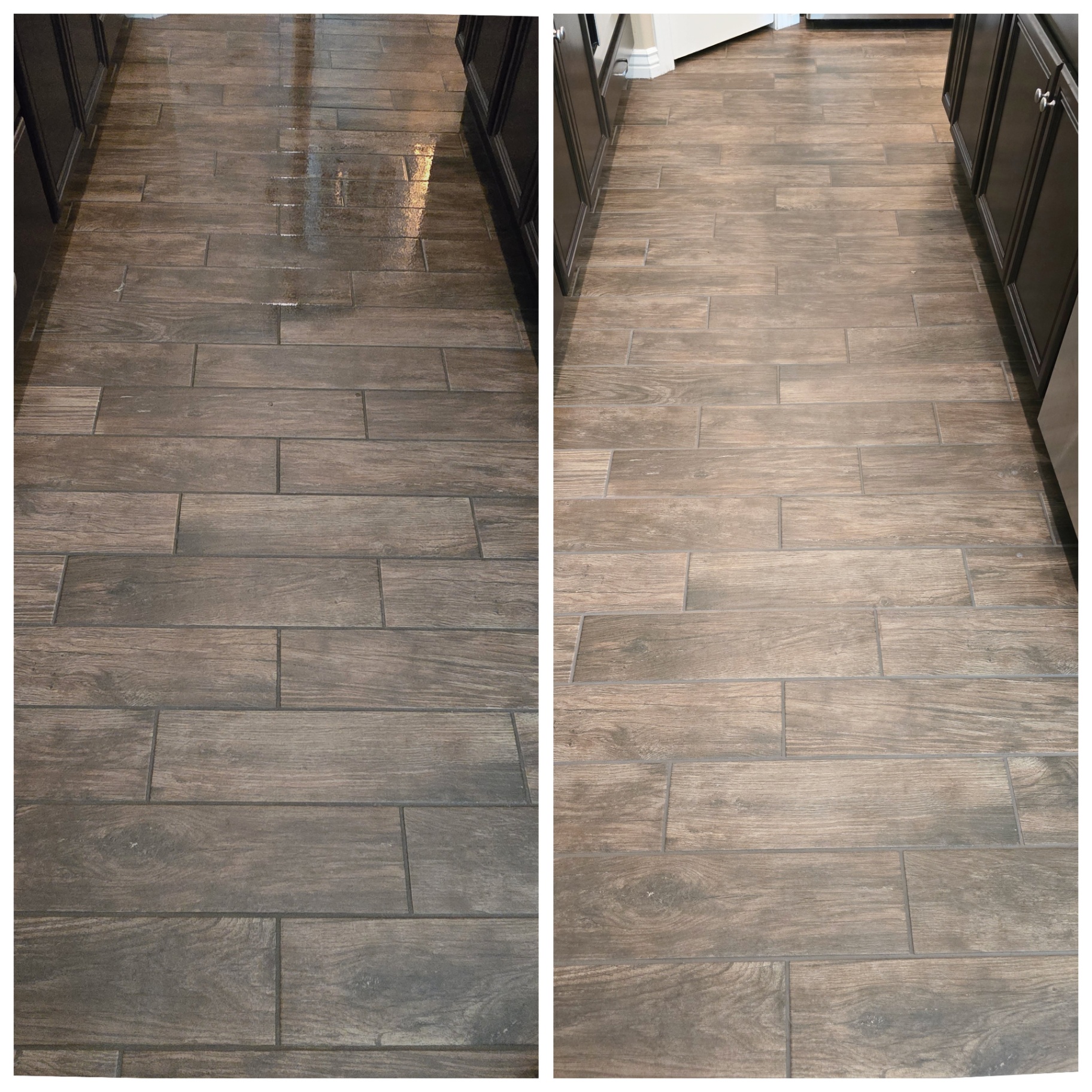
A dark traffic lane through a kitchen does not automatically mean the grout needs replacement. If the joints remain firm and intact, embedded soil or cleaning residue may be the main issue. Loose grains, missing sections, recurring cracks or tile that shifts underfoot point to a different problem. Covering those symptoms with a new color can hide evidence without correcting the cause.
| Visible clue | Possible cause | Better next step |
|---|---|---|
| Dark joints that remain firm | Embedded soil, residue or staining | Material-compatible cleaning assessment |
| Sticky tile and quickly returning dirt | Too much cleaner or incomplete rinsing | Correct dilution and remove residue |
| Gritty, soft or missing grout | Weak grout, chemical wear or installation defects | Assess the joint before repair or sealing |
| Cracks returning in the same place | Movement, bonding or joint-design issues | Check tile stability and movement accommodation |
| Persistently damp joints or nearby damage | Leak, drainage or moisture problem | Find the moisture source before cosmetic work |
1. Porous Grout Holds Dirt, Spills and Cleaning Residue
Many cement-based grout joints are porous. Tracked-in dust, kitchen spills and dirty cleaning water can settle into their texture. In an East Valley home with indoor-outdoor living, the route between the patio, kitchen and family room often needs more careful soil removal than a seldom-used room. That is a maintenance pattern, not proof that every Arizona floor has the same defect.
Hard-water deposits can add another layer where water repeatedly dries on the surface. Minerals and soil may make a sound joint look chalky or dark. Scrubbing harder without identifying the deposit can leave the floor wet and the grout unchanged. A penetrating sealer can reduce absorption, but it does not make spills, dust or maintenance disappear.
- Stop it: vacuum or dry-mop grit before wet cleaning, remove spills promptly and avoid redistributing dirty water.
- Lazona's fix: assess whether the joint is sound, use appropriate tile and grout cleaning, and discuss grout color sealing when the grout is suitable.
- What protection changes: color sealing creates a more uniform appearance and stain-resistant surface. It does not rebuild missing grout or stabilize loose tile.
2. The Cleaner Is Wrong, Too Strong or Left Behind
A cleaner that cuts through one deposit may be wrong for the surrounding material. Repeated acidic cleaning can attack cement-based grout and etch calcite-based stone such as marble and travertine. A porcelain tile face may tolerate products that its grout, metal trim or nearby stone cannot. That is why vinegar is not a universal floor-care shortcut.
Dish soap is a separate issue. It is not automatically destructive to every tile floor, but using too much or leaving it behind can create residue that holds soil and makes the floor feel sticky. Stronger dilution is not necessarily better cleaning. Mixing products is also unsafe; never combine bleach with acids or ammonia.
- Stop it: choose a manufacturer-approved, material-compatible cleaner, measure the dilution, rinse when directed and use clean pads.
- Lazona's fix: identify the tile, stone, grout and any existing coating before selecting a process. Remove compatible residue without treating every surface alike.
- When cleaning is not enough: soft, eroded grout needs assessment and eligible repair before protection. Etched stone needs a stone-restoration evaluation, not another bottle of sealer.
3. The Grout Was Weak Before Your First Mop
Cement-based grout depends on the correct mix, placement and curing conditions. Excess water in mixing or cleanup, poorly prepared joints, unsuitable products and failure to follow installation instructions can contribute to weak or inconsistent grout. Premature use or cleaning may interfere with a product's required cure. Exact requirements vary, so the product's technical data matters more than a generic number of hours.
Powdery joints in a new home deserve a closer look, but white material on the surface is not always failed grout. It may be residue or efflorescence, which is a salt deposit associated with moisture movement. Do not assume a builder installed the floor incorrectly from a photograph alone. Save photos, installation records and the grout product name if available, especially while a builder workmanship claim is still possible.
- Stop it: do not apply a coating over loose material, and avoid aggressive scraping or repeated acid treatments as a home test.
- Lazona's fix: inspect the condition and depth of affected joints, explain whether localized regrouting is appropriate, and identify issues that require the installer or another specialist.
- The limit: color sealing needs a suitable substrate. It is not a substitute for curing or a cure for grout that remains weak underneath.
4. The Floor Moves and the Grout Cannot Absorb It
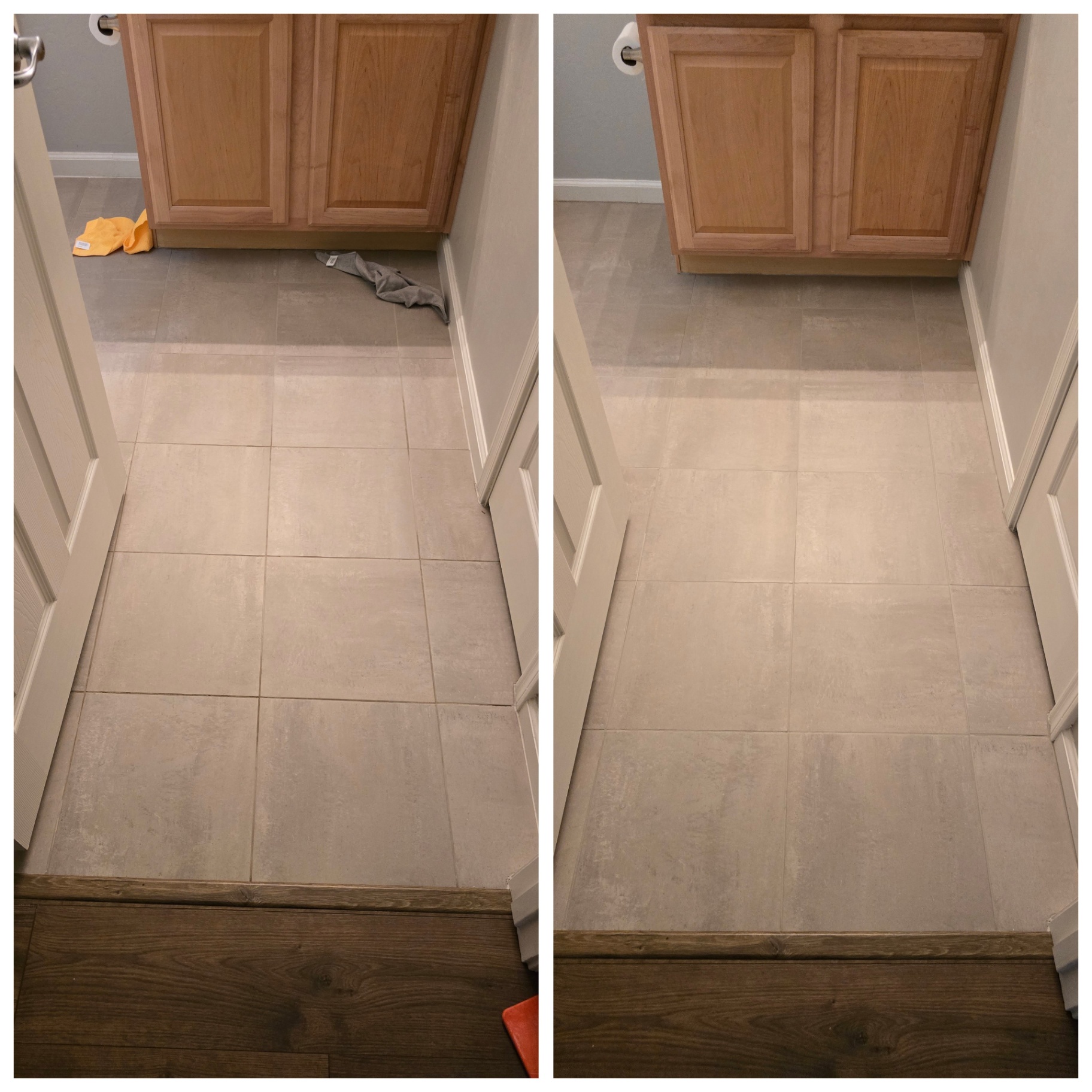
Rigid grout is not designed to act as a flexible movement joint. Temperature changes, substrate movement, inadequate bonding or missing movement accommodation can put stress into a tiled floor. Sunlit rooms with large windows can experience different surface temperatures from shaded rooms, even when the thermostat stays steady. This makes joint design worth checking, not a reason to blame Arizona heat for every crack.
A crack returning in the same joint after patching is a warning to look beyond the patch. Tile that rocks underfoot, lifting edges or a changing crack pattern needs evaluation before cosmetic restoration. A hollow sound alone is not a complete diagnosis; it must be considered alongside the installation, tile stability and other symptoms. The National Tile Contractors Association's overview of TCNA movement-joint guidance explains why movement accommodation is part of a tiled assembly.
- Stop it: do not pack rigid grout into a joint intended to move or repeatedly patch a crack without investigating why it returns.
- Lazona's fix: assess eligible tile, stone and grout repair, explain the limits of localized repair, and separate bonding or movement work from color sealing.
- The limit: a grout-sealer warranty is not a promise that the slab, tile bond or entire installation will never move or crack.
5. Moisture Keeps Reaching a Problem That Sealing Cannot Fix
A shower joint that stays wet, a leak around a fixture or moisture at a wall base can keep feeding a problem after the visible grout has been cleaned. Grout and surface sealer are not the shower's waterproofing assembly. Recoloring joints cannot repair a failed pan, concealed plumbing leak or drainage defect.
Persistent odor, recurring discoloration, softened trim or moisture in an adjacent room deserves investigation. If water is actively leaking, stop using the affected fixture when practical and arrange appropriate leak assessment. Do not keep flooding damaged joints to see whether they will improve. Surface cleaning and repair should follow the resolution of an ongoing moisture source, rather than camouflage it.
- Stop it: address leaks, maintain ventilation and allow the shower to dry between uses where possible.
- Lazona's fix: evaluate eligible shower restoration and joint repairs, while distinguishing surface work from plumbing or waterproofing repair.
- The limit: stain-resistant grout protection does not make a leaking shower watertight.
The Lazona Fix: Clean, Repair, Protect
The goal is not another temporary brightening that leaves you wondering when the dark lines will return. It is a clear plan for the floor you actually have. We assess the grout, tile stability and visible damage before agreeing on a restoration scope. Where open or damaged joints make wet cleaning inappropriate, eligible repairs and preparation come first. Clean, repair, protect describes the outcome, not permission to soak a compromised surface before it is ready.
| Stage | What it is for | What it does not replace |
|---|---|---|
| Clean | Remove compatible soil and residue from prepared surfaces | Repair of weak grout or active leaks |
| Repair | Correct eligible missing or damaged joints and agreed defects | Unspecified structural or waterproofing reconstruction |
| Protect | Color seal suitable grout for a consistent, stain-resistant finish | Tile bonding, movement joints or routine cleaning |
Our 15-Year Warranty applies to the grout color sealer itself. Grout restoration with our Maintenance Plan has its own stated coverage. Review the 15-Year Warranty details and your written scope before booking. Do not mistake sealer protection for a 15-year guarantee against structural cracking, leaks or every possible floor defect.
For Power Ranch, Trilogy at Power Ranch and Las Sendas Homeowners
If you live in Power Ranch or Trilogy at Power Ranch in Gilbert, Las Sendas in Mesa, or an East Valley community in Chandler, start with the outcome you want: cleaner-looking joints, a different grout color, repaired missing sections or confidence that recurring cracks have been properly assessed. The neighborhood tells us where you are, not what is wrong with your floor. Material, condition and installation determine the recommendation.
Bring photos of the whole room and close-ups of the affected joints to your consultation request. Tell us whether the problem is staining, crumbling, a recurring crack or persistent dampness, and what products have been used. Explore grout colors if you want a design change, but choose the repair plan before choosing the final shade.
Know the Price and Scope Before Work Starts
We no longer offer free estimates. Consultations are $150. An actual test spot is $250 and is credited toward your total if you book. All tile, stone and grout repairs start at a $1,500 minimum day rate, with no exclusions. Extended repairs, hollow-tile work and perimeter caulking are separate line items. Your written proposal should identify what is included, what requires separate work and whether the surface is suitable for color sealing.
Ready to stop guessing and start protecting the floor you want to keep? Book A Consultation with Lazona Tile Care or CALL NOW at (480) 352-0392. We will help distinguish a cleaning problem from a repair problem and explain the clean, repair, protect path that fits your home.
Further Reading
Use the NTCA movement-joint guidance for installation principles, the specific grout manufacturer's technical and care instructions for product requirements, and Lazona's written warranty information for our coverage. For a deeper look at moving or hollow tile, read our tile debonding and stress-cracking guide. This article is a homeowner triage guide, not a diagnosis of an unseen installation.