
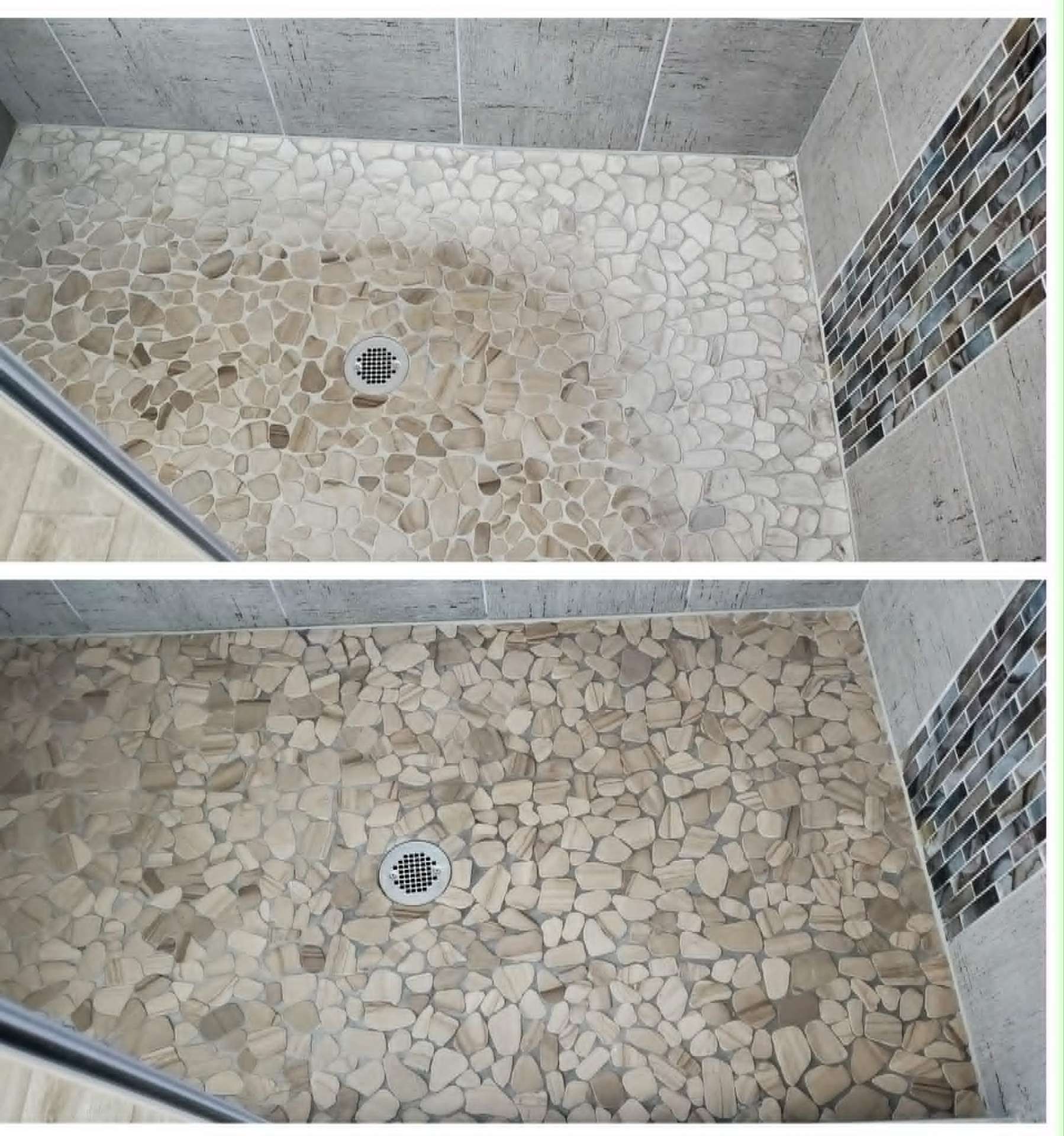
Modern Arizona showers are built with materials that reward proper care and punish neglect. Porcelain mosaic floors, large-format natural stone walls, tight cementitious grout joints, 100 percent silicone in the corners, and metal drain hardware all have different cleaner sensitivities. Use the wrong product daily and your $20,000 shower starts crumbling in two years. Use the right routine and the same shower stays beautiful for decades.
Why Arizona Showers Need Special Maintenance
Arizona hard water typically tests between 15 and 25 grains per gallon, which is severe by national standards. Every shower deposits a thin layer of mineral on tile, stone, glass, and grout, and that mineral hardens into stubborn buildup if it is not addressed regularly. Most homeowners react by reaching for the strongest acidic cleaner they can find, which solves the mineral problem and creates a much bigger one: the acid eats grout, etches stone, and corrodes the drain.
There is no acidic cleaner that is safe for daily use on a modern tile and stone shower in Arizona. If your routine includes a foaming bathroom spray, you are slowly destroying your shower.
Daily Routine: 60 Seconds That Save Your Shower
- Squeegee the walls and glass after every shower while surfaces are still wet
- Run the bathroom fan during the shower and for 20 minutes after to pull moisture out
- Mist a pH-neutral daily shower spray on the walls and floor and walk away
- Leave the shower door open so air can circulate to the corners and grout
- Wipe down the door track and threshold with a microfiber cloth to prevent mineral buildup
Weekly Routine: The Real Cleaning
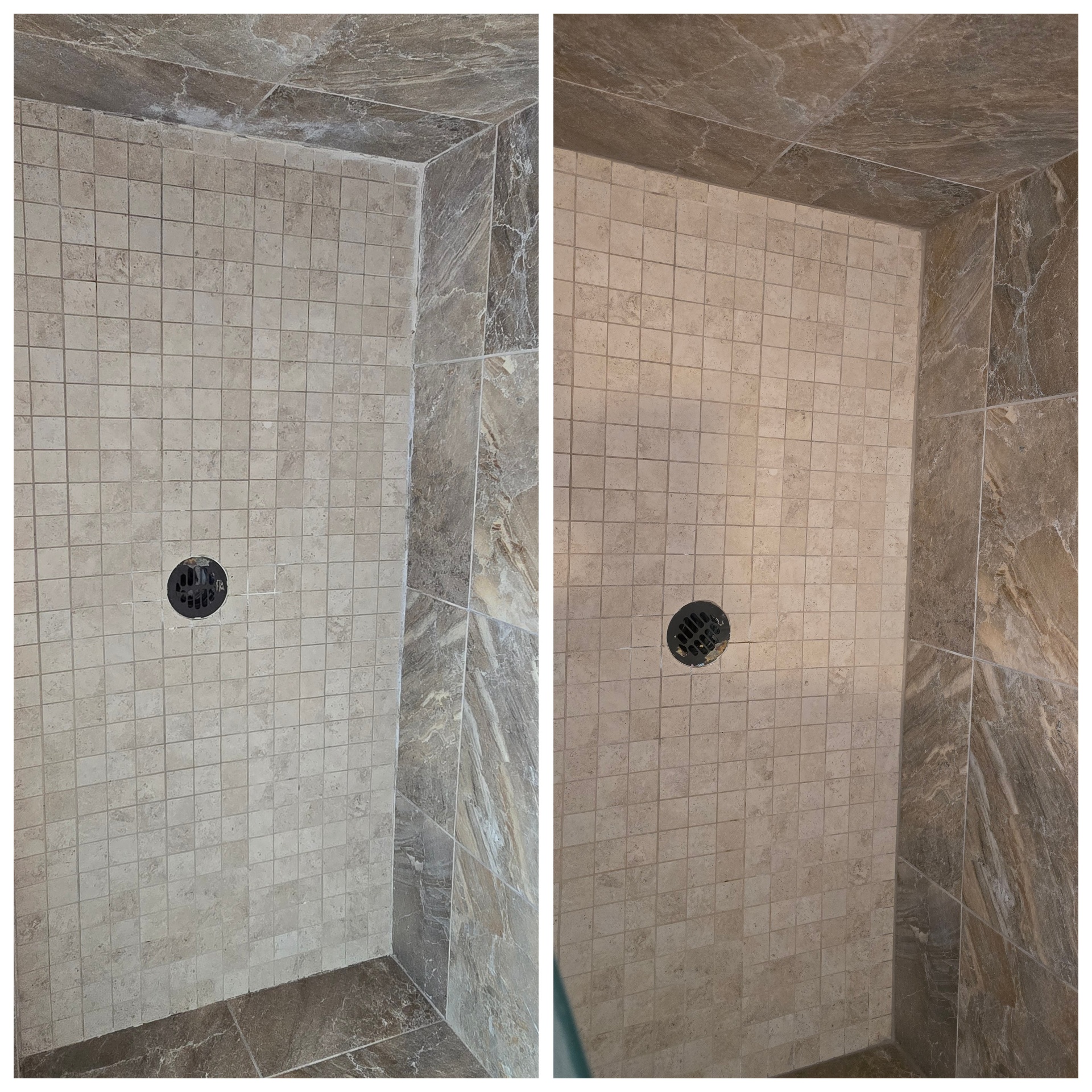
Once a week, give the shower a real but gentle cleaning. The key word is gentle. You are not scrubbing soap scum off because the daily routine prevented it from forming. You are doing a maintenance pass to keep the surfaces neutral, the drain flowing, and the silicone intact.
- Spray a pH-neutral stone-and-tile cleaner on all surfaces and let it dwell 3 to 5 minutes
- Use a soft microfiber pad on stone walls and a soft nylon brush on grout joints
- Lift the drain strainer, brush around the seat, and rinse out any hair or biofilm
- Inspect every silicone corner for shrinkage, peeling, or black spots and note any failures
- Rinse the entire shower from top to bottom with warm water, then squeegee everything dry
If you cannot find the original product label, look for cleaners explicitly labeled pH-neutral, safe for stone and grout, or recommended by the Marble Institute of America. Avoid anything with vinegar, citrus, lemon, lime, ammonia, bleach, or hydrogen peroxide as the active ingredient.
What Never to Use on a Modern Tile and Stone Shower
- Vinegar, lemon juice, or any homemade acidic cleaner
- Bleach-based bathroom sprays (corrode silicone and metal hardware)
- Magic Eraser pads on natural stone or polished tile (act as ultra-fine abrasive)
- Ammonia or Windex on stone or grout (etches stone, dries out grout)
- Pumice stones, steel wool, or scouring pads of any kind
- Carpet shampoo or all-purpose cleaners marketed for kitchen counters
- Hard water removers, lime removers, or rust removers as routine cleaners
Monthly Maintenance: Drain, Caulk, and Stone Check
Once a month, walk through a focused inspection. The goal is to catch failures while they are easy and cheap to fix, before water gets behind the surface and turns a 30-minute repair into a 3-day rebuild.
- Pull the drain strainer and clear hair, soap, and biofilm from the throat of the drain
- Run hot water for 2 minutes and confirm the drain is flowing freely with no standing water
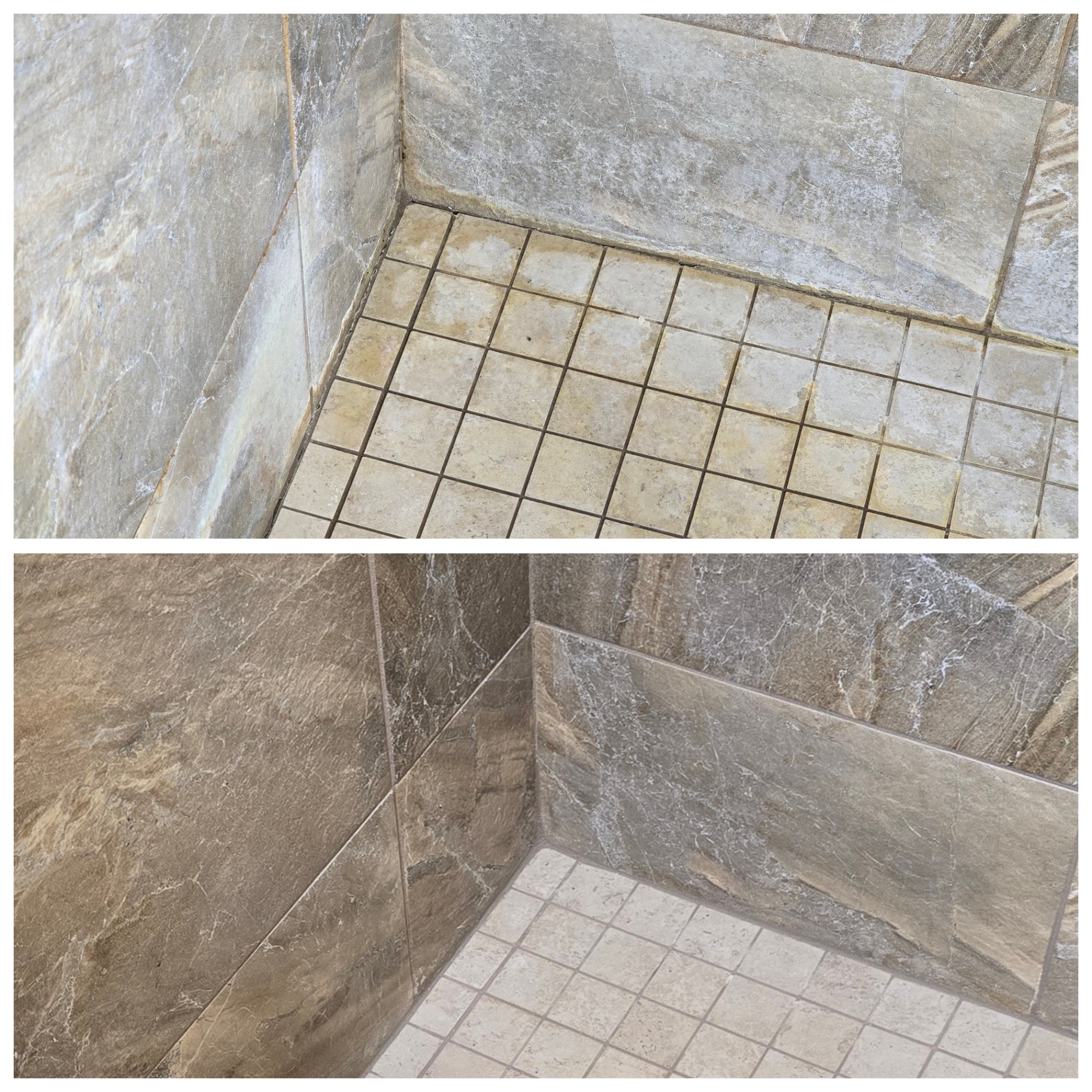
- Press a fingernail along every silicone joint and confirm there is no peeling, gap, or dark mold under the silicone
- Drop a few drops of water on each stone wall and floor area and confirm the water beads on the surface (if it absorbs and darkens the stone, the sealer has failed)
- Look for any white powder (efflorescence) at the top of the walls or between tiles, which indicates moisture migration through the substrate
Seasonal Care for Arizona Showers
Arizona's monsoon humidity in July, August, and September drives moisture into every porous surface in the home, including grout and natural stone in the shower. The dry winter months from November through March pull moisture back out, which causes movement at every joint. That moisture cycle is why grout and silicone fail at the corners first. A simple seasonal routine keeps everything stable.
- Spring (March to May): Schedule a professional shower deep cleaning to remove winter mineral buildup
- Summer (June to September): Run the bathroom fan longer and check silicone joints monthly during monsoon humidity
- Fall (October to November): Reseal any spots where the water bead test fails on stone walls
- Winter (December to February): Watch for new hairline cracks at corners as the building dries and contracts
When to Call a Professional
Most modern shower problems are recoverable if they are caught early. The line between maintenance and restoration is usually drawn at structural failure. Crumbling grout in a wet area, peeling silicone, hazy stone that no longer beads water, a slow drain, or visible efflorescence are all signs that maintenance is no longer enough and a professional restoration is needed before water gets behind the surface.
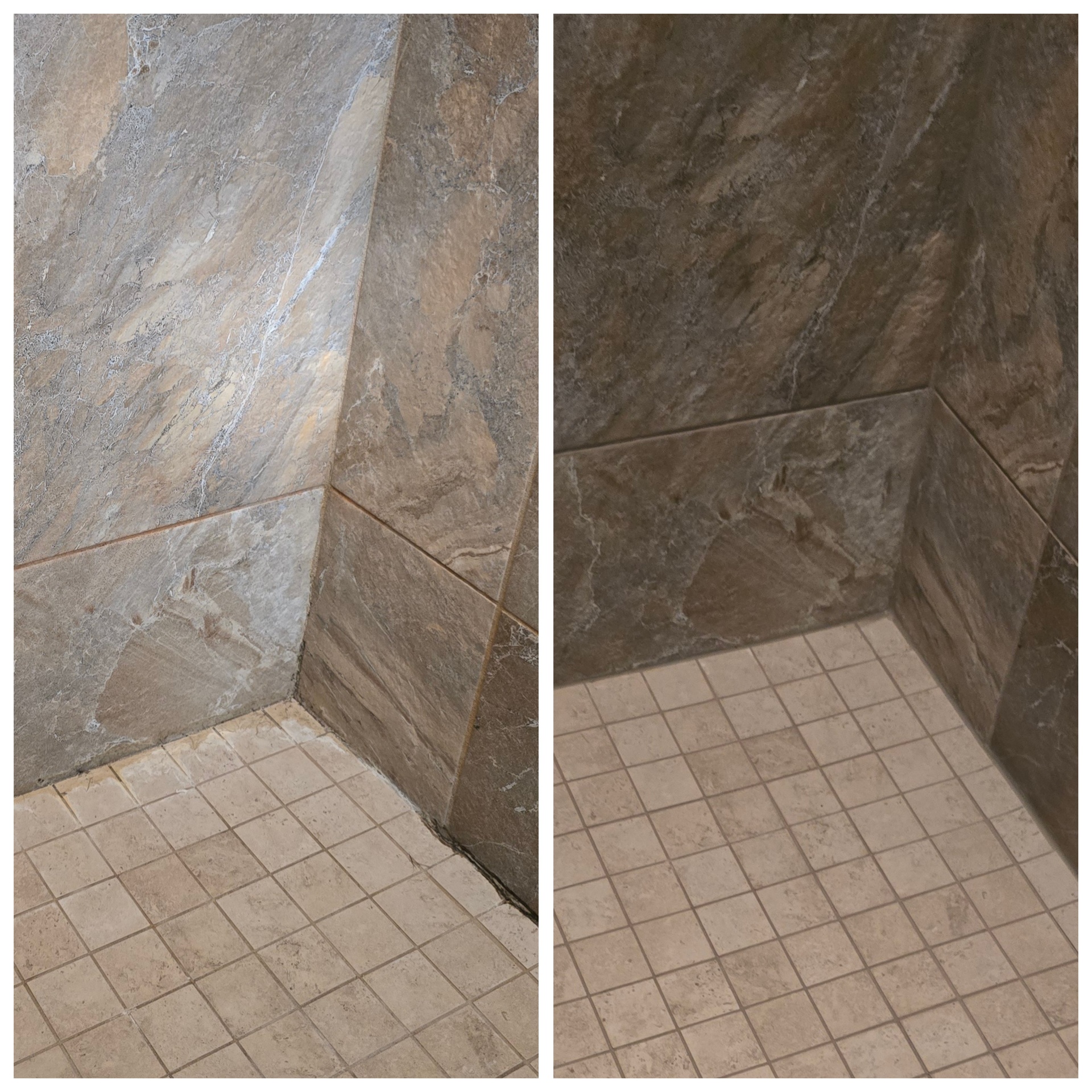
Members of The Zone receive scheduled pop-in shower cleanings, priority service, and a 15-Year Warranty on grout color sealing. For one monthly fee, the entire shower maintenance burden moves off your plate.
Service Areas and Next Steps
Lazona Tile Care provides professional shower maintenance and restoration throughout Chandler, Mesa, Gilbert, Scottsdale, Paradise Valley, Tempe, Queen Creek, San Tan Valley, Casa Grande, and Ahwatukee. If your modern shower needs a reset, request a $150 in-home consultation and we will give you a clear path forward.