
Those white, crusty deposits covering your shower glass, tile, and fixtures aren't dirt - they're Arizona's infamous hard water minerals. Our water contains 15-25 grains of hardite per gallon, making Arizona showers some of the most challenging to keep clean in the entire country. If DIY removal has failed, professional shower restoration is almost always more affordable than replacement. Also see our professional shower restoration.
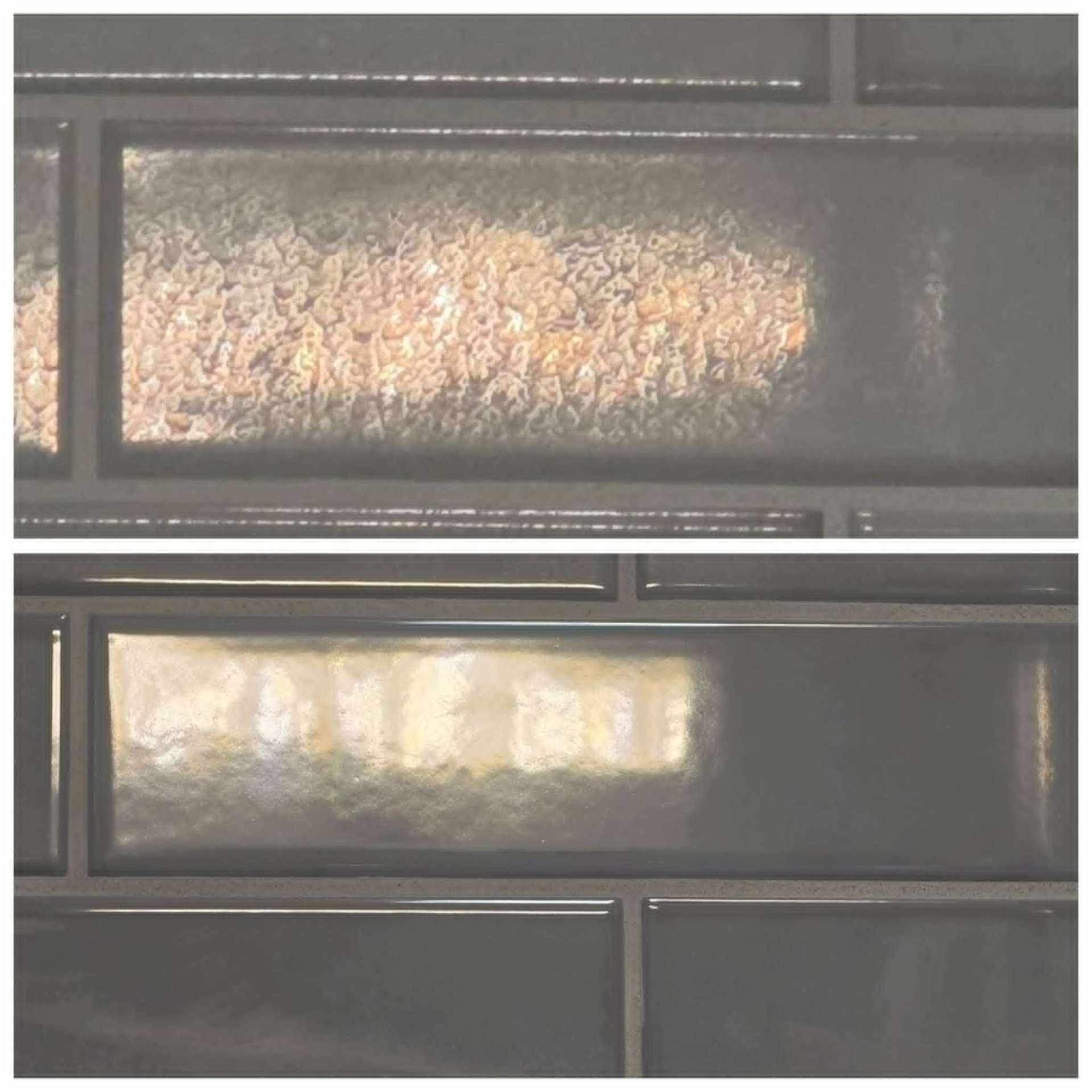
Understanding Arizona's Hard Water Problem
When water evaporates in your shower, the minerals stay behind. In Arizona, that's a LOT of minerals. Over time, these deposits build up layer upon layer, becoming increasingly difficult to remove.
- Calcium carbonate - creates white, crusty buildup
- Magnesium - contributes to soap scum formation
- Silica - bonds deposits to surfaces, making removal harder
- Iron - causes orange/rust colored staining in some areas
- These minerals bond chemically to surfaces, not just physically
Surface-by-Surface Removal Guide
Shower Glass and Doors
Glass shows hard water staining worst because it's non-porous - minerals sit on the surface in full visibility. Light buildup can be removed with non-abrasive acidic cleaners; heavy buildup may require professional restoration.
- Light buildup: White vinegar spray, let dwell 15 minutes, scrub with non-scratch pad
- Moderate buildup: Commercial lime scale remover (Bar Keeper's Friend, CLR), plastic scraper for thick deposits
- Heavy buildup: Professional restoration with specialized compounds may be required
- After cleaning: Apply rain repellent coating to reduce future buildup
- Daily prevention: Squeegee after every shower - most effective prevention
Never use razor blades or abrasive scrubbers on glass. While they remove deposits, they permanently scratch the glass, making future cleaning harder and the glass appear hazy.
Porcelain and Ceramic Tile
Glazed tile handles acidic cleaners well, but always test in an inconspicuous area first. The grout is the vulnerable component - acidic cleaners that work on tile will damage grout if left too long.
- Use commercial bathroom cleaners with lime scale dissolvers
- Apply to tile surfaces, avoid excessive contact with grout
- For heavy buildup: apply, let dwell 5-10 minutes, scrub, rinse thoroughly
- Rinse completely - residual acid continues damaging grout
- Reseal grout after aggressive cleaning to restore protection
Natural Stone (Travertine, Marble, Limestone)
NEVER use acidic cleaners on natural stone. Stone is calcium-based - acid dissolves it. This includes vinegar, most bathroom cleaners, and lime scale removers.
- Use only pH-neutral stone cleaners
- For hard water deposits: alkaline (not acidic) stone-safe products
- Poultice methods may be required for severe buildup
- Professional restoration is often necessary for neglected stone showers
- Prevention through sealing and daily squeegeeing is critical
For stone-safe hard water removal products, visit mbstonecare.com and use code MBSTONECARE for 10% off. Their MB-3 cleaner is pH-neutral and safe for natural stone while still effective on hard water deposits.
Chrome and Metal Fixtures
Fixtures develop hard water buildup quickly, especially showerheads and handles. The deposits can eventually clog showerhead holes and damage finish if left untreated.
- Soak removable parts in 50/50 vinegar and water solution
- For showerheads: fill plastic bag with vinegar, rubber band around showerhead overnight
- Wipe fixtures after every shower to prevent buildup
- Use soft cloth only - abrasives damage chrome finish
- Consider water-spot resistant finishes when replacing fixtures
Prevention: The Real Solution
Removing hard water stains is always harder than preventing them. Arizona homeowners who implement prevention strategies spend far less time and money on shower maintenance.
- Squeegee glass and walls after every shower (2 minutes saves hours of cleaning)
- Install a whole-house water softener (the ultimate solution)
- Apply protective coatings to glass (rain repellent products)
- Seal grout and stone regularly (every 12-18 months)
- Use daily shower spray to slow mineral buildup
- Improve ventilation to speed drying (deposits form as water evaporates)
When Professional Restoration Is Needed
DIY methods work for light to moderate buildup. When deposits have built up over years, or when previous cleaning attempts have damaged surfaces, professional restoration may be the only option.
- Glass that's etched or permanently hazy despite cleaning
- Stone with visible etching or dull spots from acidic cleaners
- Grout that won't come clean or has deteriorated
- Tile that's lost its shine despite proper cleaning
- Overall shower that looks 'tired' despite regular maintenance