
Usually, porous cement-based grout benefits from appropriate sealing once it is clean, sound and ready for the product. But not every grout needs sealer, and sealing dirty grout will not make it clean. If your floor or shower already has dark, patchy joints, the better question is: should I protect what is there, or restore it first? Lazona Tile Care helps you keep the tile you love by cleaning, repairing eligible damage and color sealing suitable grout with our 15-Year Warranty on the sealer itself.
Your Tile May Not Be the Problem
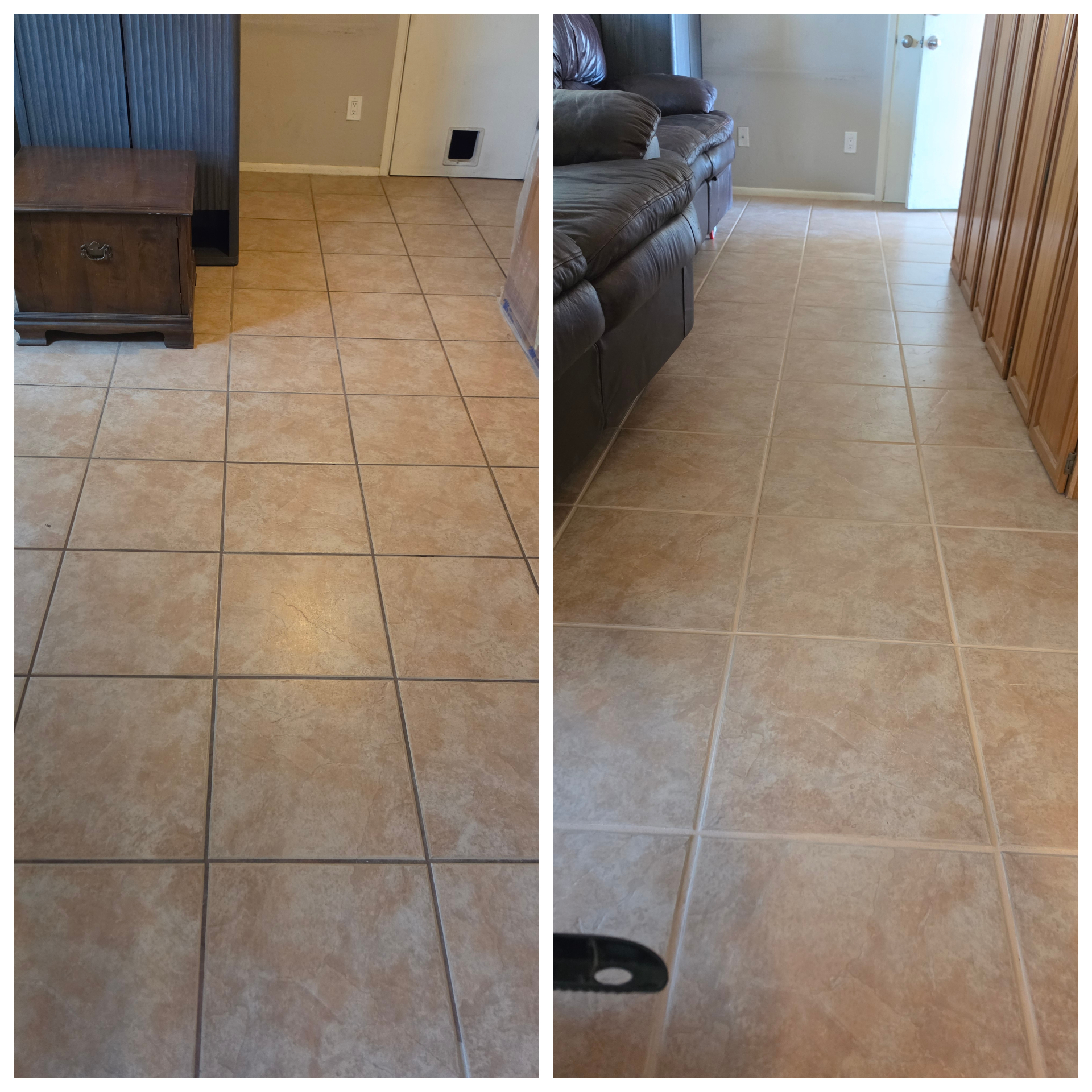
You can have attractive tile and still feel embarrassed by the floor. Dark outlines between otherwise clean tiles make the room look neglected, even after you have spent time mopping. In a shower, inconsistent joints can make a carefully chosen wall tile look older than it is. The grout occupies a small part of the surface, but its contrast repeats across the entire room. Changing that contrast can be a major visual improvement without removing the tile.
Look at the living-room comparison above. The furniture and tile remain familiar; the joints change how the room reads. That is the opportunity in restoration: preserve the existing surface and bring its appearance back into balance. A photo demonstrates visible results, not the condition beneath the tile or a promise that every floor can achieve an identical finish. We assess your installation before recommending a scope.
First, Find Out What Kind of Grout You Have
Traditional cement-based grout is often porous and can absorb spills and soil. An appropriate sealer can reduce absorption and give you more opportunity to clean a spill before it becomes a stain. Some newer cement-based products have their own protection and care requirements. Epoxy grout generally does not need a penetrating sealer. Ready-to-use and other specialty grouts must be evaluated against their manufacturer's instructions rather than treated as ordinary cement grout.
If you have the installation paperwork, save the grout brand, product name and color. If you do not, that is not a reason to start coating the joints blindly. Existing sealers, coatings and cleaning residue can affect compatibility. A suitable test spot helps evaluate preparation and appearance on the actual surface. It does not diagnose concealed waterproofing or guarantee the condition of the entire installation.
| What you have | Sealing decision | What comes first |
|---|---|---|
| Clean, sound, porous cement grout | An appropriate penetrating sealer may be suitable | Confirm product compatibility and required drying |
| Sound grout with uneven or stubborn staining | Consider restoration and compatible color sealing | Assess, clean and prepare the joints |
| Epoxy or specialty grout | Do not assume it needs penetrating sealer | Follow the specific manufacturer's care instructions |
| Missing, soft or repeatedly cracked joints | Sealing is not the first fix | Evaluate the defect and eligible repair |
| A leaking or persistently damp shower | Surface sealer will not fix the leak | Resolve moisture, drainage or waterproofing issues |
Clear Sealer vs. Grout Color Sealing
A penetrating sealer is primarily about reducing absorption. It generally preserves the existing grout color rather than covering dark patches or making mismatched joints uniform. On suitable clean grout, that may be exactly what you want. On a floor already marked by years of staining, however, clear protection alone can leave you looking at the same uneven lines. It is protection, not a color correction.
Grout color sealing combines a chosen color with protection at the surface of suitable grout. Preparation and application matter: the joint must be ready for the product to bond. Lazona uses this approach to restore a more consistent appearance and improve stain resistance, rather than simply brighten the joints for the next round of scrubbing. It is not ordinary wall paint brushed across a dirty floor.
| Option | Best-matched goal | Important limit |
|---|---|---|
| Professional cleaning | Remove compatible soil and residue | May not remove every stain or correct mismatched color |
| Penetrating sealer | Reduce absorption while retaining existing color | Does not conceal old staining or repair joints |
| Grout restoration and color sealing | Create a more uniform, stain-resistant finish | Requires suitable grout and ongoing care |
| Eligible grout or tile repair | Address missing joints or agreed defects | Recurring movement or leaks need cause-specific evaluation |
Restore the Design, Not Just the Dirt
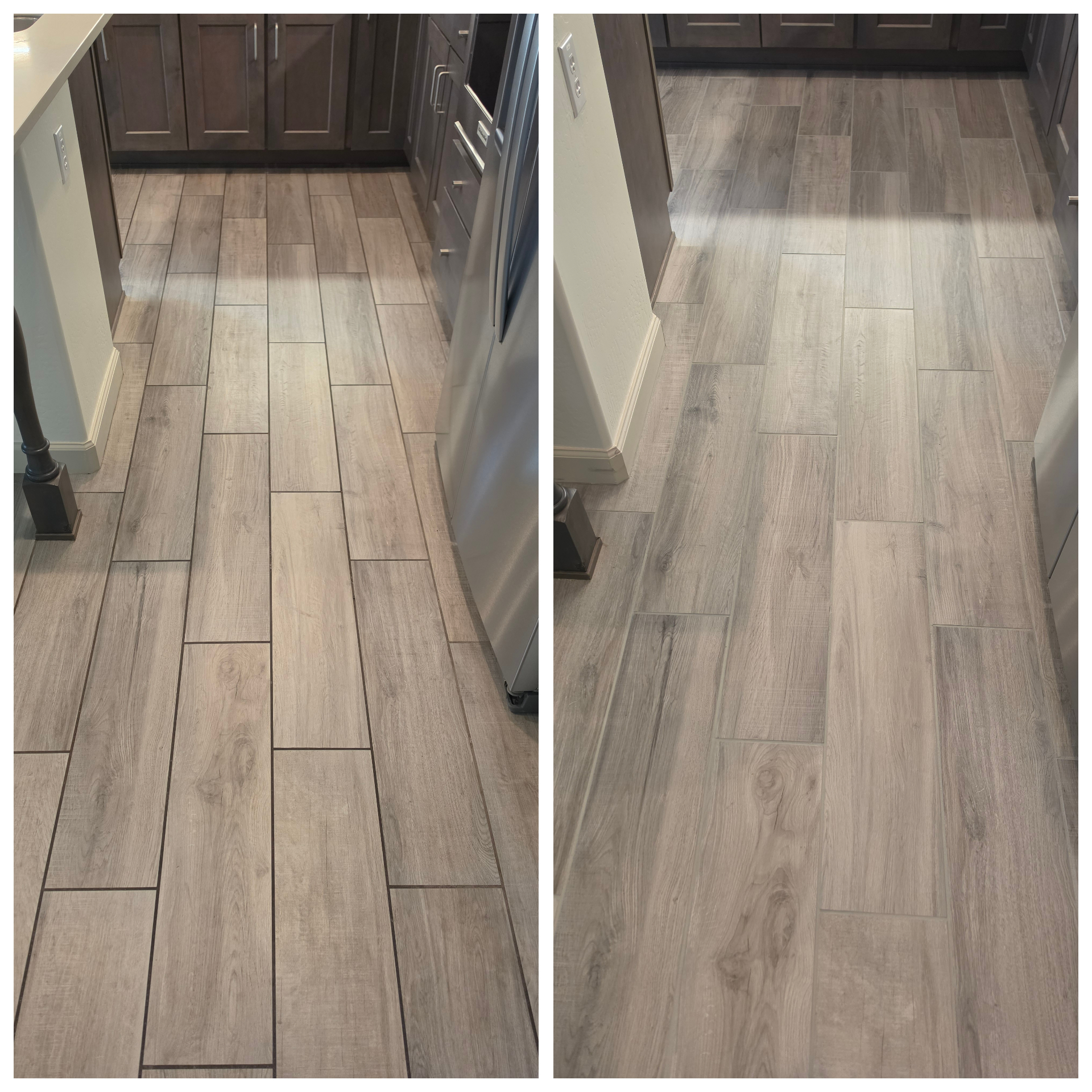
A kitchen floor should support the room, not compete with the cabinetry at every joint. With wood-look porcelain, a grout tone close to the tile can soften the grid. On stone-look tile, a warm neutral can complement the variation rather than emphasize every edge. Darker grout may be intentional on a patterned floor or a subway-tile wall. There is no universally correct shade: the right choice depends on your tile, lighting and the look you want.
Browse grout colors, then compare a candidate against the actual tile rather than deciding from a phone screen alone. Warm bulbs and daylight can change how a neutral appears. A photo of a neighboring room may inspire you, but it is not a substitute for checking the combination in your home. Restoration can be a design choice as well as a maintenance decision.
Should I Seal My Shower Grout, Too?
Suitable cement-based shower grout may benefit from compatible protection, but a shower is not a living-room floor with more water. The surface must be assessed for deposits, product compatibility and ongoing moisture. Soap residue and mineral buildup need the appropriate removal process before any protective treatment. Applying sealer over residue can leave you disappointed with both appearance and performance.
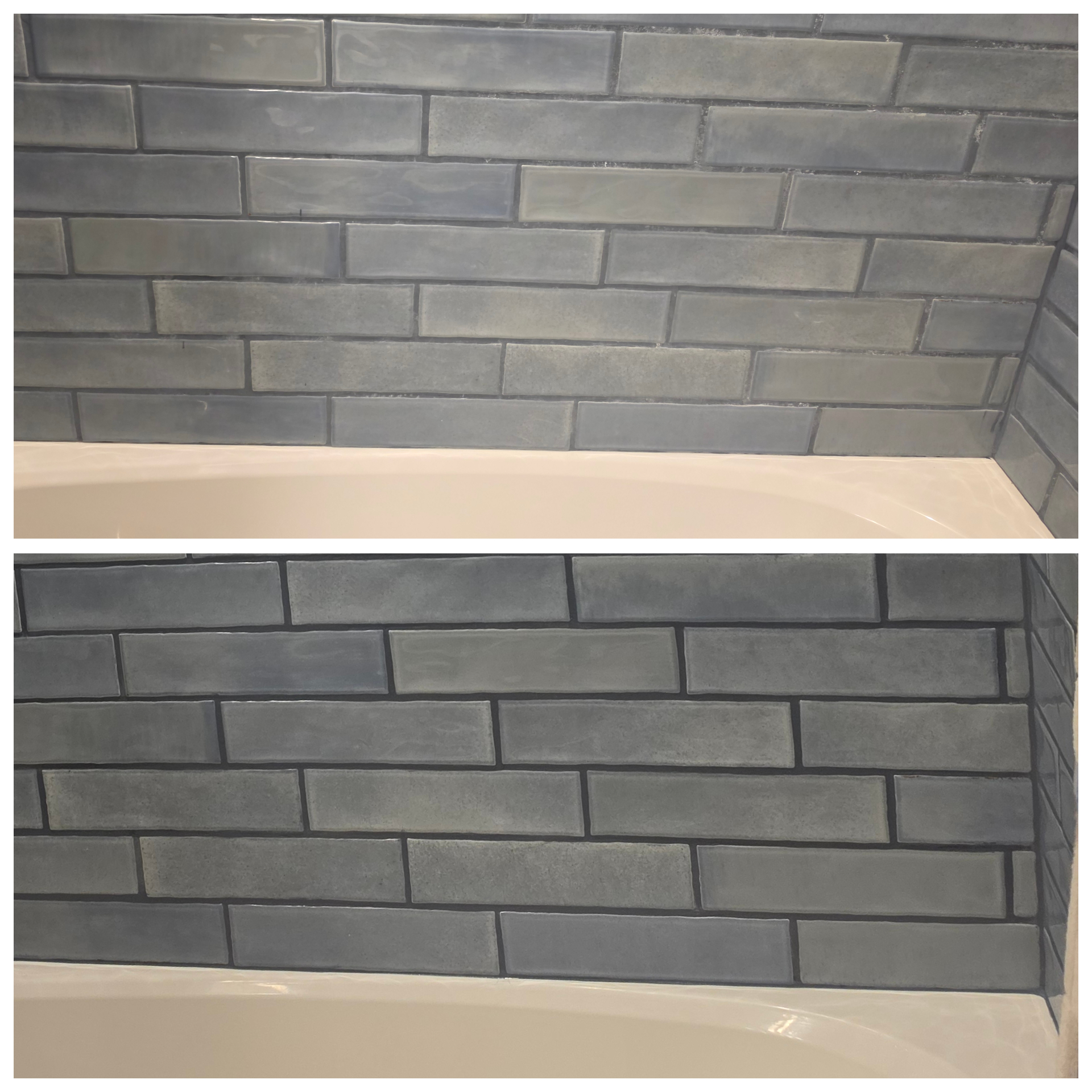
Our shower restoration assessment separates cosmetic joint work from leak, drainage and waterproofing problems. Grout and surface sealer are not the shower's waterproofing assembly. Flexible joints at appropriate changes of plane must not simply be converted to rigid grout. If water is reaching an adjacent room, the shower stays persistently wet or cracks return after patching, investigate the underlying cause before choosing a cosmetic finish.
A protected surface is not a waterproof shower. Sealing cannot repair a failed pan, stop a plumbing leak or stabilize loose tile. Those issues need their own assessment before surface restoration.
Clean, Repair, Protect: The Lazona Difference
Our goal is to get you out of the cycle of chasing individual dark joints with a brush and hoping the room will finally look clean. We begin with the existing tile, grout condition, prior products and visible defects. Eligible repairs and preparation may need to happen before wet cleaning when joints are compromised. Clean, repair, protect describes the complete result, not an instruction to soak damaged grout before it is ready.
- Clean: remove compatible contamination and residue from appropriately prepared surfaces, using a process suited to the tile or stone.
- Repair: address eligible missing or damaged grout and agreed defects, with separate work clearly identified in the proposal.
- Protect: apply compatible color sealer to suitable grout for a consistent appearance and improved stain resistance, then explain the product-specific care and return-to-use requirements.
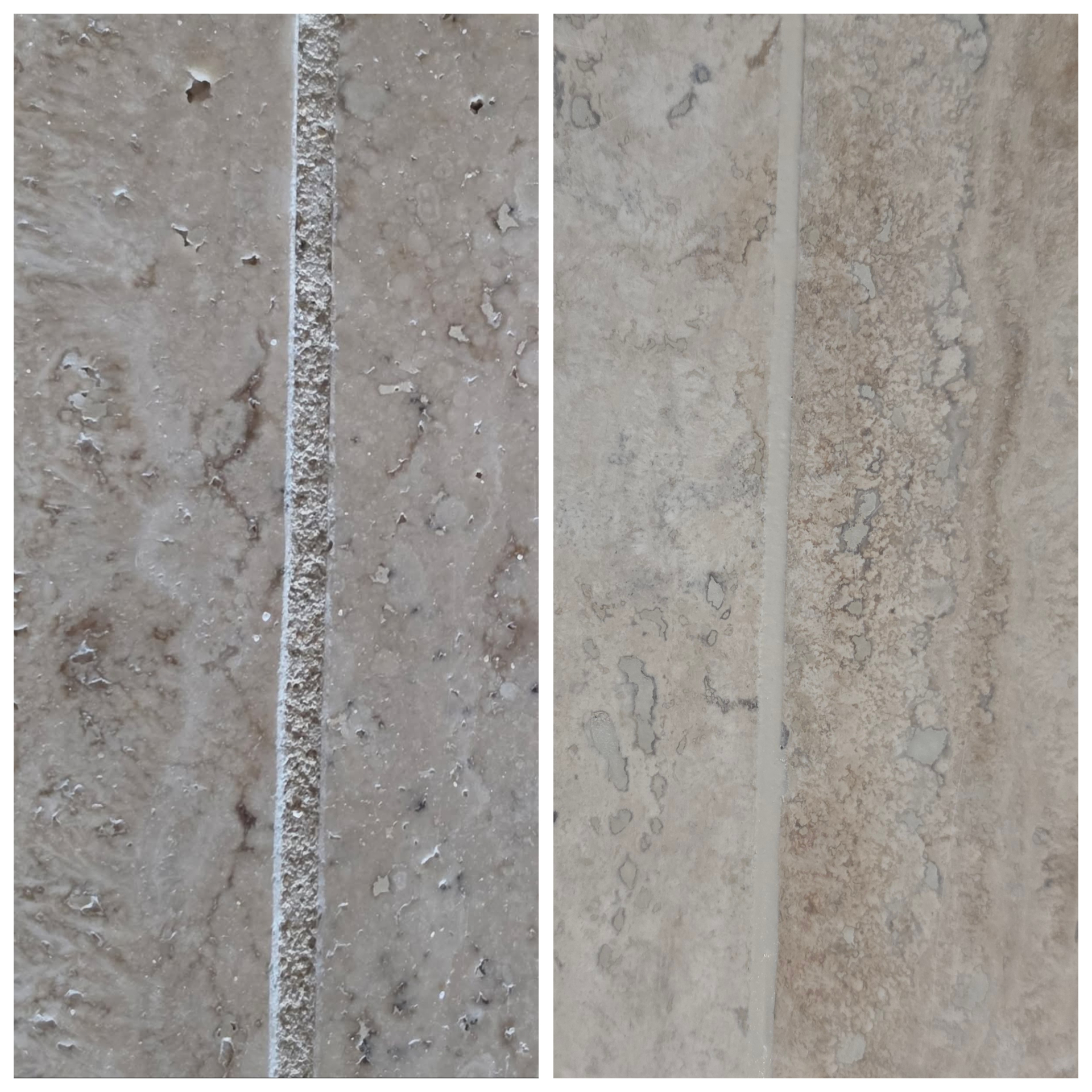
If your surrounding tile is travertine or marble, grout care must respect the stone as well. Travertine naturally contains voids and can expose additional pits as material wears; marble and travertine can both etch when exposed to acids. Joint color restoration does not flatten lippage, polish dull stone or fill every stone cavity. Those goals belong in a separate stone restoration assessment, so the proposed work matches the result you actually want.
What Our 15-Year Warranty Means for You
Every Lazona grout color sealing job is backed by our 15-Year Warranty on the sealer itself. That is a meaningful reason to invest in restoring grout you want to keep, rather than repeatedly buying temporary fixes. Grout restoration clients on the Lazona Maintenance Plan have the coverage stated for that plan. Review our 15-Year Warranty details and your written proposal for the precise coverage that applies to your project.
When you imagine a 'bulletproof' floor or shower, the practical goal is easier care, a finish you feel proud of and protection you can understand. We do not mean indestructible, maintenance-free or immune to every stain. The grout-sealer warranty is not a blanket 15-year guarantee against structural movement, cracked tile, leaks, etching of adjacent stone or every possible installation defect. Clear expectations are part of protecting your home.
Keep the Transformation Looking Its Best
Dry soil removal still matters after restoration. Vacuum or dry-mop loose grit before wet cleaning, pick up spills promptly and use a material-compatible cleaner at its instructed dilution. Use clean pads or water instead of distributing the same dirty solution across the floor. In showers, ventilation and removing excess surface water where practical help reduce the buildup that forms when water repeatedly dries in place.
Avoid treating vinegar as an all-purpose cleaner, especially around cement grout, marble and travertine. Do not assume an aggressive brush or stronger chemical is better for protected joints. Follow the specific care directions given for your tile, stone and grout sealer, including curing and return-to-use guidance. If you hire a cleaning service, share those directions so maintenance stays consistent after the restoration team leaves.
A Preservation Choice for East Valley Homes
For homeowners in Power Ranch and Trilogy at Power Ranch in Gilbert, Las Sendas in Mesa, or Chandler and Queen Creek, keeping well-chosen tile can be more appealing than disrupting the whole house for replacement. The decision should begin with whether the floor is sound and whether restoration can deliver your desired appearance. Your address tells us where to meet you, not what your surface needs.
Before your consultation, gather a whole-room photo and close-ups of the joints. Tell us whether you want the existing color back, a softer contrast or a deliberately different shade. Mention any loose tiles, missing grout, persistent dampness and prior treatments. These details help us discuss a useful scope instead of treating every stained floor as the same problem.
Start With a Clear Scope and a Real Test Spot
We no longer offer free estimates. A consultation is $150. An actual test spot is $250, credited toward your total if you book. Permanent grout restoration and color sealing start at $3.00 per square foot. All repairs start at a $1,500 minimum day rate, with no exclusions; extended repairs, hollow-tile work and perimeter caulking are separate line items. Your proposal will identify the work and protection appropriate to your surface.
You do not have to keep apologizing for a floor you have already tried to clean. Find out whether the tile you love can be restored, choose a grout finish that belongs in the room and protect suitable joints with Lazona's 15-Year Warranty on the color sealer. Book A Consultation or CALL NOW at (480) 352-0392.