
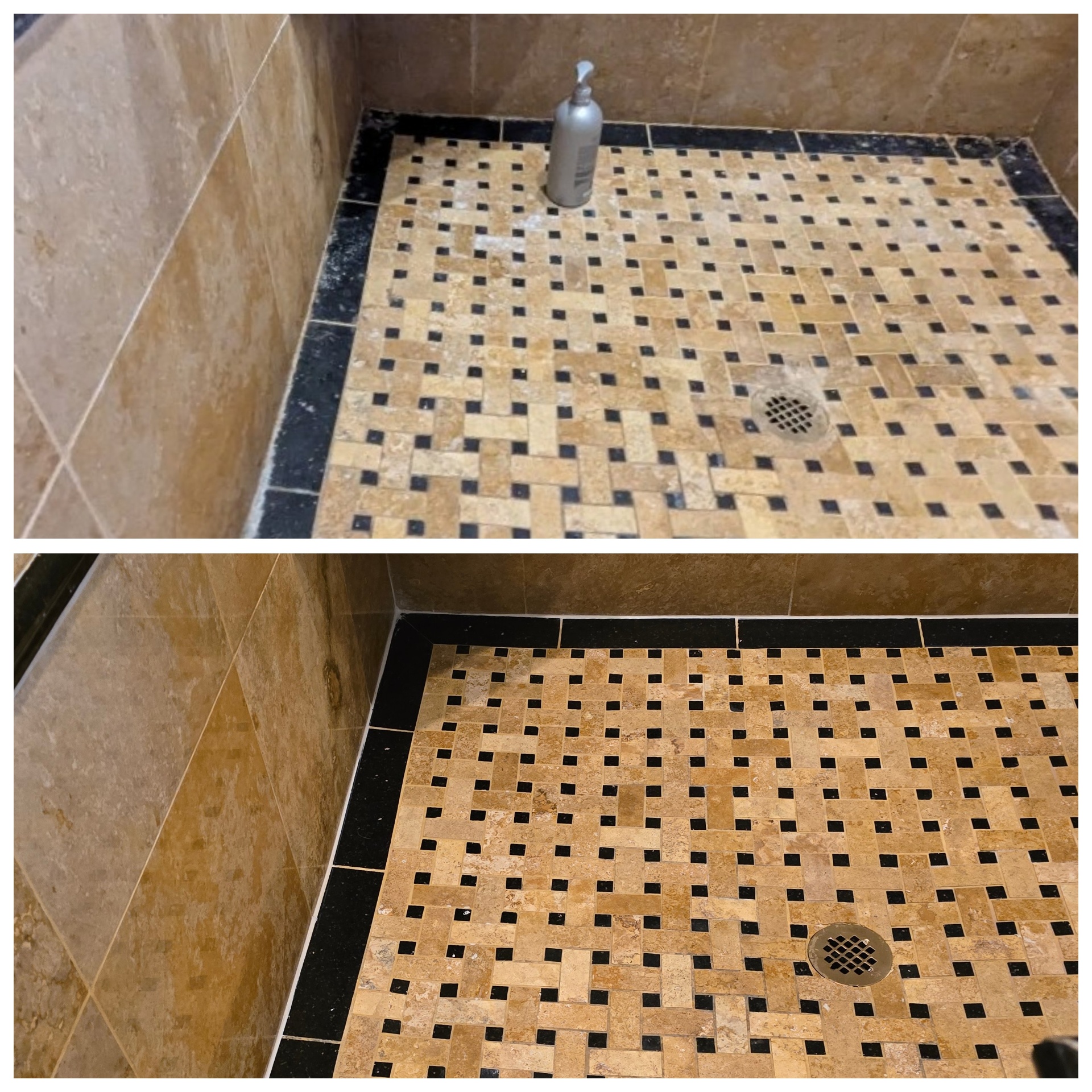
Our client in the East Valley loved her newer custom shower. Porcelain mosaic floor, large-format natural stone walls, beautifully veined ceiling tile, and a tight, modern grout pattern. Two years in, she was ready to demo the entire shower. The grout was crumbling at the corners, the mosaic floor was hazy, the drain was caked with mineral and biofilm, and the silicone was peeling. The cause was not bad workmanship. It was acidic bathroom cleaners destroying everything porous in the shower.
The Shower: What We Were Working With
This was a modern, high-end Arizona shower built with materials that look stunning when maintained correctly and fall apart fast when they are not. Porcelain mosaic on the floor, large-format natural stone (a quartz-based slab) on the walls and ceiling, cementitious grout throughout, and 100 percent silicone in the change-of-plane joints. Every one of those materials has a different cleaner sensitivity, and our client had been cleaning all of them with the same acidic bathroom spray she bought at the grocery store.
The Real Problem: Acidic Cleaners on a Modern Shower
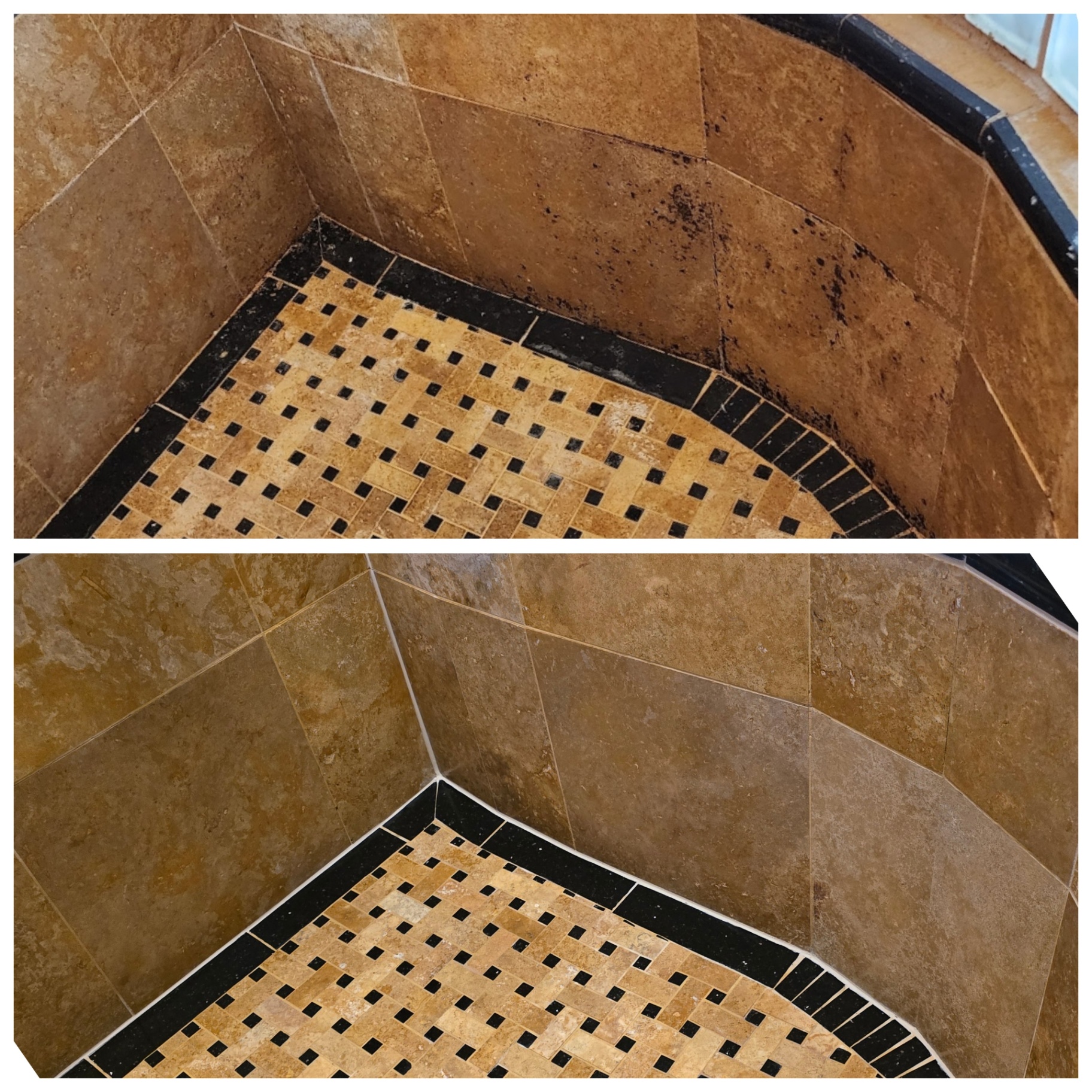
Most bathroom sprays on the grocery store shelf are acidic. They are designed to dissolve soap scum and hard water, which they do well, but they also dissolve cementitious grout, etch natural stone, eat through silicone caulk, and corrode metal drain hardware. In a modern shower with tight grout joints and natural stone walls, daily acidic cleaning does in two years what would normally take fifteen.
- Cementitious grout was eroding at every wall-to-floor and wall-to-ceiling joint
- The porcelain mosaic floor had a permanent mineral and soap film that mopping could not remove
- Natural stone walls had lost their factory polish and showed dull etched bands at hand height
- The 100 percent silicone in the corners had failed and pulled away from the tile
- The metal drain assembly was caked with mineral deposits, biofilm, and a corroded ring around the strainer
- Efflorescence (white mineral powder) was forming at the top of the walls where moisture was wicking through compromised grout
If your bathroom cleaner has a strong chemical smell, foams aggressively on contact, or is marketed for soap scum and hard water, it is almost certainly acidic. On a modern tile and stone shower, that one habit can cost you the entire shower in 3 to 5 years.
Step 1: Drain Assessment and Restoration
We always start at the drain. The drain is the lowest point in the shower, which means every contaminant in the system ends up there. On this project the drain told the whole story: a thick black ring of biofilm and mineral on the strainer, corrosion under the strainer, and standing water that was not draining freely because of buildup in the throat of the drain. We pulled the strainer, descaled the assembly, treated the corroded ring, and flushed the line.
Step 2: Grout Repair and Re-Caulking
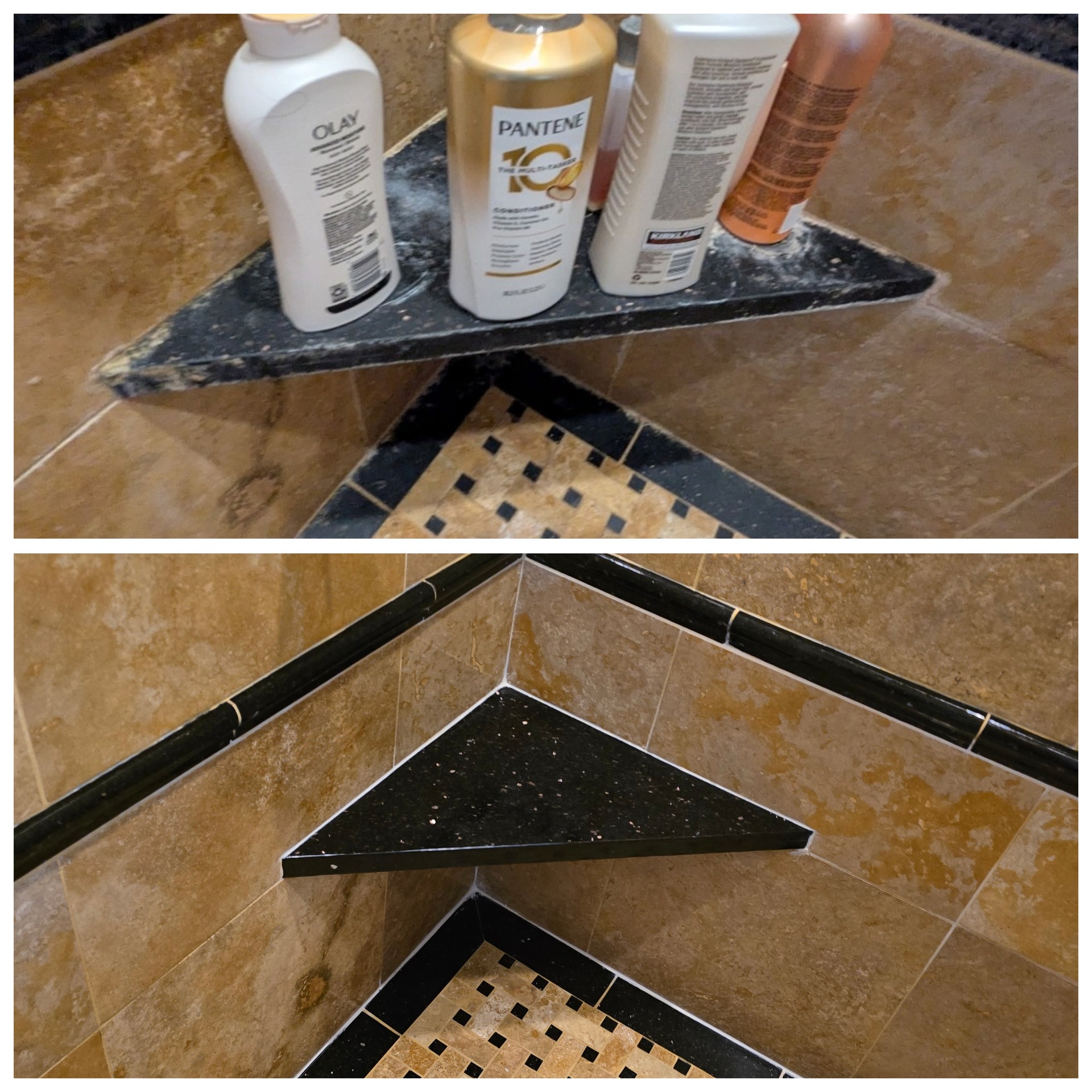
Before any deep cleaning, we repair what is broken. On this shower that meant removing all of the failed silicone in the corners, raking out crumbling grout at the wall-to-floor and wall-to-ceiling transitions, and rebuilding those joints. We used a sanded grout color matched to the original on the field joints, and 100 percent neutral-cure silicone in the change-of-plane corners. This is the part most homeowners skip and most general handymen get wrong: cement grout does not belong in a corner that will move with the building. Silicone does.
Step 3: Stone Wall Cleaning, Honing, and Sealing
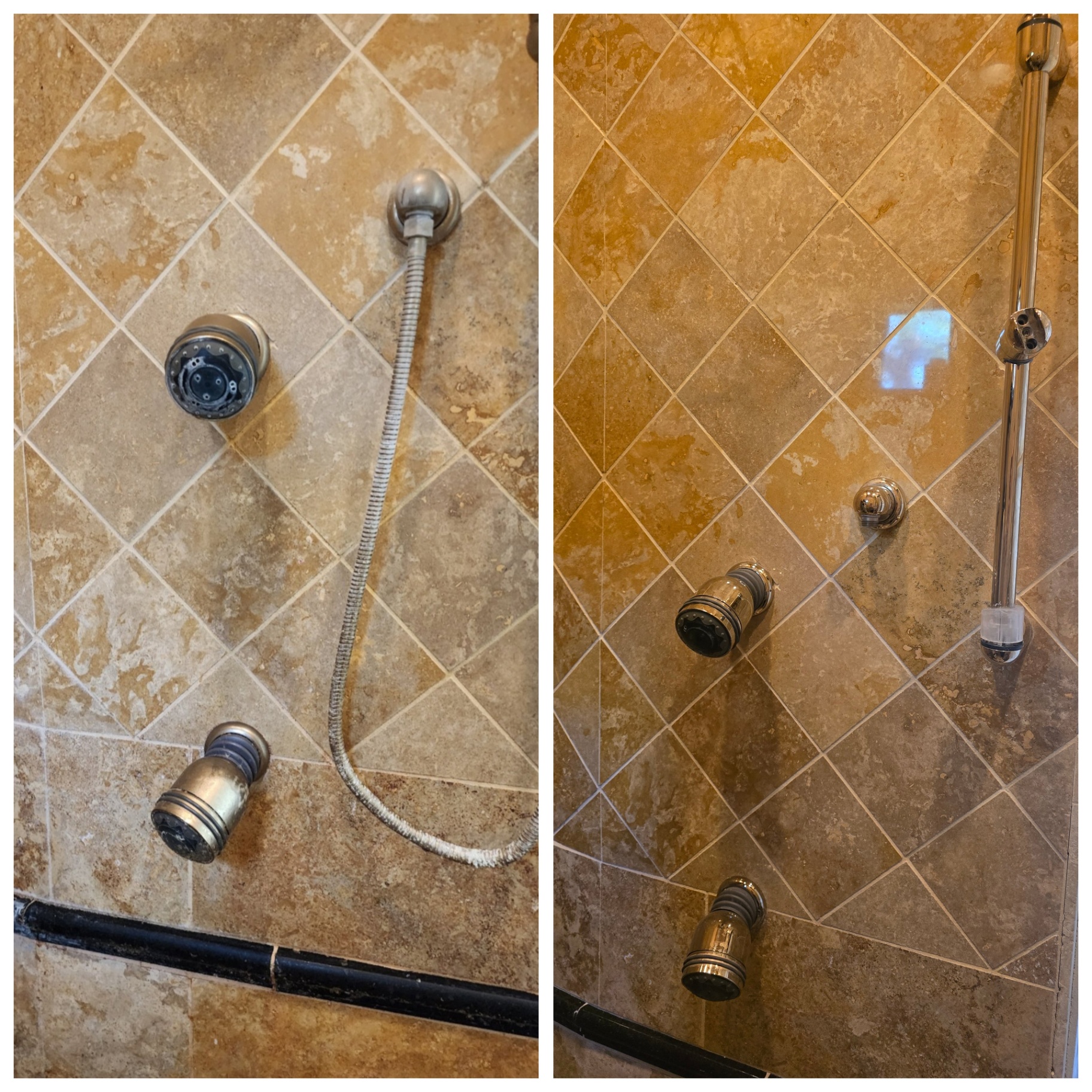
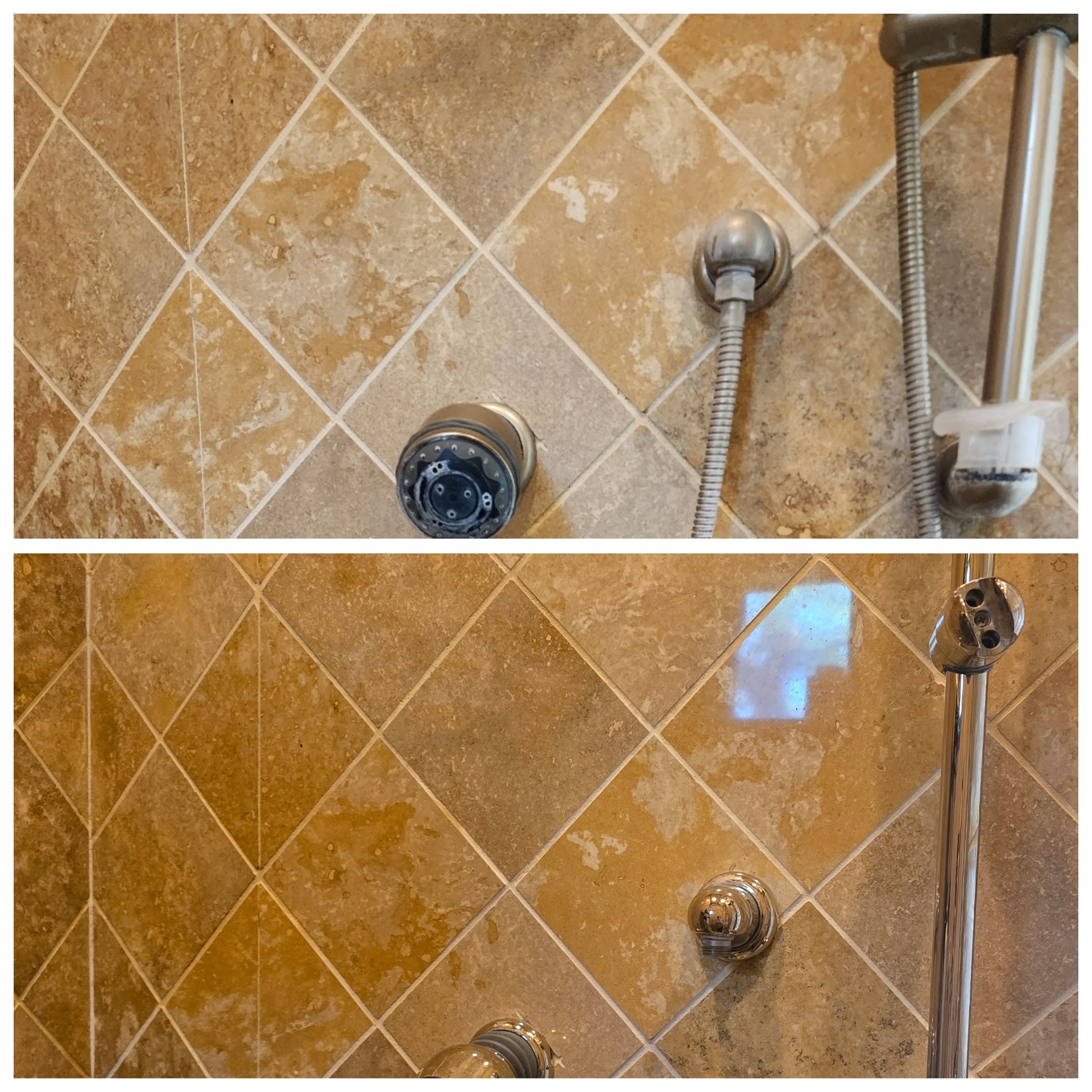
The natural stone walls had lost their factory finish in the splash zones from years of acid exposure. We used a controlled honing process with progressive diamond pads to remove the etched layer and restore a uniform satin finish across each wall, then applied a penetrating impregnating sealer rated for shower environments. Penetrating sealer is critical here. Topical sealers will peel and trap moisture against the stone in a hot, wet shower.
Step 4: Mosaic Floor Restoration and Color Sealing
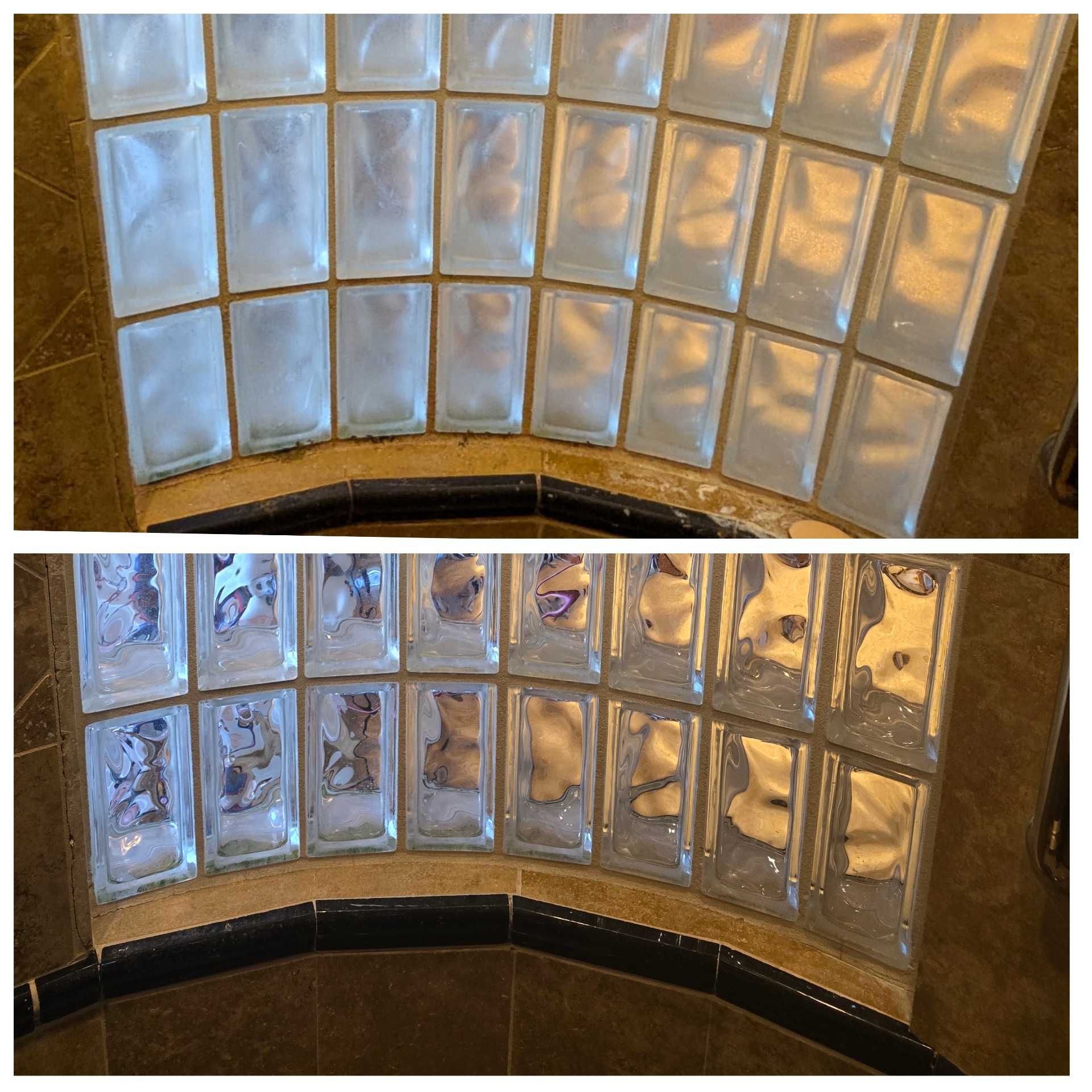
Porcelain mosaic floors look great on day one and become a maintenance headache by year three because of the sheer amount of grout. This shower floor had hundreds of linear feet of grout in a 12 square foot area. We deep extracted the grout with truck-mounted equipment, neutralized the residual acidic cleaner chemistry, repaired a few hairline cracks, and applied a 15-year color seal to lock in a uniform color and create a barrier against future staining, soap scum, and bacterial growth.
Step 5: Final Walkthrough and Maintenance Plan
We finished the project with a walkthrough, a written care card listing the specific cleaners that are safe for this shower, and an enrollment in our 15-Year Warranty plan. The client now uses a pH-neutral daily shower spray, gets a professional pop-in cleaning twice a year as part of The Zone membership, and has stopped touching her shower with anything acidic.
Restoration cost on this project was a fraction of what a tear-out and rebuild would have cost. A full demo and rebuild of a comparable modern stone-and-mosaic shower in the East Valley typically runs $12,000 to $25,000 and takes 2 to 4 weeks. Our restoration was completed in a single visit.
What This Shower Looks Like 6 Months Later
Six months after restoration, the grout is still uniform, the stone walls still bead water on contact, the silicone in the corners is intact, and the drain is flowing freely. The client switched cleaners, started squeegeeing the walls after each use, and has not had to scrub anything. That is what proper material care looks like in an Arizona shower.
Service Areas and Next Steps
We restore modern tile and stone showers throughout Chandler, Mesa, Gilbert, Scottsdale, Paradise Valley, Tempe, Queen Creek, San Tan Valley, and Ahwatukee. If your modern shower has eroding grout, hazy tile, or peeling silicone, do not demo it yet. Read our companion guide on how to maintain modern tile and stone showers, then book a $150 in-home consultation.