
It seems logical. Bleach kills mold and germs in laundry, so it should be the perfect grout cleaner too, right? Wrong. After restoring thousands of bathrooms across Arizona, we can tell you that bleach is the single most common reason homeowners end up calling us for grout restoration or full color sealing. Here is exactly what bleach does to cement grout, what you should use instead, and why bleach-damaged grout almost always ends in a grout color seal restoration (see the full chart of grout colors we seal to) to fully reset the color.
What Bleach Actually Does to Cement Grout
Standard sanded and unsanded grout is a cement-based mortar held together by polymer binders and surface sealers. Bleach is a strong oxidizer that aggressively breaks apart organic compounds. When you pour it on grout, it does not just lift the surface stain. It chemically dissolves the polymer matrix that holds the cement particles together, etches the sealer, and leaves the grout more porous than it was before you started cleaning.
- Bleach oxidizes and destroys the polymer binders in cement grout, turning a solid joint into a sponge
- Repeated bleach exposure breaks down topical sealers in days, leaving grout completely unprotected
- More porous grout absorbs the next round of soap scum, body oil, and hard water faster than the last
- Bleach reacts with Arizona hard water minerals to leave salt deposits inside the grout joints
- Color pigments in colored grout fade and turn chalky after consistent bleach exposure
- Bleach fumes corrode metal fixtures, drain covers, and shower door hardware near the cleaning area
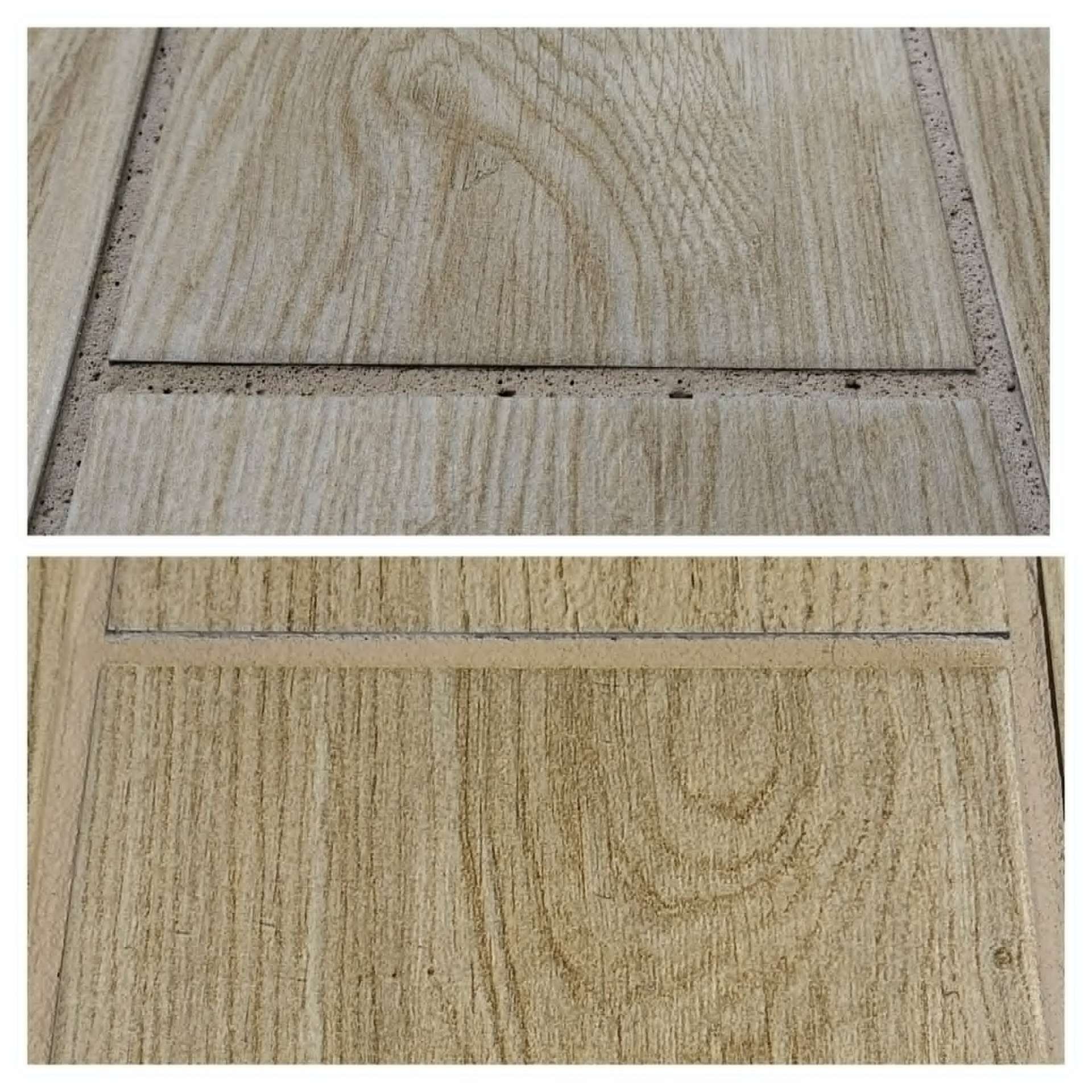
If your grout looks more stained one month after bleaching than it did six months ago, bleach damage is the cause. The grout is now more absorbent than the day it was installed and cannot be 'cleaned' back to white. It needs to be color sealed or replaced.
The Bleach Damage Cycle Arizona Homeowners Fall Into
We see the same five-phase pattern in nearly every Phoenix-area bathroom we restore. A homeowner starts with bleach because it is cheap and the first cleaning produces a dramatic visual result. Over time the grout looks worse, the homeowner uses more bleach and scrubs harder, and the joints erode into a permanent gray mess that no household product can recover.
- Phase 1: First bleach cleaning looks amazing, homeowner is convinced this is the answer
- Phase 2: Grout starts re-staining within weeks instead of months, homeowner increases bleach frequency
- Phase 3: Grout joints look pitted, sandy, or rough to the touch as the polymer breaks down
- Phase 4: Mildew comes back faster and darker because the more porous grout now harbors more moisture
- Phase 5: Homeowner gets bathroom remodel quotes at $15,000 to $30,000 to 'fix the grout'
The good news: in 90% of these bathrooms the tile is still perfectly bonded and structurally sound. The grout is the only thing that failed, and grout is replaceable or sealable without touching the tile.
A Real Arizona Bathroom: 8 Years of Bleach Damage
We recently restored a master shower in Gilbert where the homeowner had used a bleach spray every weekend for eight years. The grout had gone from bright white to a yellowed gray with black pinpoint staining no amount of additional bleach could remove. She had a contractor quote of $22,000 to tear out the shower and rebuild it.
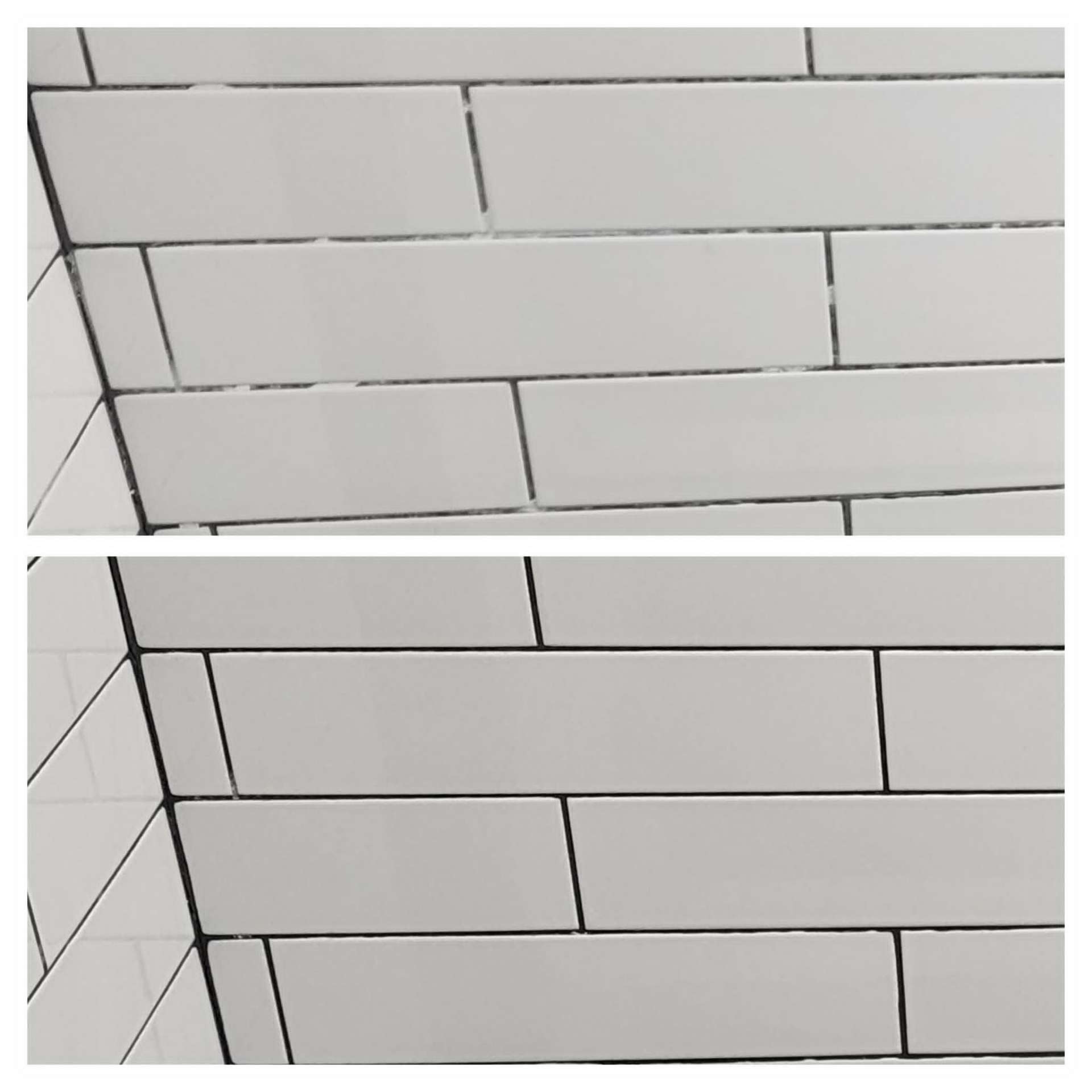
Our assessment showed every tile was sound. We deep cleaned with a high-pressure pH-neutral system, repaired three hairline grout joints, and applied a pigmented epoxy color seal in a fresh bright white. The entire job was finished in one day and cost under $1,200. The shower now carries a 15-Year Warranty on the color seal.
"Eight years of bleach nearly cost me a $22,000 remodel. One day of restoration and color sealing saved my shower and my budget."
What to Use Instead of Bleach on Grout
The right answer is a pH-neutral tile and grout cleaner combined with mechanical agitation from a stiff nylon brush. These products dissolve soap scum, body oil, and biofilm without attacking the cement or pigments in the grout.
- Use pH-neutral tile and grout cleaners available at any home improvement store (MB Stone Care, StoneTech, and Aqua Mix all make excellent options)
- For weekly maintenance, warm water with a microfiber cloth or a soft nylon brush is enough on sealed grout
- Never use bleach, ammonia, vinegar, or any acidic or oxidizing cleaner on cement grout
- Avoid 'oxygen' bleach powders too, they damage polymer binders the same way liquid bleach does
- Squeegee shower walls after every shower to cut soap scum and hard water deposits by 80%
- Keep the bathroom fan running for at least 20 minutes after showering to prevent mildew growth
If you only do one thing differently, squeegee your shower walls and door after every shower. This single habit cuts grout staining in Arizona bathrooms by roughly 80% and extends your next professional cleaning interval by years.
The Sealer Connection: Why It Matters More in Arizona
Professional grout sealers (both topical color seals and impregnating penetrating sealers) create a barrier that keeps water, soap, and minerals out of the porous cement. Bleach destroys these sealers in days. Once the sealer is gone, Arizona's 15 to 25 grains per gallon hard water drives mineral deposits and soap scum directly into the grout where they cannot be removed with household products.
In Chandler, Mesa, Gilbert, and most of the East Valley, professionally installed grout should be color sealed or resealed every 12 to 18 months on shower floors and high-traffic kitchen joints, and every 3 to 5 years on lower-use surfaces. A pigmented epoxy color seal from Lazona Tile Care carries a 15-Year Warranty, which is roughly 10 times longer than any penetrating sealer can survive in an Arizona shower.
Signs Your Grout Needs Professional Restoration
- Grout looks darker, yellower, or grayer than the day it was installed
- Joints feel rough, gritty, or sandy when you run a fingernail over them
- Stains return within weeks of cleaning instead of months
- Mildew comes back faster and darker every time you clean
- Grout color has gone chalky or faded in colored grout installations
- You can see daylight gaps, cracks, or missing chunks in shower or floor joints
If three or more of these apply, bleach has done structural damage and the grout needs professional restoration, not more cleaning.
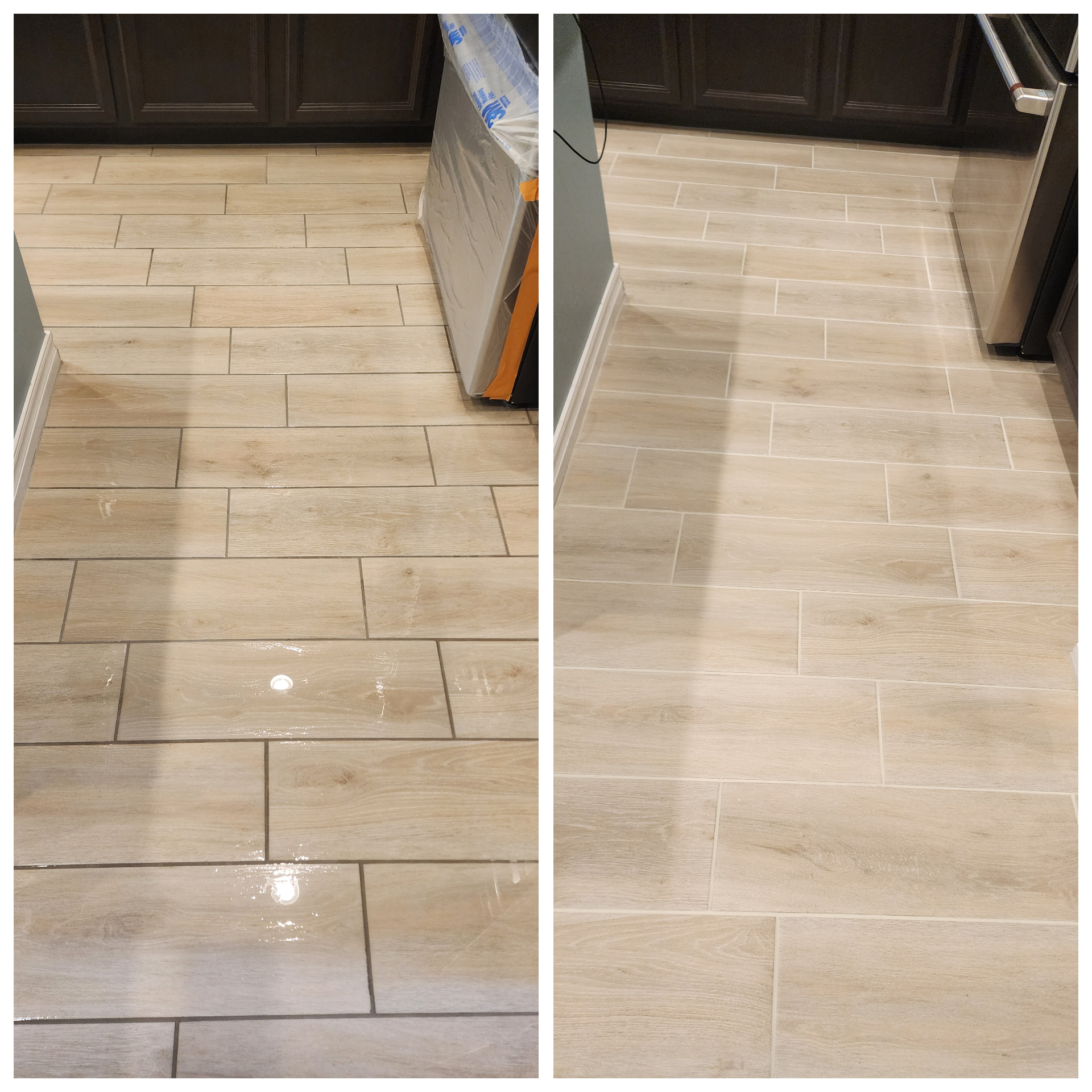
Professional Grout Restoration Saves Thousands
At Lazona Tile Care, we restore bathrooms every week that homeowners thought needed a full remodel. In nearly every case, professional restoration costs 90% to 95% less than a tear-out remodel and is completed in a single day. Our pigmented epoxy color seal carries a 15-Year Warranty and turns yellowed, bleach-damaged grout into a uniform stain-resistant finish.
Whether your grout has 3 years or 15 years of bleach damage, hard water buildup, or mildew staining, professional restoration can bring it back. Serving Chandler, Mesa, Gilbert, Scottsdale, Paradise Valley, Tempe, Queen Creek, and the entire East Valley. Contact Lazona Tile Care for a $150 bathroom grout consultation.