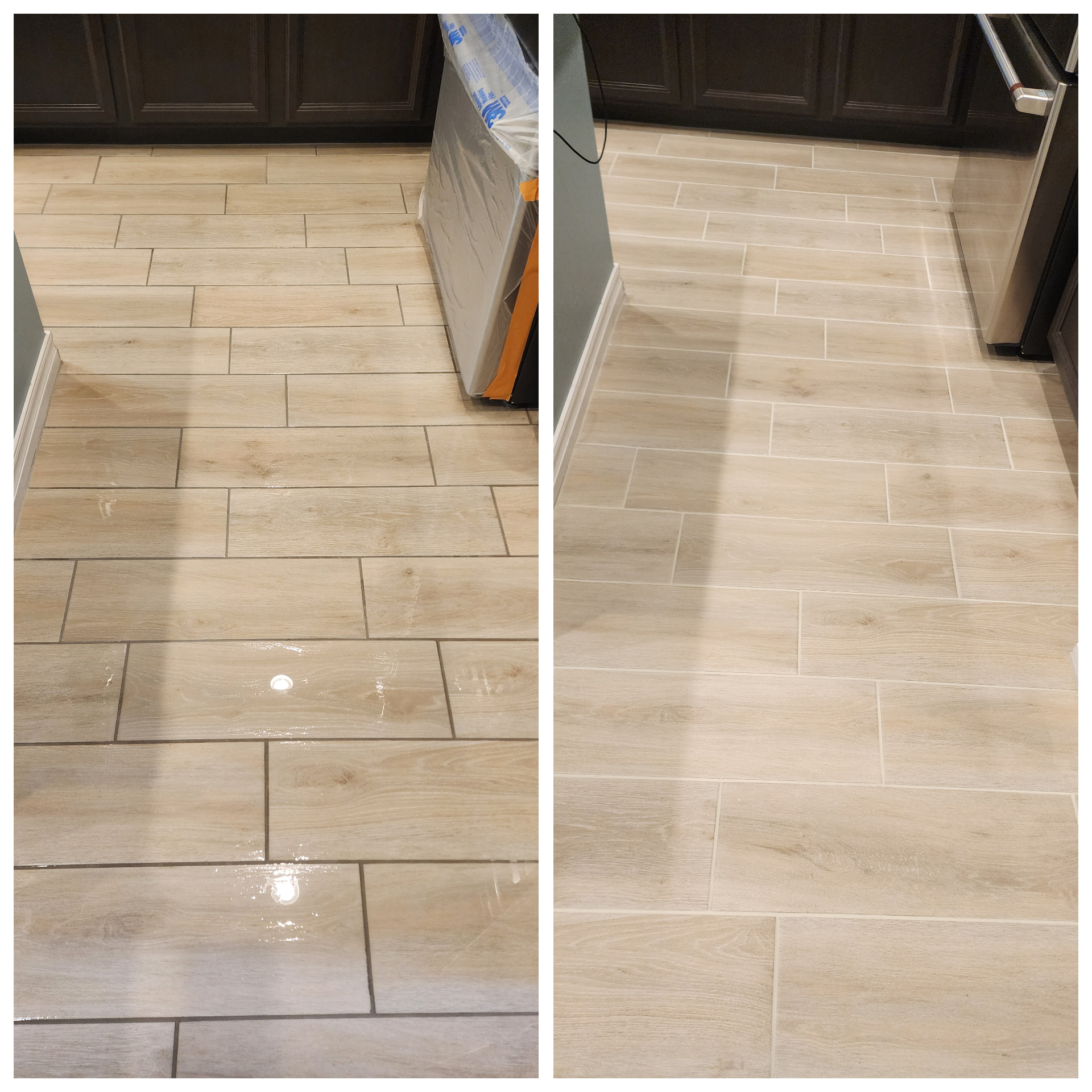
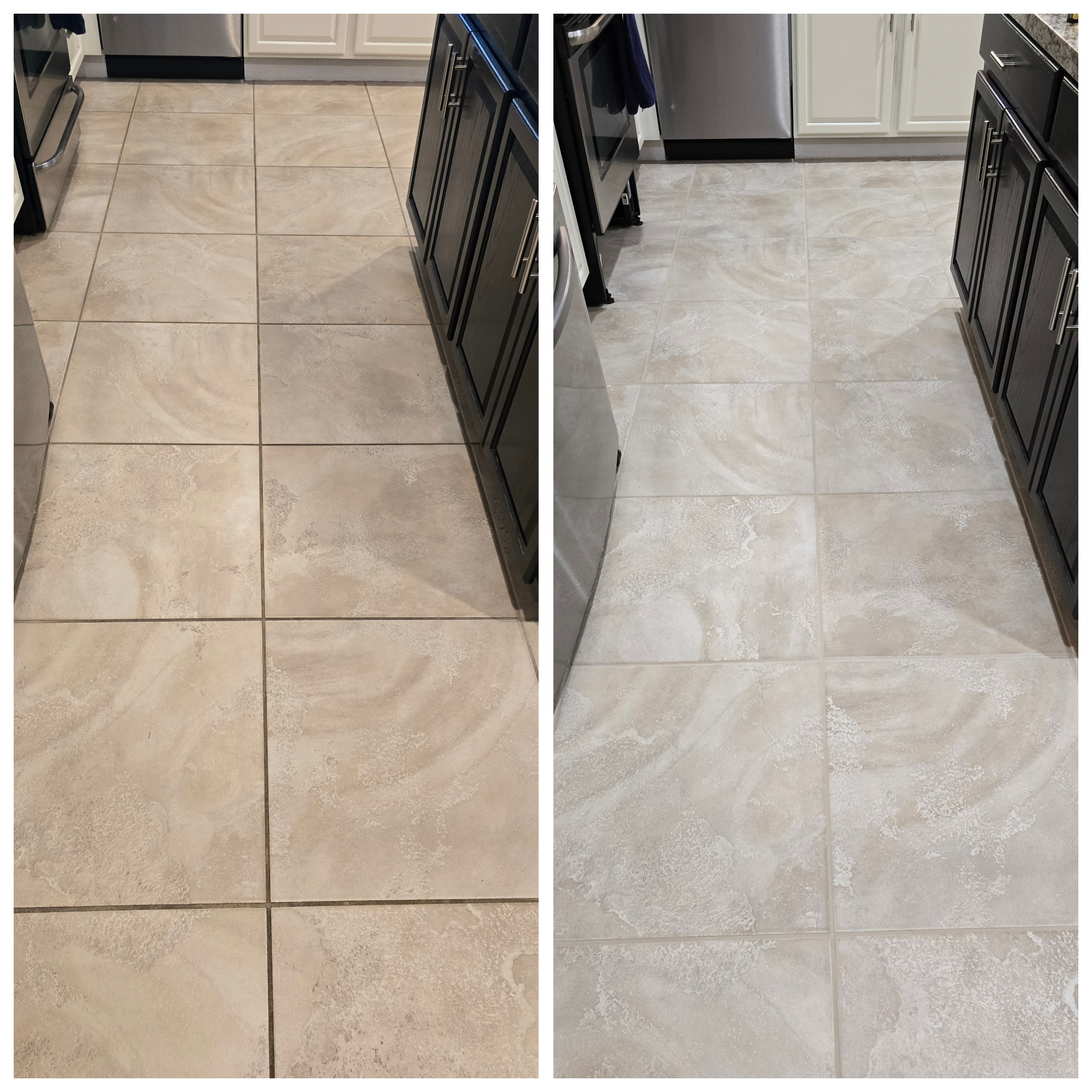
Gilbert draws a portion of its municipal water from the Central Arizona Project (Colorado River) blended with Salt River Project surface water and local groundwater. Gilbert's own annual water-quality reports consistently note total hardness in the 15 to 20 grain per gallon range - meaningfully harder than neighboring Chandler, and among the hardest supplied to any East Valley city. Every mop-pass with untreated Gilbert tap water leaves calcium and magnesium behind. On sealed tile faces that scale wipes away; on unsealed sanded grout it embeds into the pores permanently.
The second factor is builder grout. Master-planned Gilbert communities built between roughly 2000 and 2018 - Power Ranch, Seville, Val Vista Lakes, Layton Lakes, Adora Trails, Agritopia, Morrison Ranch, Lyons Gate, Trilogy at Power Ranch - were almost universally installed with unsealed sanded grout. Sanded grout is essentially a hard sponge. It absorbs mop water, food oils, pet residue, and cleaning-product film, and then holds all of it below the surface where a household cotton mop cannot reach.
The third factor is Gilbert's climate. 300+ sunny days per year, monsoon dust every July through September, and an active outdoor lifestyle that tracks pool water, patio dust, and desert grit onto the tile every day. Layered on top of the hard-water scale already sitting in the grout, that dust bonds chemically to the joint. By year five most Gilbert homes have grout that reads two shades darker than the day it was installed. Truck-mounted vapor extraction with a high-heat rotary tool is the only reliable way to pull that soil back out.
For a deeper technical read, see our guide on why grout stays stained no matter how much you mop, our vinegar & DIY tile cleaner damage report, and our Gilbert-specific 2026 Gilbert Tile & Grout Cleaning Price Guide.