
You searched for a tile contractor, and odds are your floors or shower look nothing like they did the day they were installed. Grout lines have darkened from pale grey to near black. The travertine looks flat and chalky. The master shower is losing a slow fight with hard water scale. You have scrubbed, you have tried the grocery store foaming sprays, and now you are wondering whether it is time to tear everything out and start over. Here is what most replacement quotes will not tell you: the majority of East Valley homeowners who ask for a retile estimate do not need one. What they need is professional restoration, which means thorough deep cleaning, grout color sealing (see the full chart of grout colors we seal to), and in some cases stone honing and polishing.
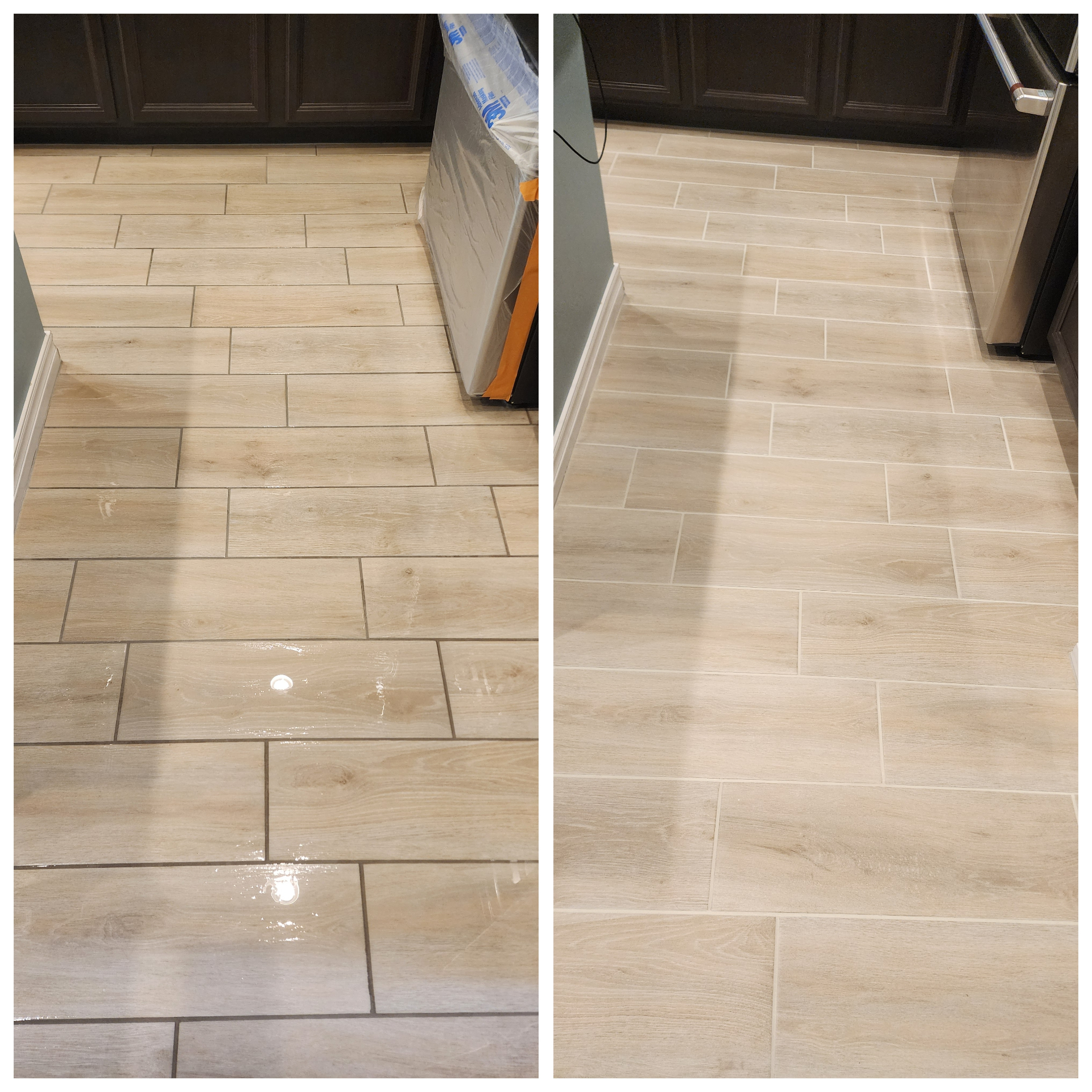
This guide is written from the perspective of a tile, grout, and natural stone restoration company that works in Gilbert, Chandler, Mesa, Queen Creek, and the east side of Scottsdale every week. Lazona Tile Care does not install tile and does not retile floors or showers. That is exactly why we can give you a straight answer about which side of the line your project falls on.
When a tile contractor is your only option
Restoration works on the surface and inside the grout joint. It cannot fix what is happening under the tile. If any of the following is true, stop shopping for cleaning and start interviewing licensed installers, because no cleaning or sealing service will solve a substrate problem.
- Hollow or drummy tile across a large area. Tap the floor with a coin. A hollow ring across many tiles means the mortar bond has released and the tile will keep cracking until it is reset.
- Cracks that run in a straight line across multiple tiles. That pattern usually traces a slab crack or a missing movement joint, not a tile defect.
- Water showing up outside the shower. Damp baseboards, a soft spot in the adjoining room, or staining on a ceiling below means an active waterproofing failure behind the tile.
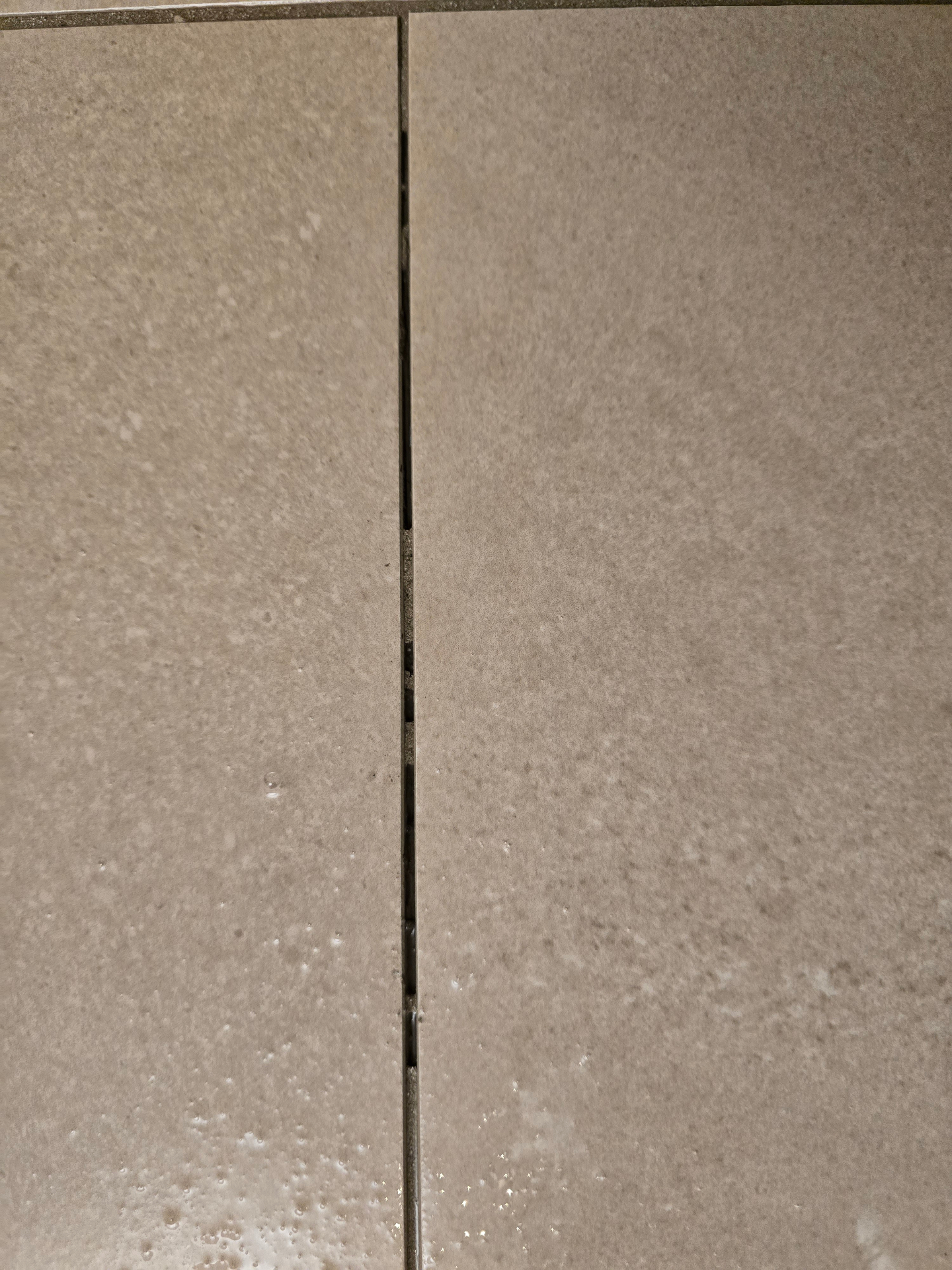
- Grout that crumbles back into a void no matter how many times it is filled. Read why grout crumbles, cracks, and fails before paying for another patch.
- A pan that holds standing water. Improper slope to drain is a build defect and requires demolition to correct.
- You want a different tile, a different layout, a curbless entry, or a bigger niche. Restoration keeps what you have and makes it look right. It cannot change design.
One clear rule of thumb: if the problem is behind or beneath the tile, hire a tile contractor. If the problem is on the tile or in the grout, hire a restoration company. Paying the wrong trade is where homeowners lose the most money.
When tile restoration is the better solution for Gilbert homes
In practice, roughly eight out of ten floors and showers we assess in Gilbert are structurally sound. The tile is bonded, the pan holds water, and the substrate is fine. What has failed is cosmetic, and cosmetic failure responds extremely well to professional equipment and chemistry.
Dirty grout and dull tile: why DIY cleaning stops working
Cement grout is porous by design. The same capillaries that let it grip tile also pull in desert dust, cooking oils, and dissolved calcium from our tap water, which runs roughly 12 to 25 grains of hardness across the East Valley. A mop moves that slurry around and pushes it deeper. A stiff brush and a home cleaner reach maybe the top fraction of a millimeter. Truck-mounted or portable hot water extraction at controlled pressure flushes the joint and pulls the soil out instead of pushing it in, which is why a professional pass looks different from your best Saturday effort.
There is a limit, though. Once cement has been chemically stained, bleached in patches, or eroded by acidic cleaners, cleaning alone cannot restore uniform color. That is the point where color restoration takes over. Grout color sealing encapsulates the joint in a pigmented, breathable coating that locks one consistent color across the whole floor and gives dirt nothing porous to enter. This is the service most homeowners are actually looking for when they type dirty grout into a search bar. See grout color sealing versus regular sealing for the technical difference.
Natural stone: travertine and marble need different care
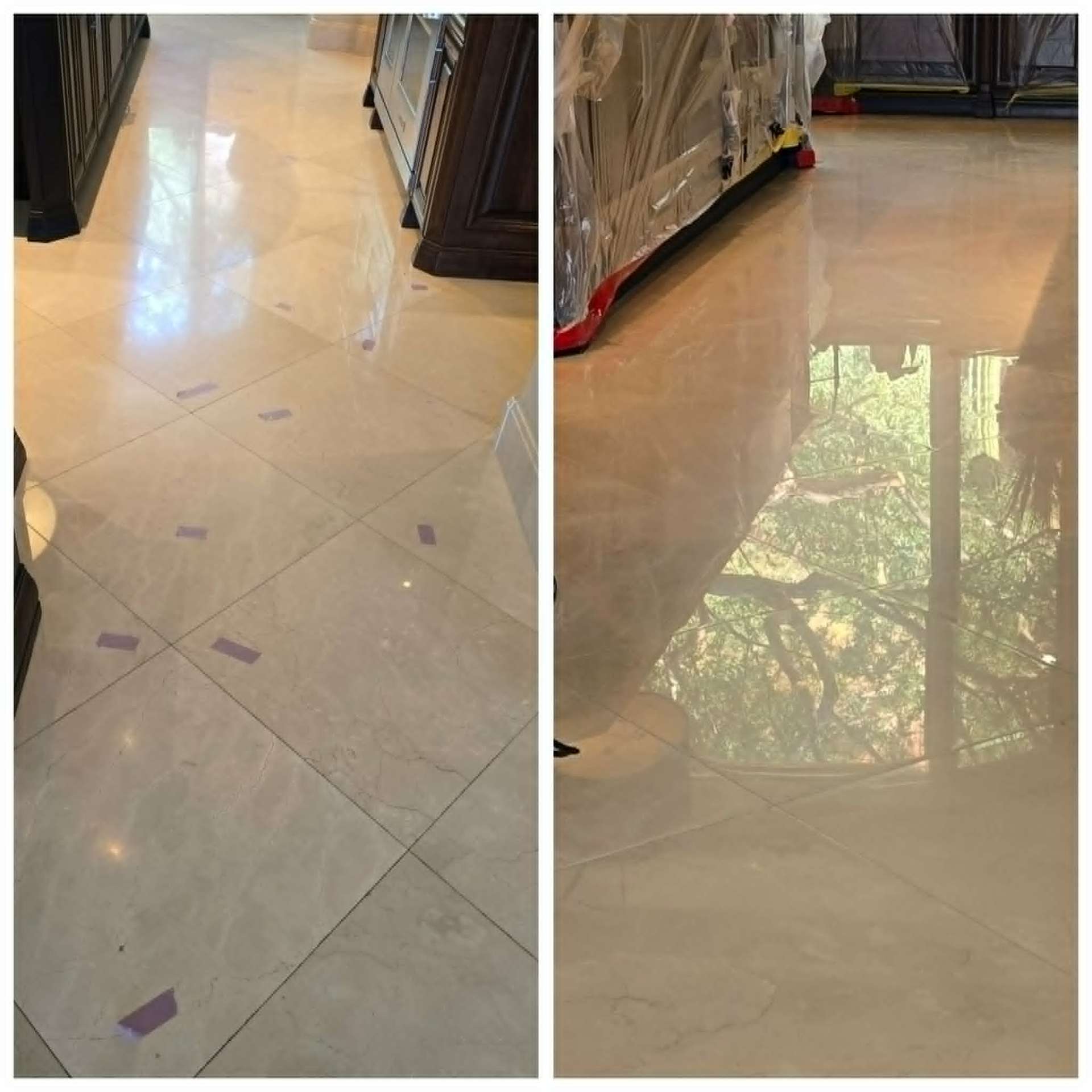
Travertine and marble are calcium carbonate, which means acid dissolves them. That chalky, cloudy look on your travertine is usually not dirt. It is etching, plus microscopic scratch patterns that scatter light instead of reflecting it. Cleaning will not bring back the finish because there is no finish left to clean. The correction is mechanical: diamond honing through a controlled grit sequence, then polishing to the sheen level you want, then an impregnating sealer to slow future staining. Filling of open travertine pits and cracks happens before polishing, not after.
East Valley showers: hard water, soap scum, and efflorescence
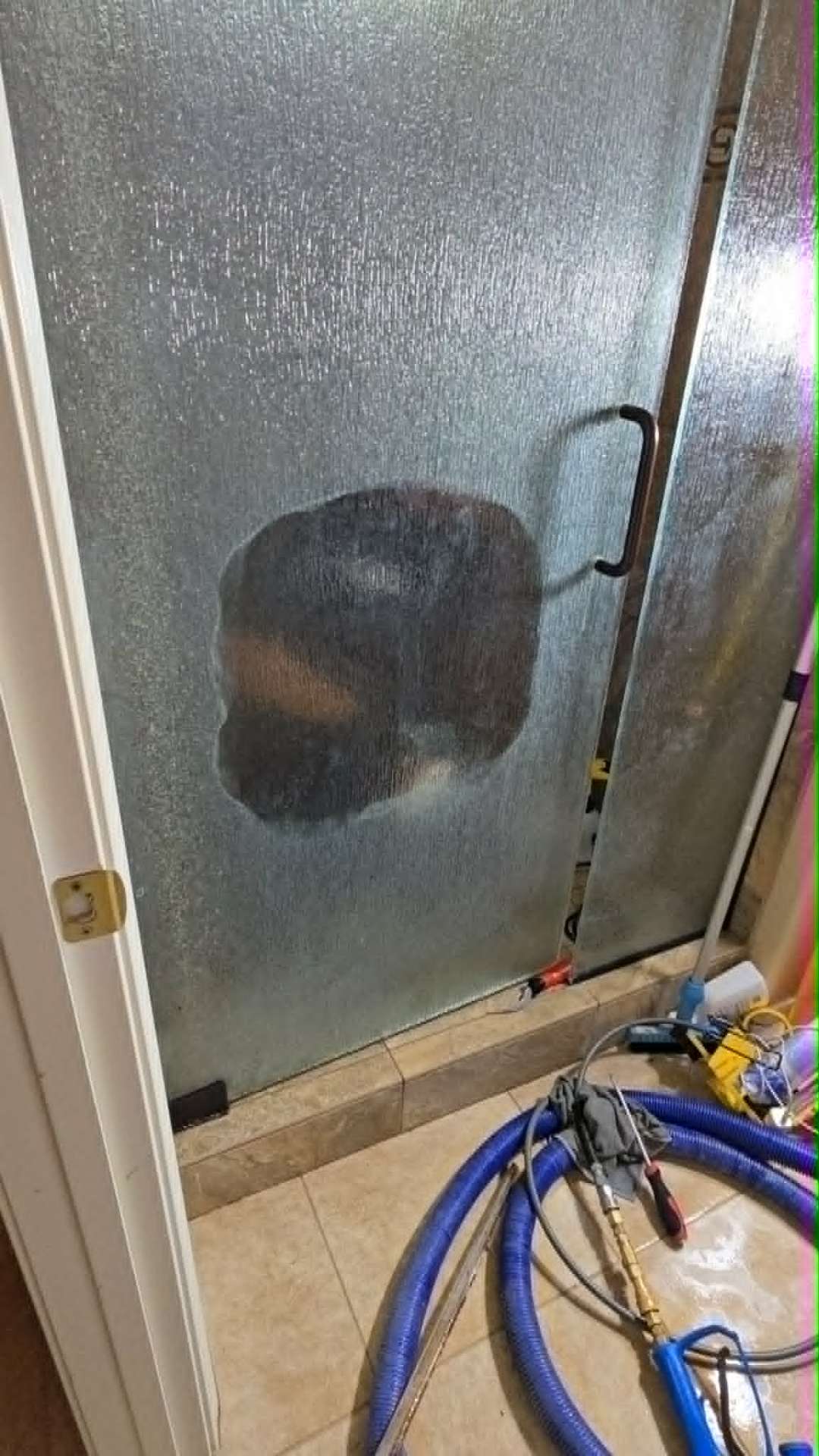
Shower glass and stone in Gilbert take the worst of our water. Evaporating droplets leave behind calcium and silica that bond to the surface and, given enough years, etch into it. Soap scum layers on top and traps body oils. On stone and grout you may also see efflorescence, a white powdery bloom of mineral salts being carried out of the setting bed by moisture. Restoration can remove scale and soap film, refinish etched stone, re-color and seal grout, and replace failed silicone at change of plane joints. Our walkthrough on how to remove hard water stains in an Arizona shower covers what you can maintain yourself between visits.
What restoration cannot fix in a shower is a leak. If efflorescence keeps returning within weeks of a professional service, water is moving where it should not, and that is a contractor job. Learn to identify true signs your shower needs restoration versus rebuild before you commit either way.
Tile and grout materials 101 for Arizona homes
| Material | Arizona weak point | Right approach | Never use |
|---|---|---|---|
| Ceramic tile | Soft glaze scratches, grout stains fast | Hot water extraction plus grout color sealing | Abrasive powders, bleach |
| Porcelain tile | Micro texture traps film and looks hazy | Alkaline degreaser plus extraction, then seal grout | Oil based or wax cleaners |
| Travertine | Acid etching, open pits, mineral haze | Fill, hone, polish, impregnating sealer | Vinegar, lemon, tub and tile sprays |
| Marble | Etch marks and scratch patterns | Diamond honing then polishing | Any acidic or scouring product |
| Cementitious grout | Porous, absorbs soil and hard water | Deep clean then color seal | Bleach, muriatic acid |
| Epoxy grout | Stain resistant but can yellow or haze | Specialty cleaning, no color seal needed | Solvent strippers |
Installation choices also decide how long results last. Proper underlayment or an uncoupling membrane, a full thinset bed rather than spot bonding, correctly placed movement joints, and the right grout type for the joint width are what keep a floor from failing early. When you read a bid, those line items matter more than the tile brand. If your surface is stone counters rather than floors, our guide to countertop restoration versus replacement applies the same logic.
What a restoration service day actually looks like
- Assessment and test area. We confirm material, grout condition, and bond, then run a small test patch so you see the realistic result before the whole job starts.
- Protection and prep. Baseboards, cabinet toe kicks, and adjoining surfaces get masked. Loose or failing grout is cut out and repaired first, because color sealing over failing grout is not warrantable.
- Deep clean. Alkaline pre-spray with dwell time, agitation of every joint, then high heat controlled pressure extraction that captures soil and water in one pass.
- Neutralize and dry. The surface is rinsed to a neutral pH and air moved until the joint reads dry, since coating a damp joint causes adhesion failure.
- Grout color restoration. Your chosen color is applied joint by joint, tooled, and the excess cleared off the tile face. This is the step that makes a fifteen year old floor read as new.
- Stone work when applicable. Fill, hone, and polish sequence for travertine and marble, followed by an impregnating sealer.
- Final inspection with you present, plus written care instructions.
Timelines: a typical Gilbert great room and kitchen runs one day. Floors are walkable in a couple of hours with socks and back to normal traffic in 24 hours. Showers should stay dry for 24 hours after color sealing and 48 hours after new silicone. Grout color sealing carries our 15-Year Warranty when the joint is sound at the time of service, which is the whole reason we repair first instead of coating over problems.
Ask any provider to define what their warranty actually covers: color loss, peeling, or nothing at all. A warranty that only covers the product and not the labor is worth very little.
2026 cost comparison for Gilbert, AZ
| Scope | Restoration | Replacement by a tile contractor |
|---|---|---|
| 1,500 sq ft of tile floor | Deep clean plus grout color seal, roughly $2,000 to $4,500 | Demo, disposal, material, labor, roughly $18,000 to $30,000 |
| Single master shower | Clean, regrout as needed, color seal, glass descale, roughly $700 to $1,500 | Full tear out and rebuild, roughly $8,000 to $18,000 |
| Travertine floor, 800 sq ft | Fill, hone, polish, seal, roughly $2,400 to $4,800 | Replace with new stone, roughly $12,000 to $24,000 |
| Timeline | One day, no demolition, no dust containment | Two to four weeks with the room out of service |
| Disruption | Live in the house the same night | Relocate use of the space, plus dust and noise |
For a whole house floor, the delta is commonly $15,000 to $30,000. That is the number worth sitting with before you sign a demolition contract. Restoration is not always the answer, but when the substrate is sound it is almost never the more expensive answer. Ranges above reflect Gilbert, Chandler, Mesa, and Queen Creek conditions and vary with square footage, joint width, and how much repair the grout needs first.
If you do need new tile: how to vet a Gilbert tile contractor
- Verify an active Arizona ROC license for the specific classification, plus general liability and workers compensation certificates sent directly from the insurer.
- Insist on a written scope that names the substrate prep, membrane or underlayment, thinset product, grout type, movement joint locations, and slope to drain for showers.
- Ask how they will handle transitions and expansion joints in long runs. Vague answers here predict cracking later.
- Request photos of in-progress work from their last three jobs, not just finished glamour shots.
- Get two or three quotes. Compare scope line by line, not bottom line to bottom line.
- Source tile from a real supply house such as Daltile, The Tile Shop, or Best Tile so replacement stock exists later, and buy 10 to 15 percent attic stock.
- Red flags: cash only, no written contract, large deposits before material delivery, and pressure to decide same day.
Use the same objectivity when choosing a restoration company, including us. The East Valley has several providers doing this work, among them Beyond Stone Solutions, Ari Stone, and Stone Care of Arizona, plus general cleaners such as Coconut Cleaners who may or may not specialize in stone. Compare written processes, whether they are quoting penetrating sealer or pigmented color seal, credentials such as IICRC certification, documented before and after photos of jobs like yours, and warranty terms in writing. Any qualified pro should welcome those questions. If you want an unbiased look at your floor first, our tile and grout cleaning in Gilbert, AZ page explains what our assessment covers.
Aftercare that protects the result
- Wait out the cure. 24 hours before normal traffic on floors, 24 to 48 hours before a restored shower gets wet.
- Use a pH neutral cleaner and a microfiber flat mop. Change the water when it clouds. Rinsing matters more than scrubbing.
- Never use vinegar, lemon, or acidic tub and tile products on grout, travertine, or marble. Acid dissolves calcium carbonate and eats cement, which is what created the patchy grout you just paid to fix.
- Squeegee shower glass after use. Two seconds per panel prevents the scale that costs hundreds to remove later.
- Reseal natural stone every two to four years in Arizona, sooner in wet areas and full sun.
- Have grout and stone inspected annually so small failures get repaired before water finds them.
The short version for Gilbert homeowners
If the tile is bonded, the shower holds water, and you are simply tired of how it looks, restoration will get you a like new surface in a day for a fraction of retiling. If the substrate, waterproofing, slope, or layout is the problem, hire a licensed tile contractor and do it properly once. Either way, get the diagnosis before you get the quote. Lazona Tile Care offers $150 consultations across Gilbert, Chandler, Mesa, Queen Creek, and east Scottsdale, and we will tell you plainly when the answer is a contractor rather than us.