
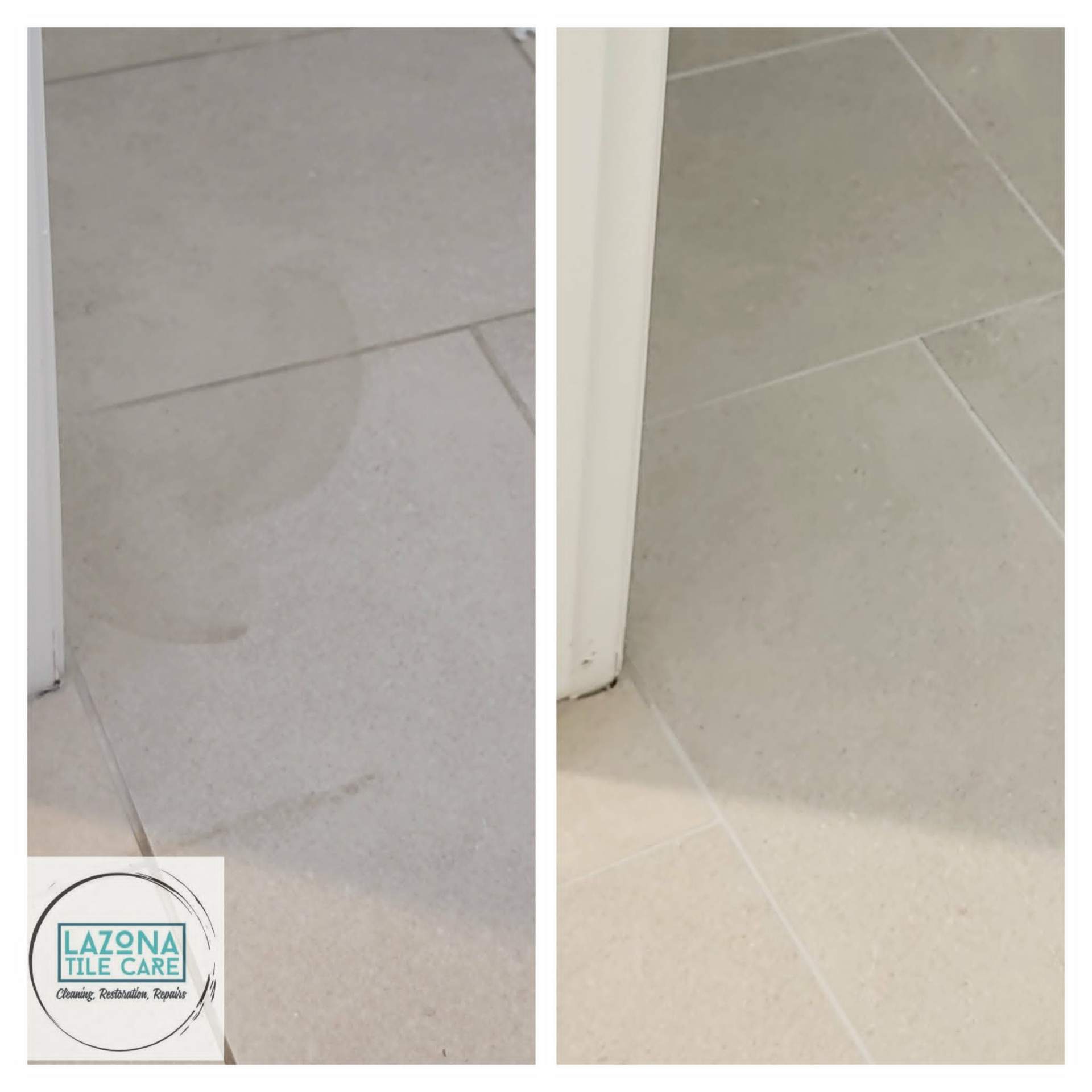
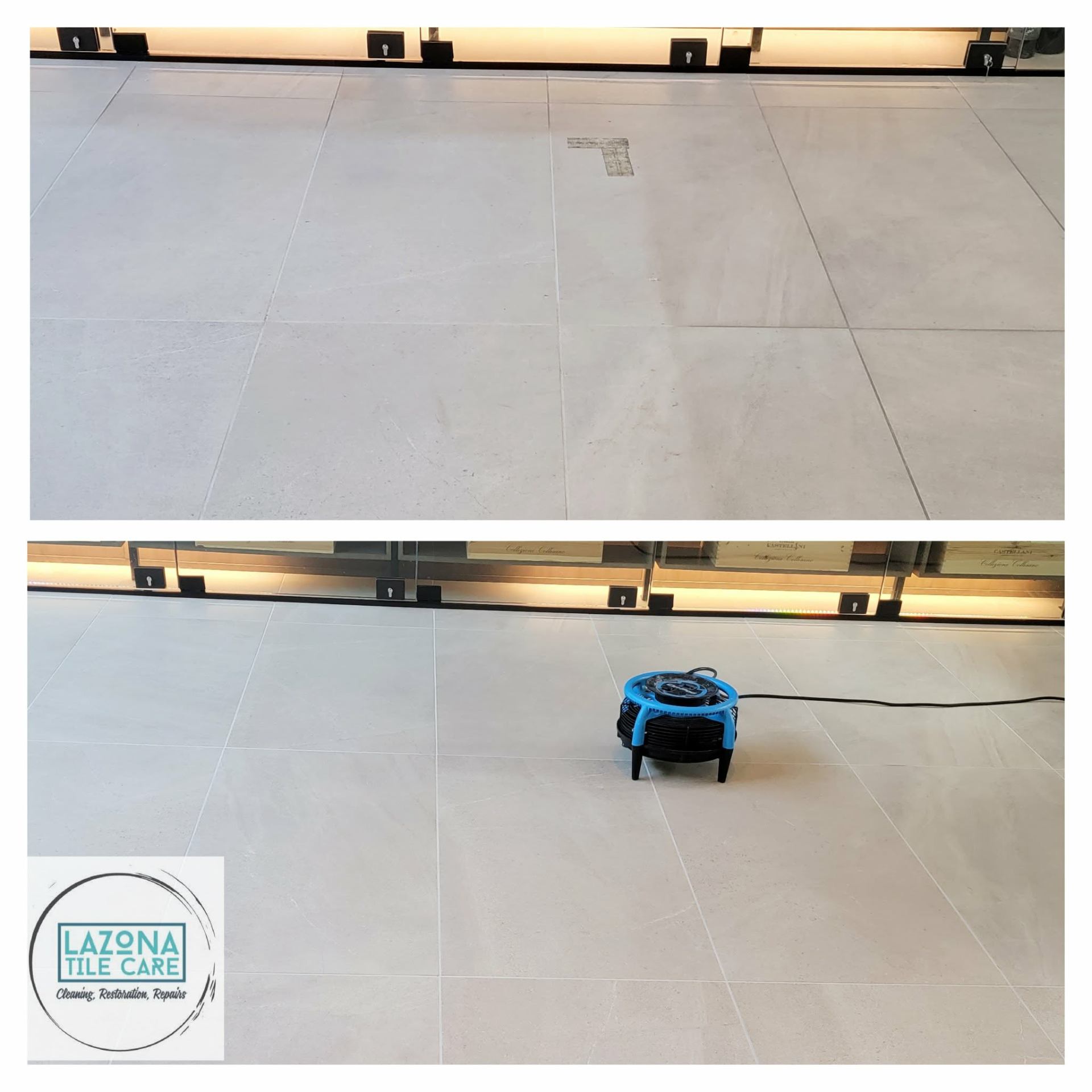
If your new construction home in Arizona has tile that always looks dirty no matter how much you mop, grout that feels gritty under bare feet, or hazy blotches that come back a day after cleaning, you are not imagining it and you did not buy a bad floor. You inherited a builder install that was finished too fast, with too much water, and most likely scrubbed down with an acidic haze remover that was never neutralized. We see it in nearly every new build we walk into. Here is what actually happened on installation day, why it shows up months later, and how it gets fixed permanently with professional grout recoloring and color sealing.
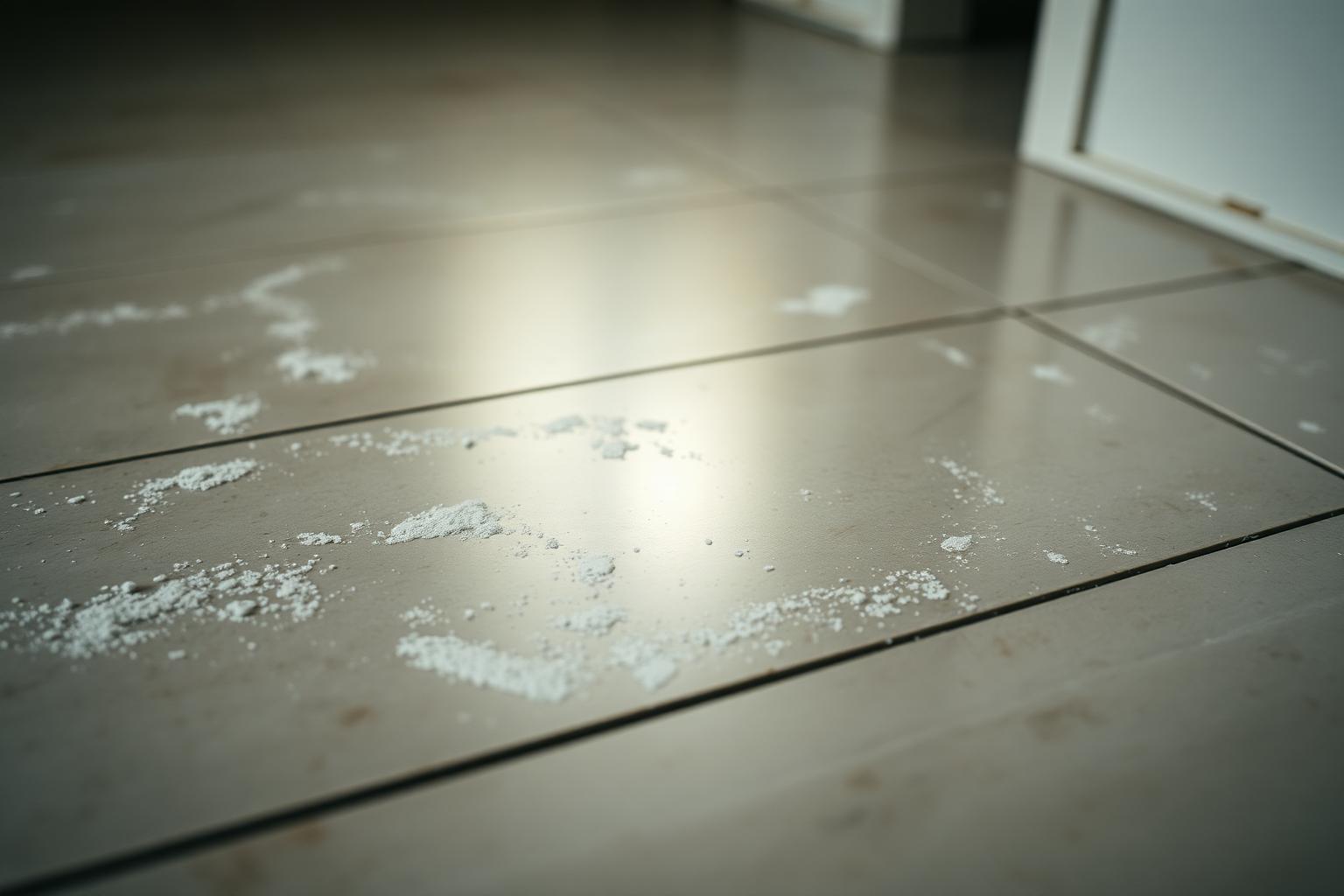
Mistake One: Way Too Much Water During Grouting
Production builders run tile crews on tight schedules. The fastest way to clean grout off the face of the tile is to flood it with water and squeegee it off. The problem is that grout is a precision mix. The polymers, portland cement, sand, and pigment are designed to cure at a specific water ratio. When a crew sponges grout joints with a soaking wet sponge over and over to beat the clock, they pull water and cement paste out of the joint and dilute what is left behind.
- Extra water weakens the cement bond, leaving grout that crumbles, dusts, and erodes early
- Pigment migrates with the water, causing blotchy color and uneven shading down the joint
- Surface laitance forms across the tile face, drying into a chalky film that looks like haze
- The joint cures porous and soft, drinking up every stain, oil, and pet accident from day one
- Within months the grout starts to powder, leaving a fine grit on bare feet and dark socks
If your new home tile leaves white powder on your feet, on a mop, or on a paper towel, that is not dust. That is your grout breaking down because it was overwatered during installation.
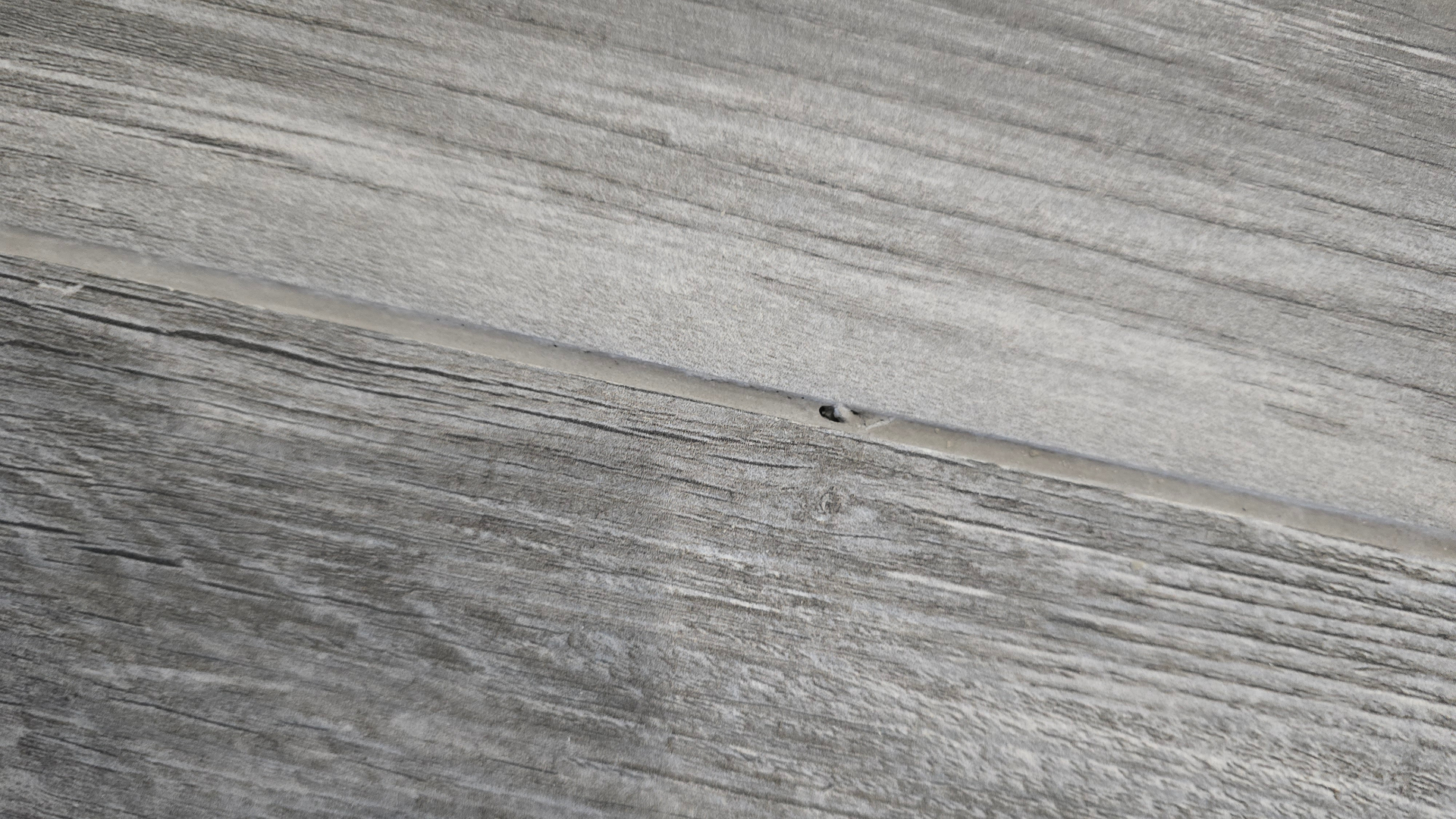
Mistake Two: Haze Remover Left to Dwell Inside the Grout
After overwatering creates haze, builder crews reach for the cheapest haze remover on the shelf, usually a sulfamic acid powder or a generic phosphoric blend. They mop it on, leave the house, and let it sit while they move on. Acidic haze removers do remove the film on the tile face, but they do not stop working when the haze is gone. Left to dwell inside an already weakened, porous grout joint, that acid keeps attacking the cement matrix and dissolves any sealer remnants that may have been present from the bag-blended additives or a quick pre-grouting wipe.
- Acidic dwell time over 60 to 90 seconds begins visible erosion of cementitious grout
- The acid breaks down polymer reinforcement and any factory sealer additives in the joint
- Pinholes open across the grout surface, becoming permanent dirt and oil reservoirs
- The grout cures even more porous than it would have, accelerating staining and powdering
- Without a full neutralizing rinse the acid continues working for days under the surface
What Grout Haze Actually Is
Grout haze is the thin film of cement paste, polymer, and pigment dragged across the face of the tile during installation. When it cures, it bonds to the tile surface as a microscopic layer that no household cleaner will break. It is not dust, not soap scum, and not water spots. It is hardened residue chemically locked to the tile. In an overwatered install, the haze layer is thicker and more uneven because the extra water carried more cement paste onto the tile face before drying.
How to Spot Powdery Grout and Grout Haze in a New Home
Once you know what to look for, the signs are obvious in almost every new build. The same five symptoms show up over and over in homes across Chandler, Gilbert, Mesa, Queen Creek, and Maricopa.
- Haziness on the tile face that returns within a day or two of mopping
- Bare feet never staying clean, picking up a fine powder across the floor
- Floor darkening in traffic patterns where hazy areas attract and hold soil
- A blotchy, uneven appearance with patches of dull tile next to clean tile
- Grout that looks lower than the tile face, with a sandy or gritty surface texture
- Color variation along single grout joints where pigment migrated during installation
- Persistent gray or brown stains in the joint that mopping never lifts
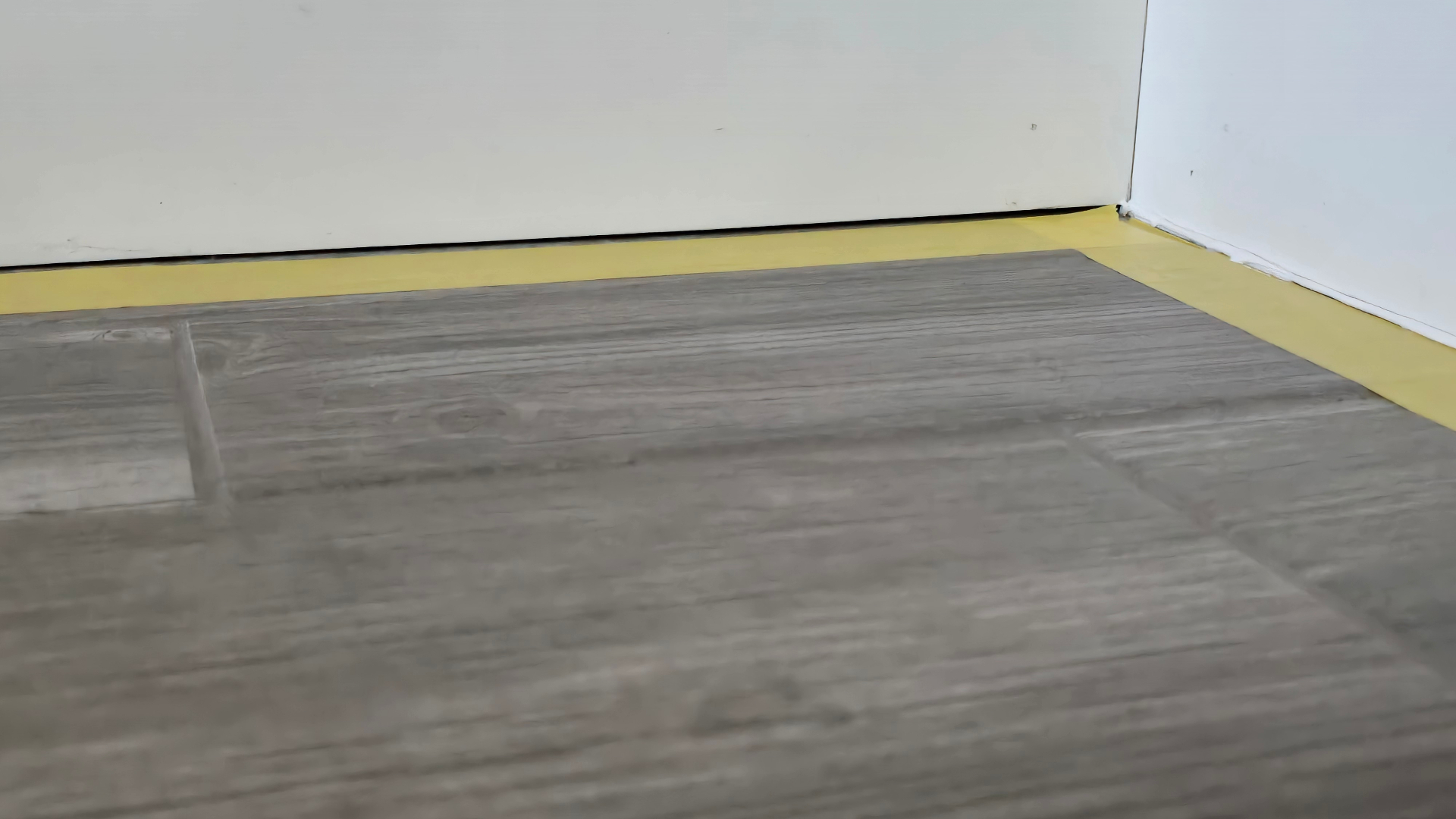
Run a clean white cloth across a freshly mopped section of tile. If it picks up a chalky white or pigmented residue, you have grout haze or a powdering grout joint. Neither will improve with more mopping.
Long Term Damage if You Leave It Alone
Powdery, hazy, eroded grout is not a cosmetic problem. Every week it stays untreated, more contaminants drive into the open cement matrix and more material wears out of the joint. In Arizona, hard water minerals and dry air accelerate the damage by pulling calcium and iron to the surface and locking them into the porous structure. The floor that started life looking dull ends up permanently stained.
- Grout joints continue to lose material until they sit visibly below the tile face
- Stains lock into the joint at depths no surface cleaning can reach
- Hard water deposits build up inside pinholes and discolor the grout permanently
- Sealing becomes harder because contaminated grout will not accept a clean seal
- Eventually the only fix becomes full regrouting or color sealing at a fraction more cost
How Lazona Remedies the Powdery Grout Epidemic
Our process is built for exactly this scenario. We see new build grout failures every week and our procedure is dialed in to remove the haze, stabilize the weakened joint, and seal everything for the long haul without ever exposing the grout to dwell time that would erode it further.
- On-site identification of grout chemistry and the actual cause of the powdering or haze
- Pre-wetting of grout joints so no remover can penetrate the cement matrix
- Buffered, professional haze removal at controlled dilution with monitored short dwell
- Mechanical agitation matched to the tile so polished surfaces are never abraded
- Full neutralizing rinse to stop the acid reaction completely, no dwell, no residue
- Hot water extraction so nothing acidic is left to keep working under the surface
- Penetrating impregnating sealer applied to every linear inch of grout at the correct coverage rate
- Written aftercare so the floor stays neutral-pH cleaned for the life of the install
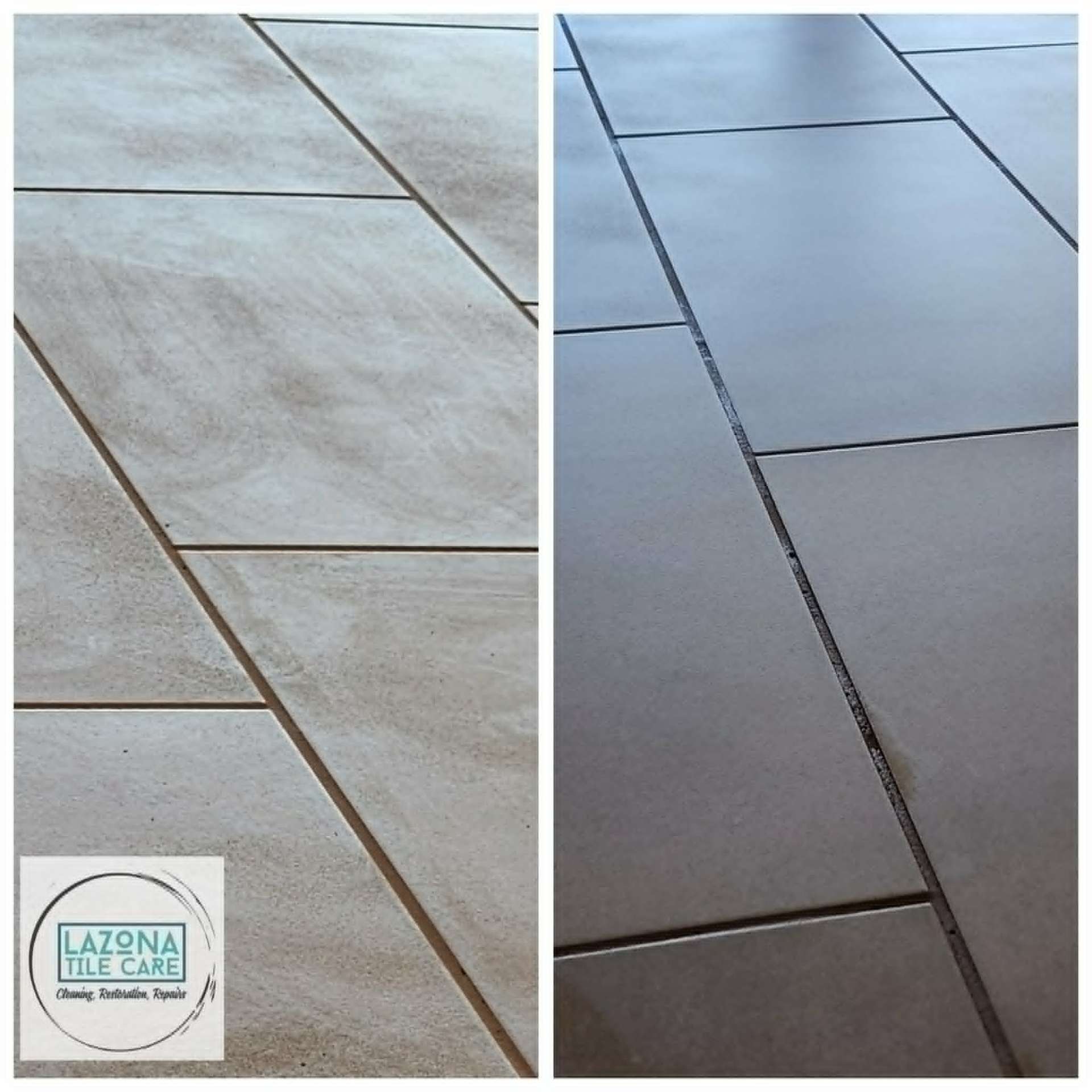
"A new floor should not look tired after one year. When grout is installed wrong, it never gets better on its own. The fix is real chemistry, real technique, and a real seal."
Backed by Our 15-Year Warranty So It Is Never an Issue Again
Every grout haze removal, stabilization, and sealing service we perform on a new build home is backed by our 15-Year Warranty. That means the haze does not come back, the powdering stops, the grout color stays uniform, and the floor cleans up with a neutral pH cleaner and a damp mop for years. If you just closed on a new home in Chandler, Gilbert, Mesa, Queen Creek, Maricopa, or anywhere across the East Valley, this is the right moment to have it corrected. Builder warranties almost never cover grout cosmetics, but our warranty does, and we make sure your tile starts the way it should have on day one.
If your new build grout feels soft, sandy, or powdery, this is a warranty issue. Don't wait. Take our 60-second Grout Failure Quiz to see if your installation qualifies for professional correction.