
You just spent thousands on a new tile floor, shower, or backsplash. The installer wiped it down, packed up, and told you, in a few days run a little vinegar and water over it and the haze will come right off. A week later the cloudy film is still there. You scrub harder. You try a stronger acidic cleaner. You watch your brand-new grout start to look chalky, pitted, and uneven. That is not bad luck. That is how grout haze actually behaves, and it is why every new tile installation in Arizona needs a real haze removal process followed by a proper seal.
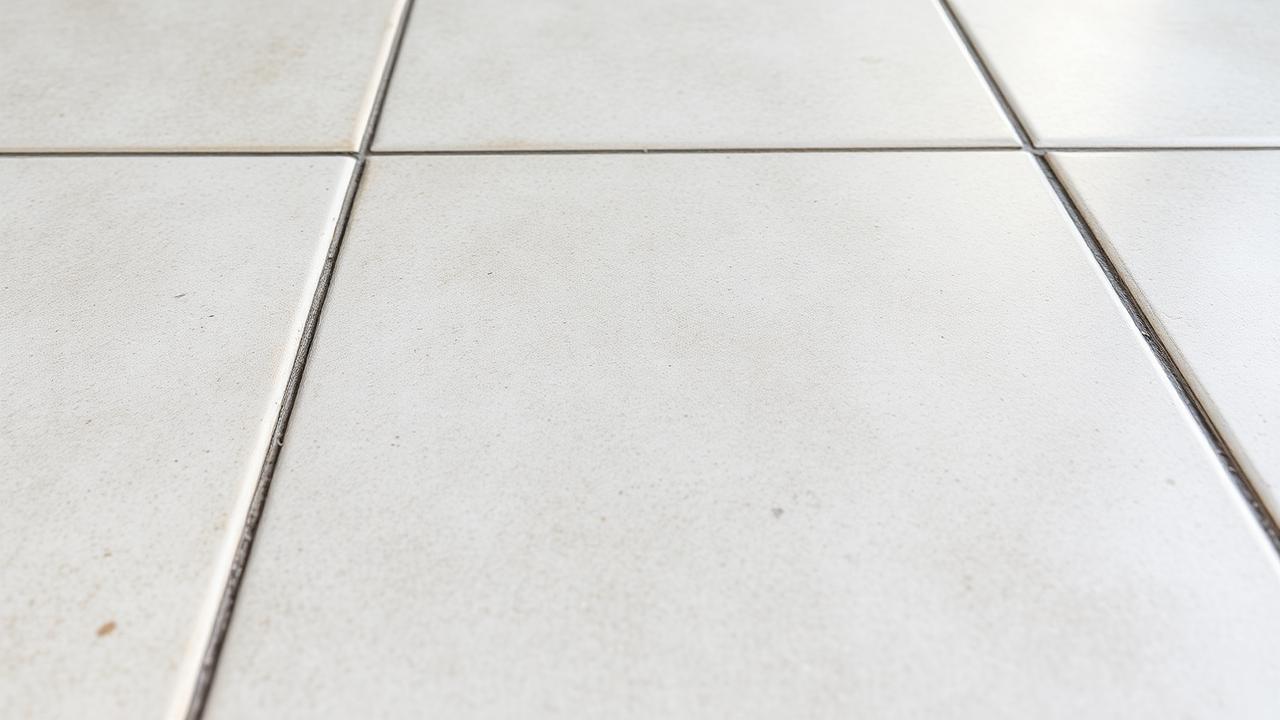
What Grout Haze Actually Is
Grout haze is the thin layer of cementitious or polymer residue that gets dragged across the face of the tile during the grouting process. When grout cures, that residue hardens into a microscopic film bonded to the tile surface. It is not dirt. It is not soap scum. It is hardened portland cement, latex polymers, and pigment that has chemically bonded to the tile face. That is why mopping does nothing, and that is why a homeowner remedy designed for soft household soil cannot break it.
Why Vinegar (and Every Acidic Home Cleaner) Fails
Installers default to vinegar because it is cheap, it is in every kitchen, and on the way out the door it sounds like a real answer. Vinegar is a mild acid. Cured grout haze is a cement-based film with polymer reinforcement, often combined with epoxy or urethane additives in modern grouts. Vinegar is not strong enough to dissolve a polymer-modified haze, but it is more than strong enough to start dissolving the cementitious grout in the joint next to it.
- Vinegar etches and softens the surface of cementitious grout, leaving it porous and chalky
- It cannot break the polymer or epoxy bond in modern modified grouts, so the haze stays
- Repeated acidic scrubbing opens pinholes in the grout that trap dirt forever
- On natural stone tile (travertine, marble, limestone) vinegar permanently etches the stone face
- On polished porcelain it can dull the glaze and create cloudy patches that look worse than the haze did
If an installer tells you to use vinegar, a citrus cleaner, CLR, Lime-A-Way, or any sulfamic acid product on a new floor, stop. Those products are formulated to dissolve cement. Used wrong, they dissolve the grout you just paid for.
Why Letting Acidic Removers Dwell Destroys Grout
Even the right haze removers (sulfamic, phosphoric, or specialty buffered acids used by professionals) become destructive the moment they are left to sit. The chemistry that breaks the haze film also attacks the cement matrix of the grout joint. The longer the product dwells, the deeper it penetrates and the more cement it removes. The result is a grout joint that looks low, sandy, pitted, and uneven, with surface pinholes that act like tiny dirt traps for the rest of the floor's life.
- Dwell time over 60 to 90 seconds on cementitious grout starts visible erosion
- Eroded grout sits below the tile face, creating shadow lines and uneven texture
- Pinholes become permanent stain reservoirs that no mopping can reach
- Once the cement matrix is opened, the grout absorbs water, oils, mop water, and pet accidents instantly
- Erosion cannot be cleaned out. It can only be repaired by regrouting or color sealing
The Real Grout Haze Removal Process
A correct grout haze removal is a controlled chemical and mechanical process, not a wipe-down. We identify the grout chemistry (standard cementitious, polymer-modified, epoxy, or urethane), match the remover to that chemistry, apply it at the correct dilution, agitate at the correct dwell, and neutralize and rinse before any erosion can begin. The whole point is to lift the film off the face of the tile while leaving the grout in the joint completely intact.
- Test patch to confirm haze type and grout chemistry
- Pre-wet the grout joints so the remover cannot penetrate the cement matrix
- Apply a buffered, professional-grade haze remover at controlled dilution
- Mechanical agitation with the correct brush, never an abrasive pad on polished surfaces
- Short, monitored dwell time with continuous visual checks
- Neutralizing rinse to stop the acid reaction completely
- Clean water extraction so no residue is left to keep working under the surface
Why New Grout Must Be Sealed
Cementitious grout is porous by design. Out of the bag, it absorbs water, oils, dyes, mop water, pet accidents, coffee, wine, and the iron and calcium in Arizona hard water. Sealing fills those pores with a penetrating impregnator that lets moisture vapor out but blocks contaminants from going in. An unsealed grout joint in a Chandler, Mesa, or Gilbert home will start looking dirty within weeks, and the staining is not on the surface, it is inside the joint where no mop will ever reach.
- Prevents hard water minerals from depositing inside the joint
- Blocks oils, food, pet accidents, and dye-based stains from absorbing
- Stops pinhole formation by reinforcing the cement matrix at the surface
- Keeps grout color uniform across the entire installation
- Makes routine cleaning faster and gentler, with no scrubbing required
- Extends the life of the grout so you are not regrouting in five years
Grout sealer is not optional in Arizona. Our hard water plus dry air pulls minerals to the surface of every porous joint in the home. A proper penetrating seal applied after haze removal is the single biggest factor in how the floor looks five years from now.
How Lazona Removes Haze and Seals New Tile
Our process is built around one rule: clean the tile, protect the grout. We use neutral pH professional cleaners during the bulk of the work, apply only buffered haze removers when chemistry requires it, and we never let an acidic product dwell long enough to erode the joint. Every haze removal we do finishes with a thorough neutralizing rinse, a complete dry, and a penetrating impregnating sealer applied to every linear inch of grout. The tile leaves clear, the grout leaves uniform, and the whole installation is protected so it stays easy to clean for years.
- Neutral pH cleaners as the default so cementitious grout is never under chemical attack
- Buffered, professional haze removers only when the haze chemistry actually requires them
- Controlled dwell, agitation, and neutralization so no joint erosion occurs
- Full hot water extraction so no remover residue is left behind
- Penetrating impregnating sealer on every grout joint, applied at the correct coverage rate
- Written aftercare so you know exactly what to clean with (and what to never touch the floor with again)
"If a tile job is worth installing, it is worth sealing. The haze removal and the seal are what separate a floor that looks new in five years from a floor that looks tired in one."
Backed by Our 15-Year Warranty
Every grout haze removal and sealing service we perform is backed by our 15-Year Warranty. That means the work is done once, done correctly, and protected for the long haul. If you just had tile installed anywhere in Chandler, Mesa, Gilbert, Ahwatukee, or Paradise Valley, this is the right moment to have it done. Haze is easier to remove before months of mop water and household cleaners drive it deeper, and grout takes a seal best when it is new and clean.