Paradise Valley is a residential town of roughly 13,000 people wrapped around Camelback Mountain and Mummy Mountain, with almost no commercial retail and one of the highest concentrations of custom-built estates in Arizona. The town itself does not operate a municipal water utility. Instead, PV homes are served by a patchwork of providers - the City of Phoenix (majority of the town), EPCOR Water, the Berneil Water Company, a small eastern edge served by the City of Scottsdale, and a handful of private wells. Published reports across these providers show hardness in the PV service area typically running 12 to 16 grains per gallon, which is squarely in the "hard" to "very hard" band.
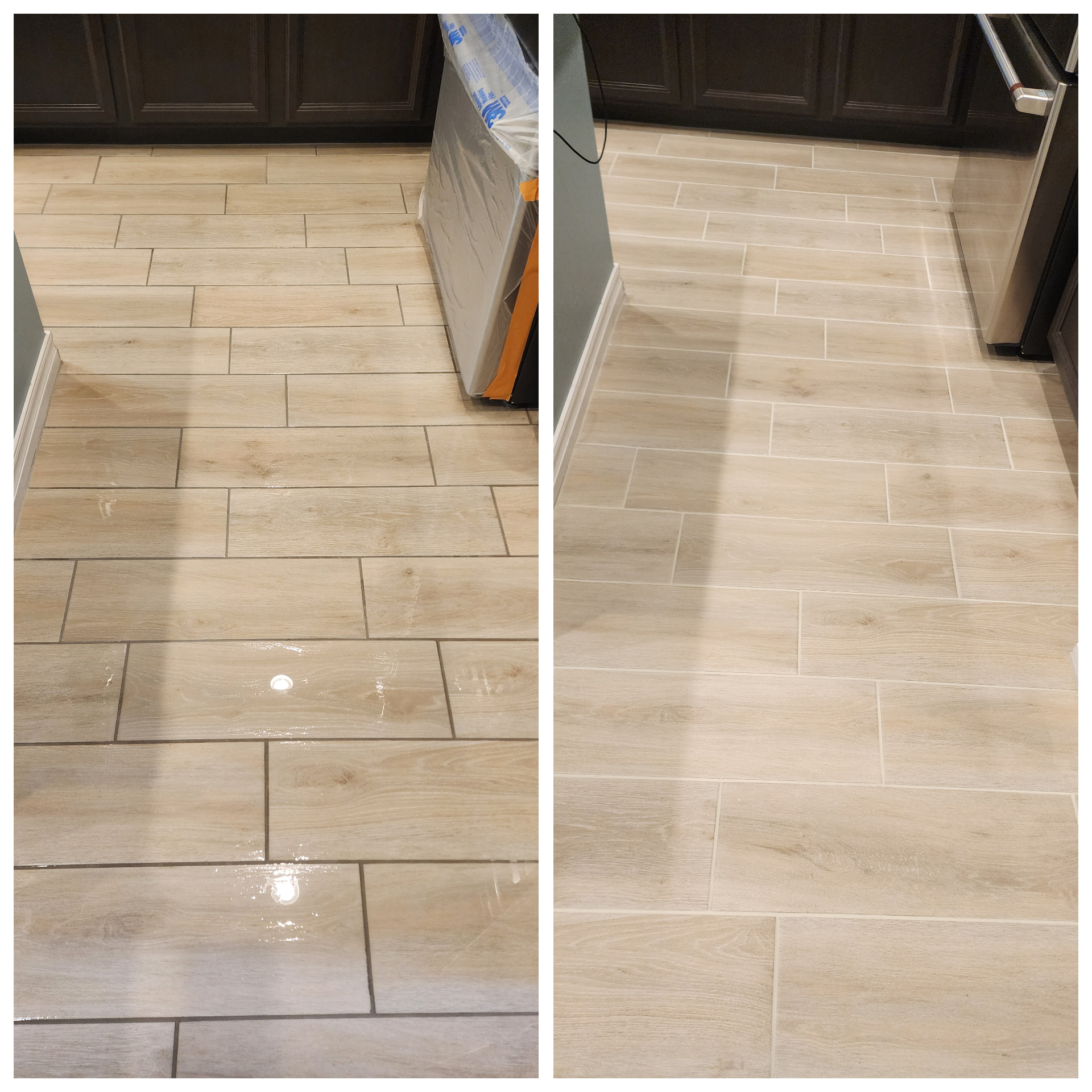
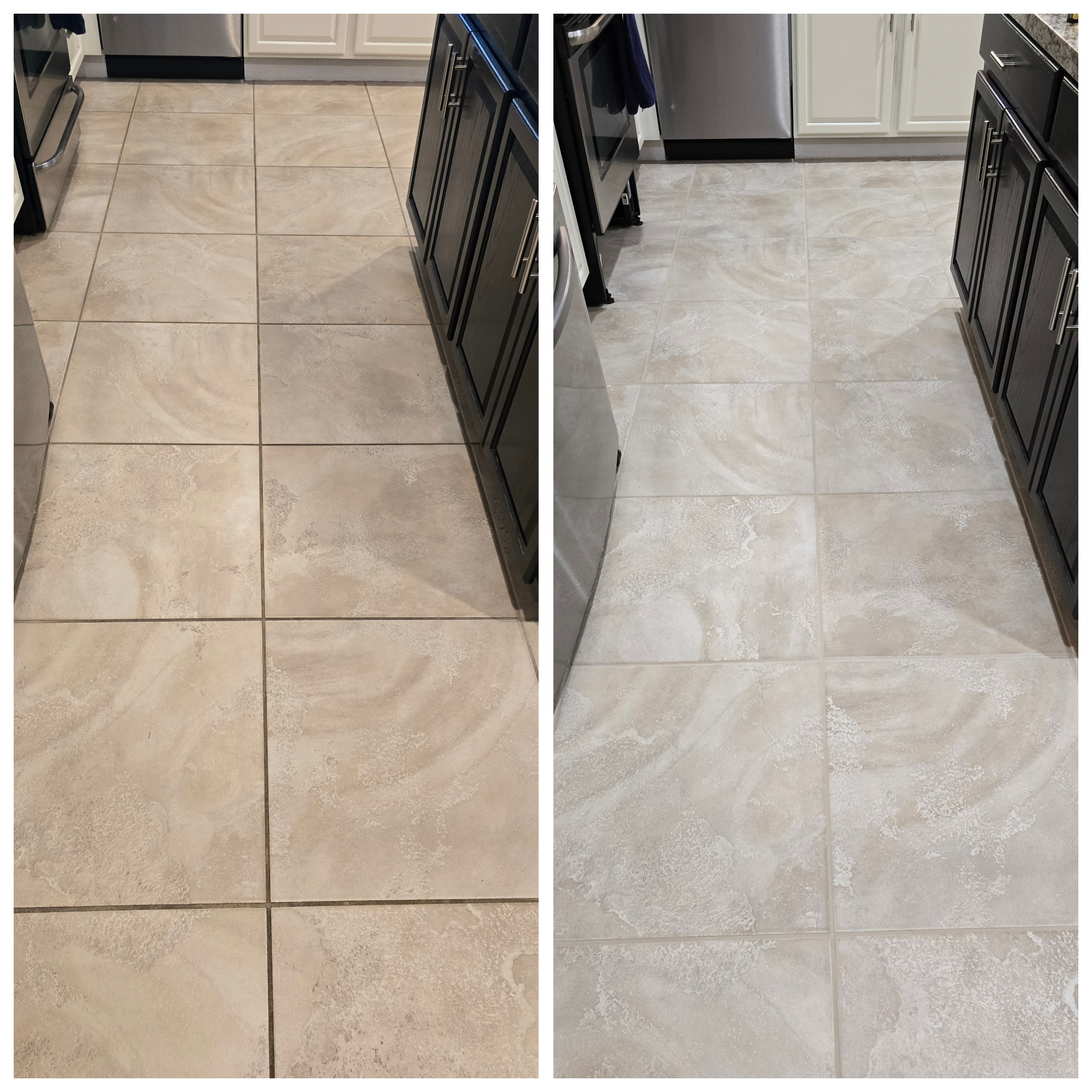
Because so much of PV's housing stock is natural stone - travertine, limestone, tumbled marble, Saltillo, and imported flagstone - every mop with untreated tap water deposits calcium and magnesium directly into unsealed sanded grout joints. Over ten or twenty years, that scale locks in every subsequent stain: coffee, wine, cooking oil, pet accidents, monsoon dust, and pool-chemistry drift from indoor-outdoor tile runs. By the time an owner notices the joints look two or three shades darker than the stone, the damage cannot be reversed by mopping harder.
The other complication in PV is chemistry risk. A large share of the general "tile cleaning" companies working the Phoenix metro area default to an acidic pre-treatment. Acid on travertine, limestone, tumbled marble, or Saltillo will permanently etch and dull the stone. On a 25-year-old imported Italian travertine floor in a Camelback foothill home, that etching cannot be mopped away - it has to be diamond-honed and re-polished, which is a five-figure repair on many PV homes. Stone-safe chemistry is not a nice-to-have here; it is the whole job.
For a deeper technical read, see our guide on why grout stays stained no matter how much you mop and our vinegar & DIY tile cleaner damage report.