Mesa is a blended-water city on a large geographic footprint. The utility mixes Salt River Project surface water with Central Arizona Project water and local groundwater, and hardness varies noticeably by ZIP - west Mesa near the Salt River corridor runs closer to 12 grains per gallon, while the far east side (85207, 85208, 85212, 85215) can push 15 to 17 grains as the groundwater blend increases. Homes without a softener deposit mineral scale into every unsealed grout joint every single time the floor is mopped, and sanded grout locks that scale in permanently.
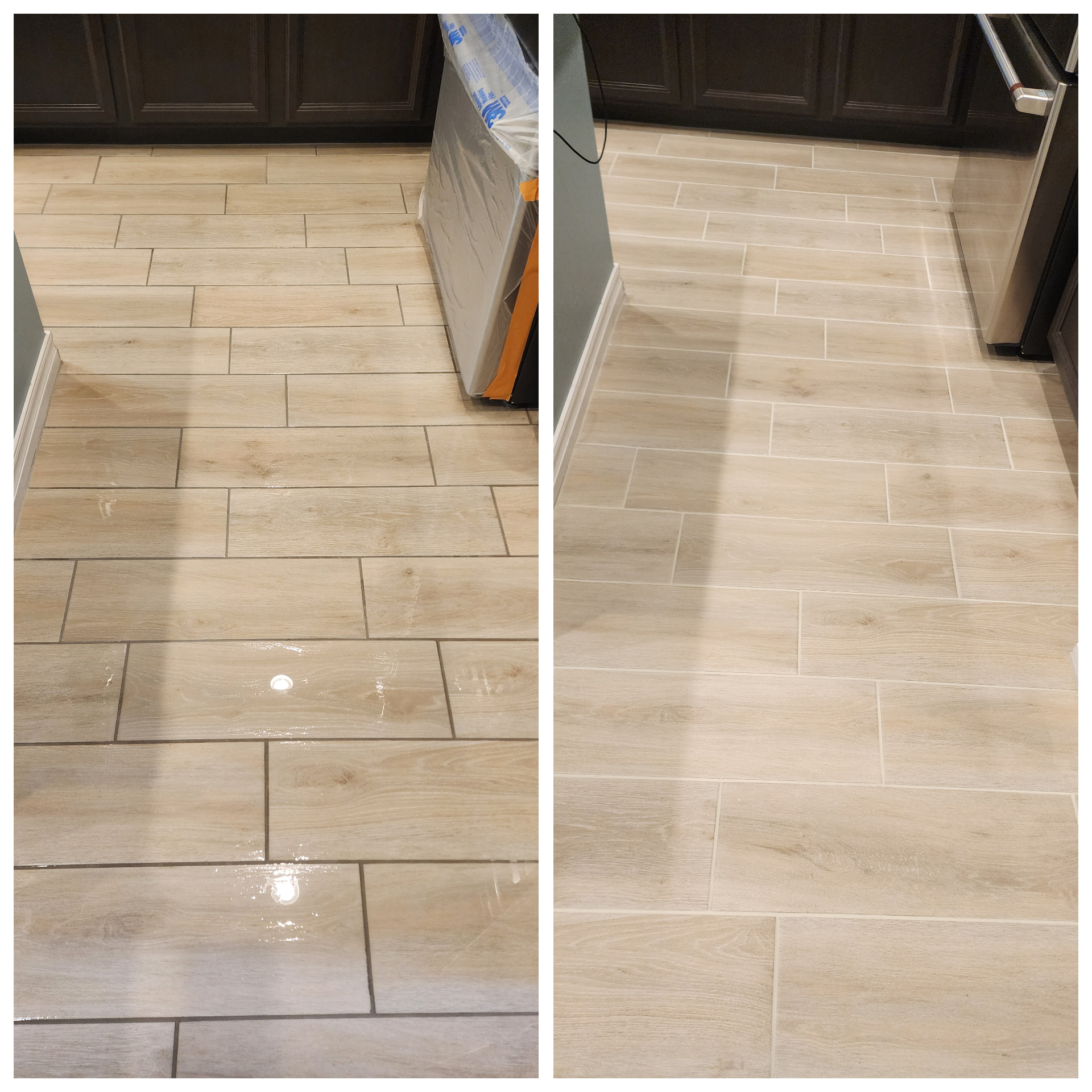
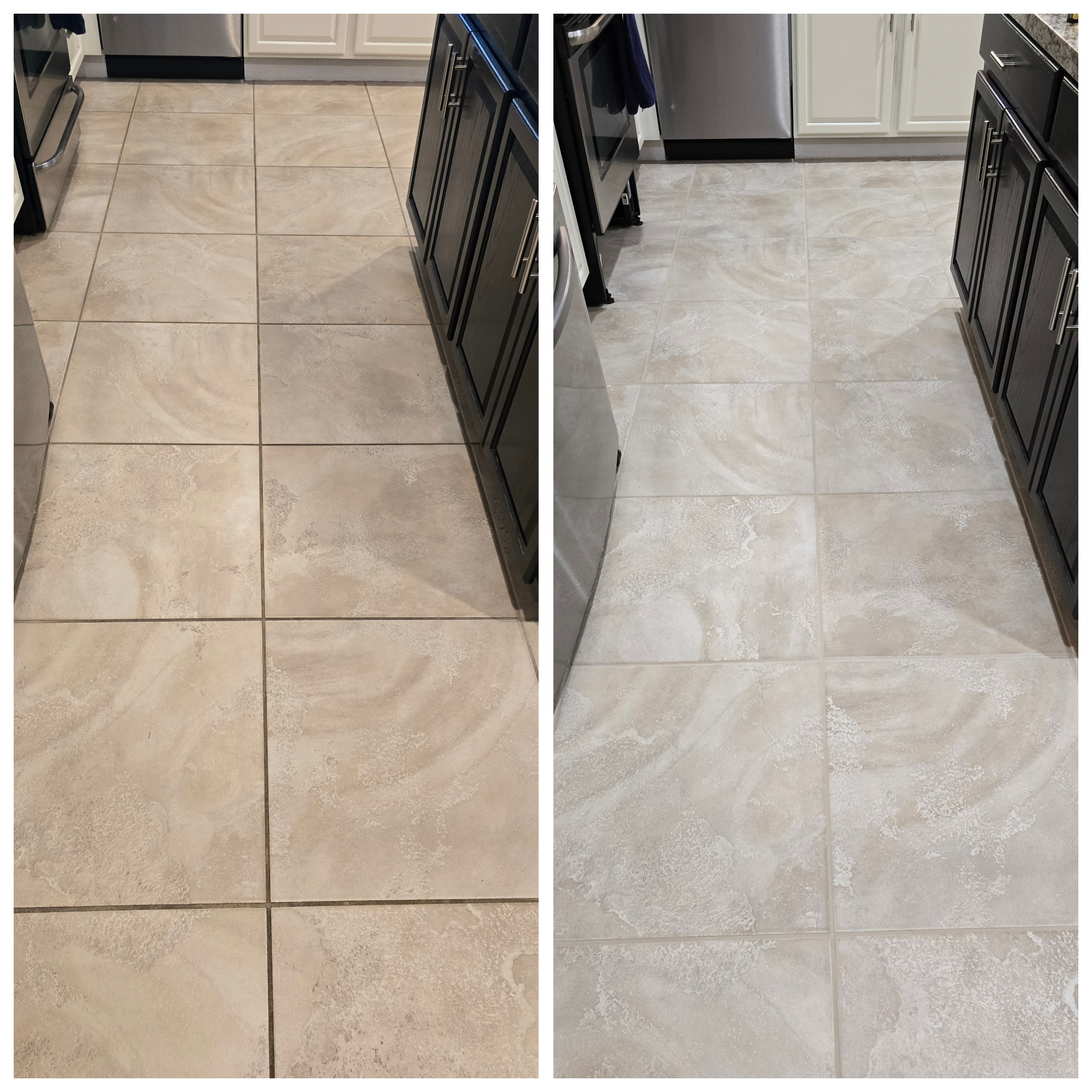
Mesa's housing stock is unusually diverse. West Mesa (85201, 85202, 85203, 85210) is dominated by 1970s–1990s construction with wide-joint travertine, Saltillo, and tumbled marble. Central and northeast Mesa (85205, 85213, 85207) is mostly 1990s–2010s ceramic and porcelain with sanded grout. The far southeast (85212 Eastmark, Cadence) is almost entirely 2013-and-newer wood-look plank porcelain. Each generation traps soil in a different way, and each needs a different tool head and chemistry to clean correctly.
Layer on 300+ sunny days per year and a monsoon season from July through September that drives fine desert dust into every joint, and by year three most Mesa homes have grout that looks two full shades darker than the day it was laid. Truck-mounted extraction with a high-heat rotary tool is the only reliable way to pull that soil back out - a mop and a bucket cannot.
For a deeper technical read, see our guide on why grout stays stained no matter how much you mop and our vinegar & DIY tile cleaner damage report.