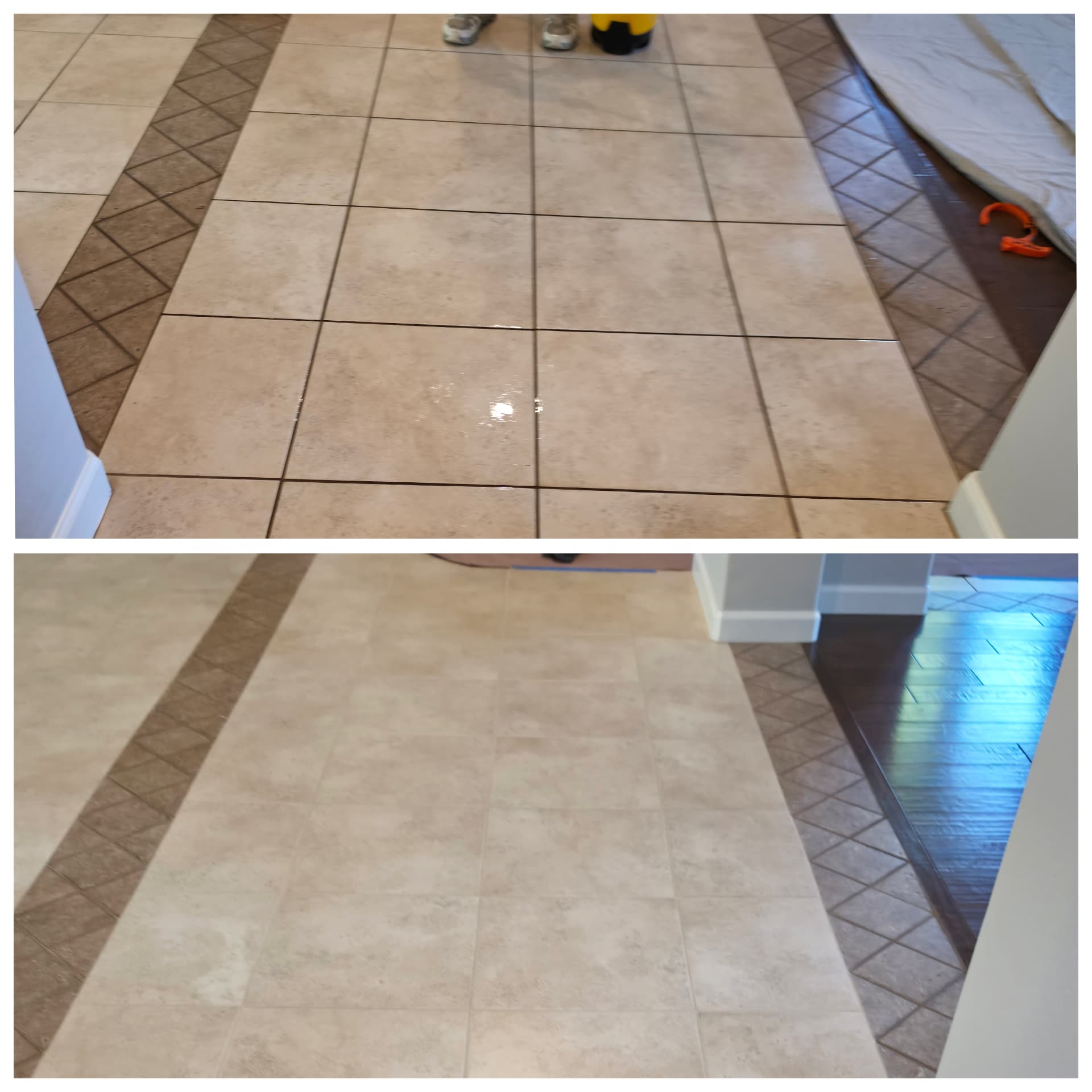
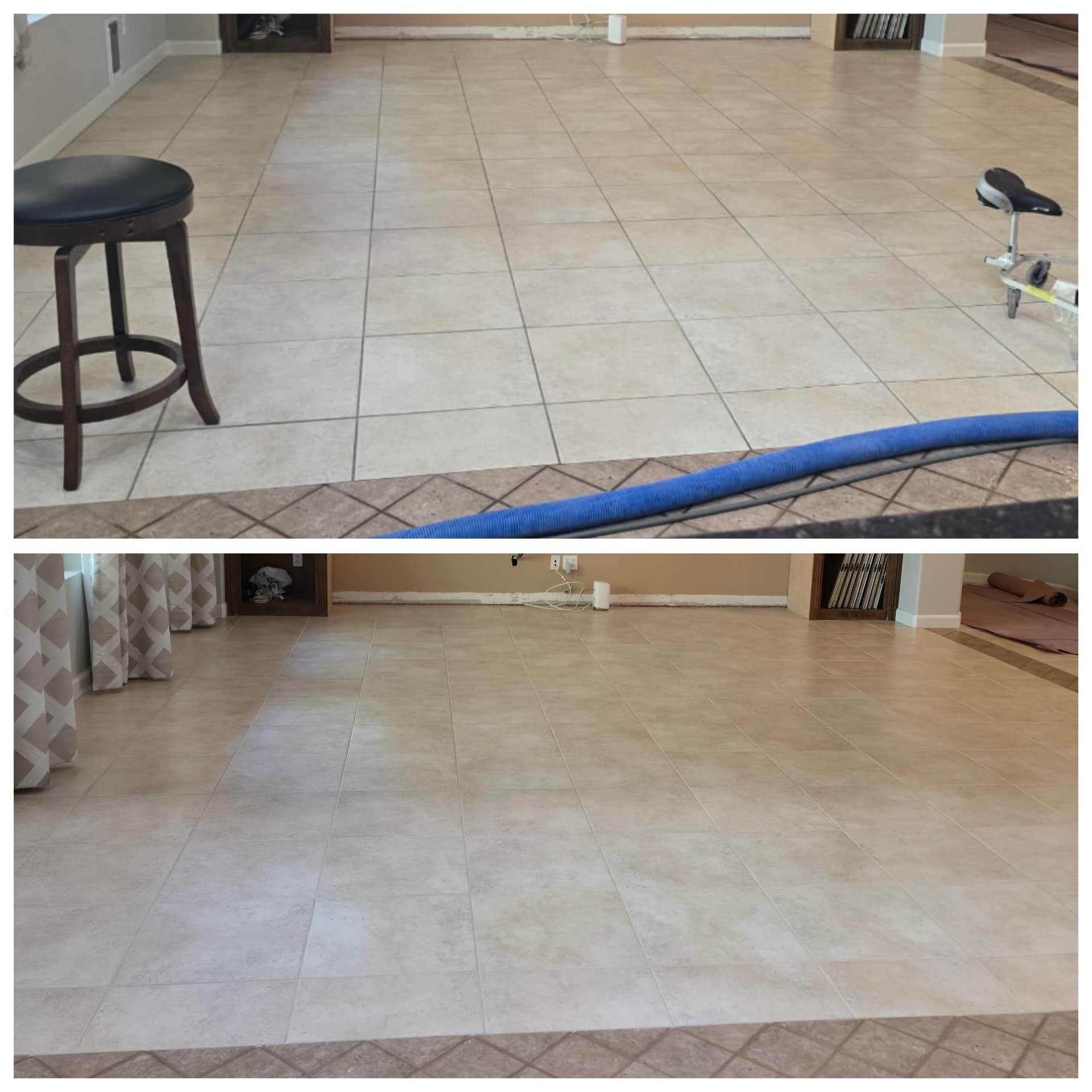
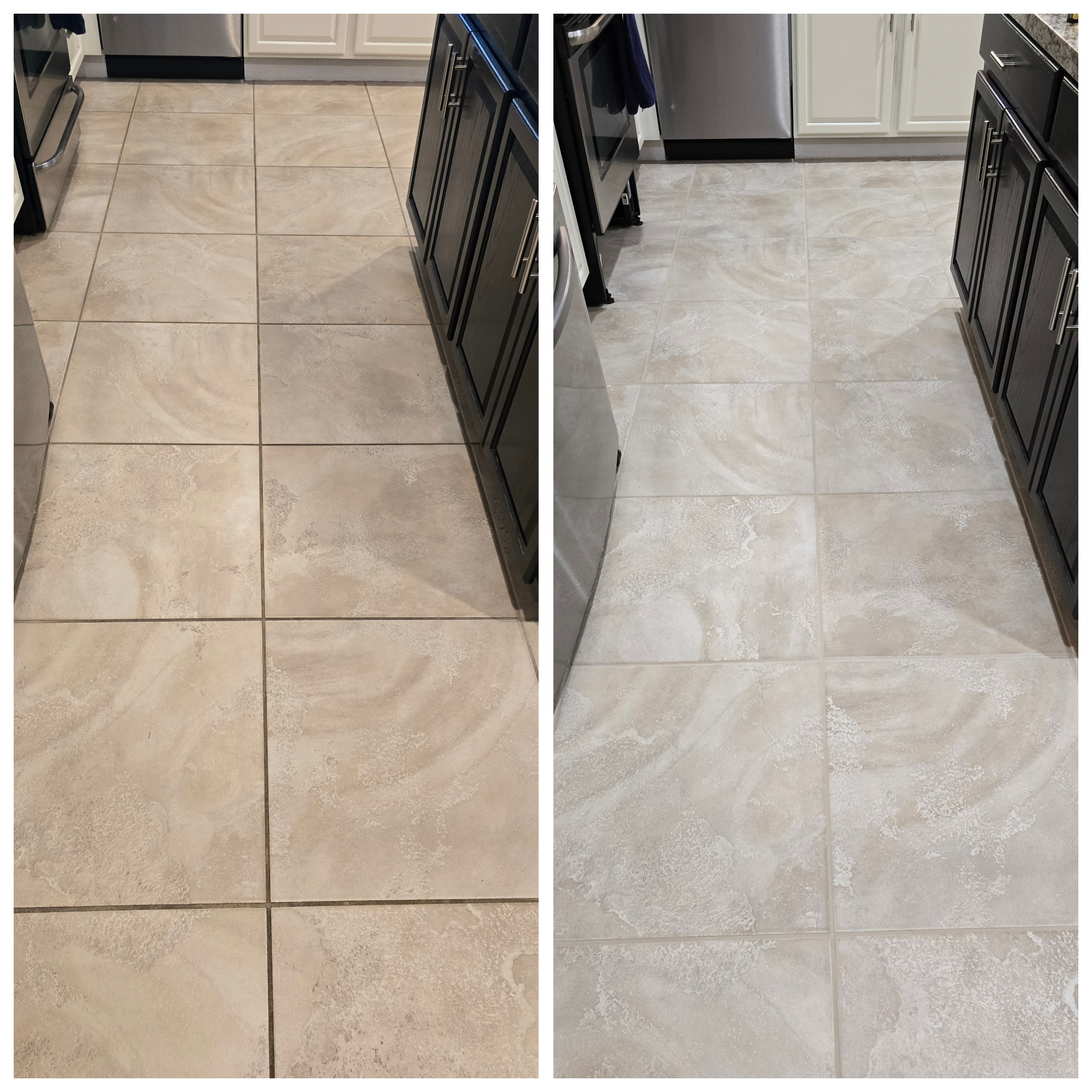
Chandler tap water runs roughly 12 to 18 grains per gallon depending on which side of town you live on, and the Ocotillo and Fulton Ranch corridors sit at the harder end of that range. Every mop bucket deposits calcium and magnesium into the porous sanded grout that Chandler builders installed through the 2000s and 2010s. Within two or three years the joint has absorbed enough mineral scale to lock in every stain that follows: coffee, olive oil, red wine, dog paws, and the fine caliche dust that blows in from the Gila River corridor.
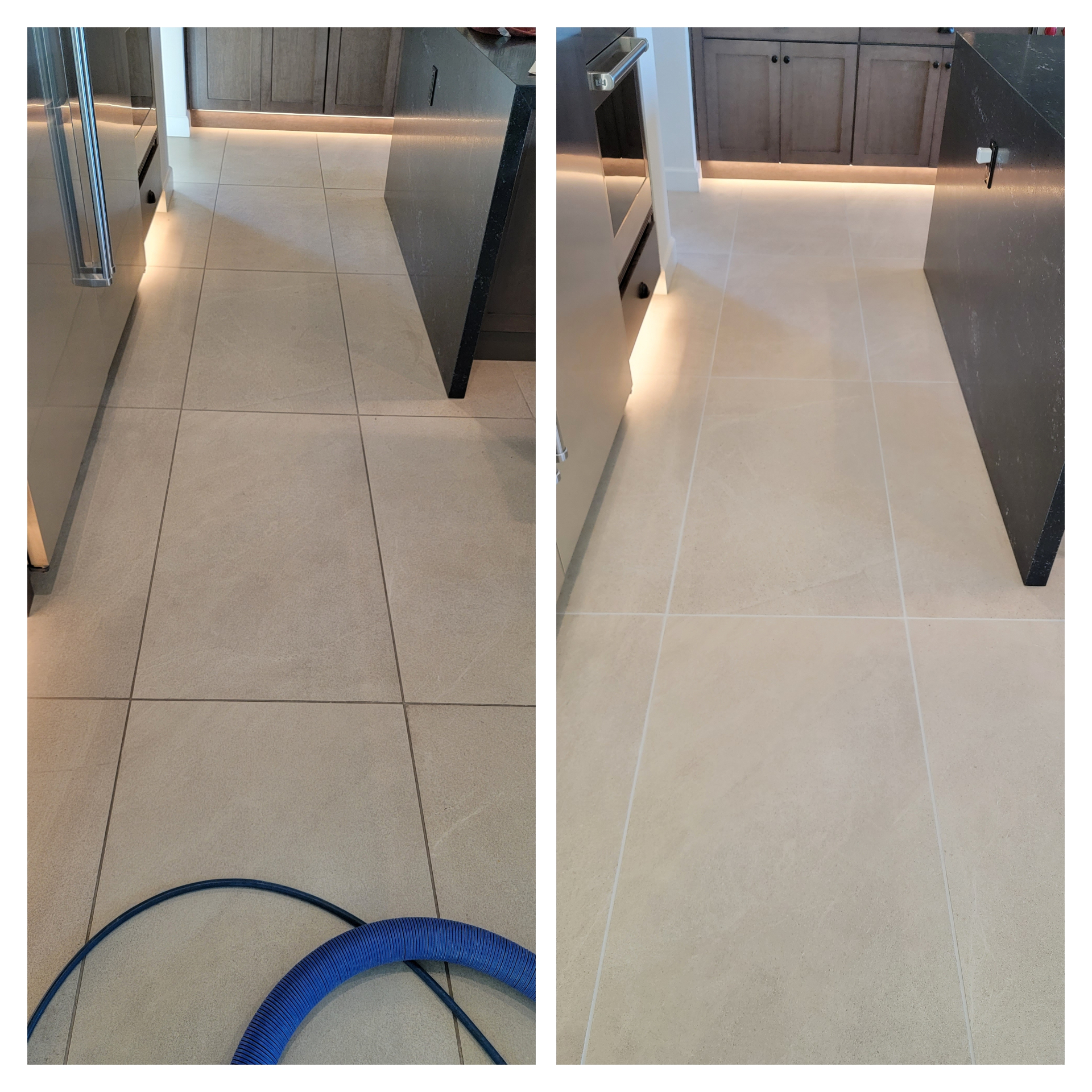
Chandler also has an unusual concentration of large-format porcelain and wood-plank tile, much of it installed with narrow 1/8 inch joints in Ocotillo, Fulton Ranch, and the newer Riggs Road builds. Narrow joints look elegant and they are brutal to keep clean, because there is no way to get mechanical agitation deep enough into the pore structure. Homeowners scrub for hours, get a marginal improvement, and conclude their floor is simply ruined. It is not ruined. It is stained, and stained grout is a color problem, not a cleaning problem.
The pattern we see across Chandler is almost always the same sequence: a big-box spray sealer, then a grocery-store colorant that peels, then a national cleaning chain that leaves the floor beautiful for two weeks. Each step costs money and none of them address porosity. A permanent pigmented color seal fills and caps the joint so the hardness, dust, and spills have nowhere to go, and we stand behind it for 15 years.
One more Chandler-specific issue: this city has a lot of Intel-corridor rentals and resale turnover, and grout condition is one of the first things a buyer's eye lands on during a walkthrough. Color sealing a Chandler floor before listing is one of the cheapest cosmetic upgrades available per dollar of perceived value, and the warranty transfers to the buyer.
For the underlying chemistry, read our guide to why DIY and clear sealers fail in Arizona and our restoration versus retiling cost comparison.