
You notice a dull ring where a glass of orange juice sat on your marble countertop. Or maybe your marble floor has lost its shine in the entryway. These are etch marks, and they are the most common marble problem we see in Arizona homes. Understanding what causes them is the first step to protecting your investment.
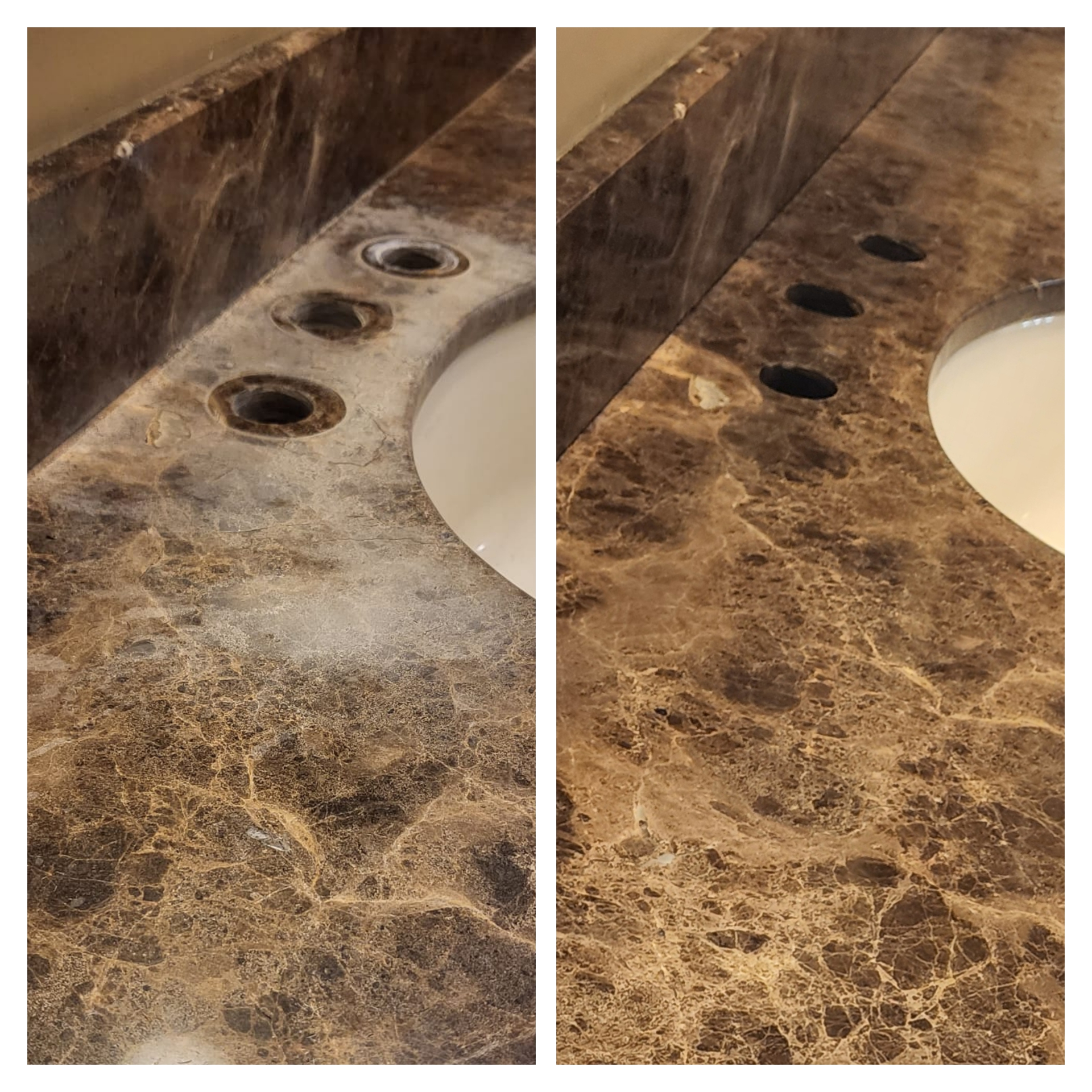
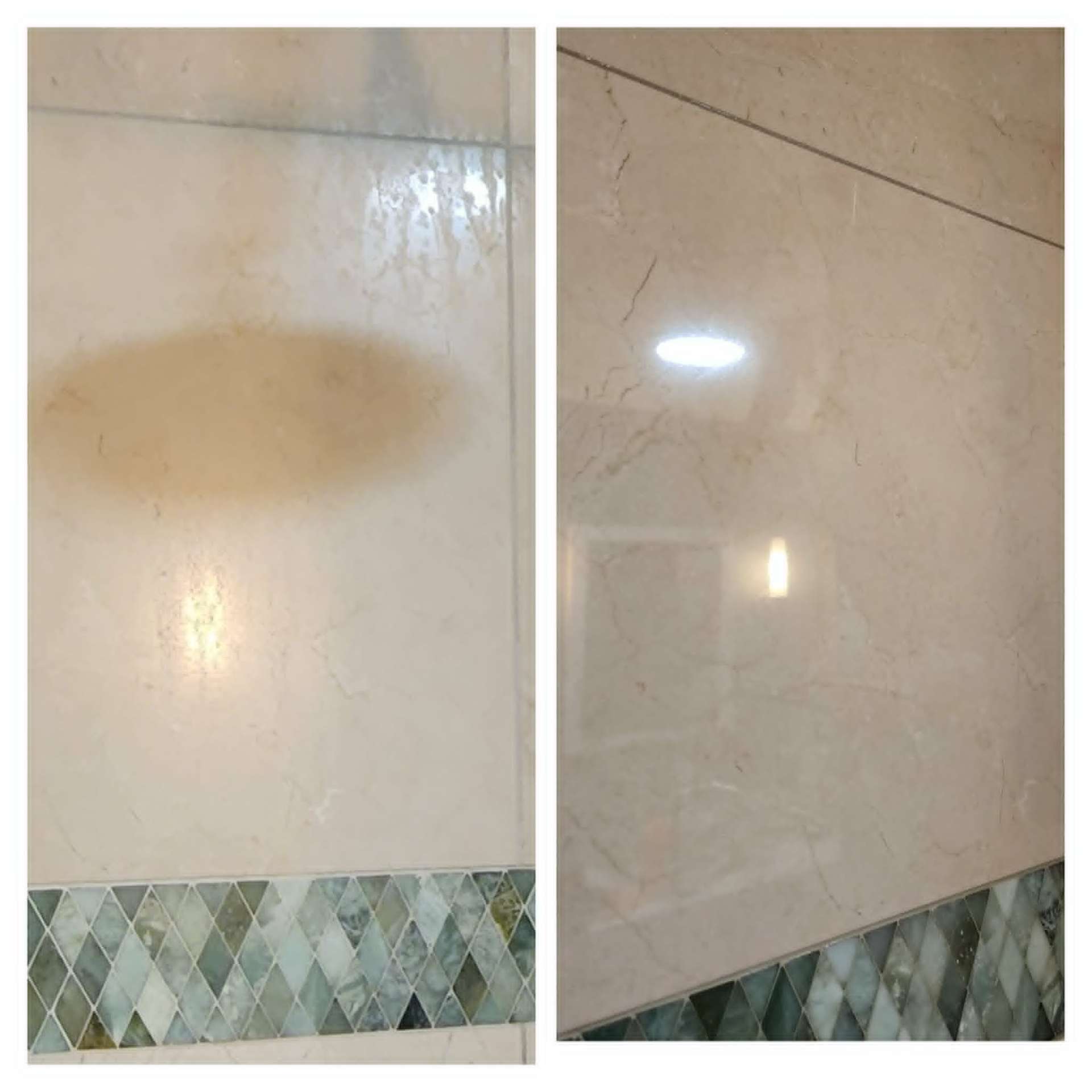
Etching vs. Staining: The Critical Difference
Most homeowners think their marble is stained when it is actually etched. Stains darken the stone by absorbing colored liquids. Etch marks lighten or dull the surface by chemically dissolving the marble. They require completely different treatments.
What Causes Marble Etching in Arizona Homes
- Citrus fruits, juice, wine, and tomato sauce (acidic foods)
- Vinegar-based cleaners (extremely damaging to marble)
- Arizona hard water mineral buildup that gets treated with acidic descalers
- Bathroom products containing alpha hydroxy acids or salicylic acid
- Carbonated beverages left on marble surfaces
- Standard bathroom and kitchen cleaners not rated for natural stone
The most common cause of marble etching in Arizona homes is using vinegar or acidic cleaners to remove hard water deposits from marble showers and countertops. The hard water stains come off, but the marble surface is permanently dulled.
Can You Fix Marble Etching Yourself?
Minor etch marks on polished marble can sometimes be improved with marble polishing powder and a lot of elbow grease. However, deep etching, large areas, and honed finishes require professional diamond polishing. DIY attempts on large areas often create uneven surfaces that look worse than the original etching.
Professional Marble Etch Repair Process
Professional marble restoration uses a series of diamond abrasive pads, progressing from coarse to fine grits, to remove the damaged surface layer and restore the original polish. For countertops, this is typically a 3-4 step process. For floors, it may involve 5-7 steps depending on the level of damage.
Preventing Marble Etching in Arizona
- Use only pH-neutral cleaners specifically labeled for marble
- Seal marble surfaces every 6-12 months (sealing does not prevent etching but reduces staining)
- Use coasters, trivets, and cutting boards religiously
- Wipe spills immediately, especially anything acidic
- Install a water softener to reduce hard water mineral buildup
- Never use vinegar, lemon, or bleach on marble surfaces
Important: sealing marble does NOT prevent etching. Sealers protect against stains (colored liquid absorption) but not against acid damage. The only prevention for etching is avoiding contact with acidic substances.