
You notice it every time you walk barefoot: tile edges that catch your toe, uneven surfaces that collect dirt in tiny ledges, and a floor that just does not look flat. This is tile lippage, and it is one of the most common tile complaints in Arizona homes. Here is what you need to know.
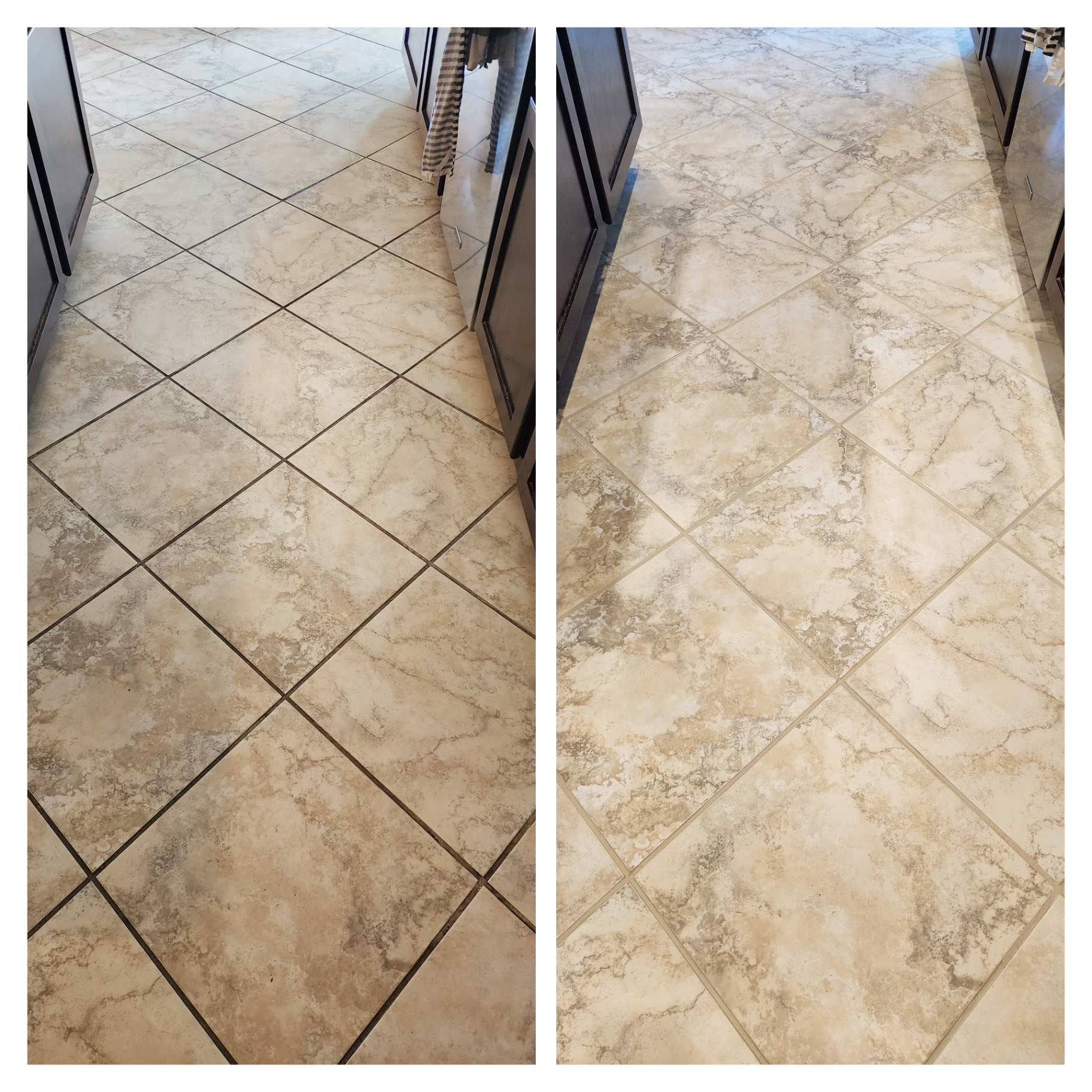
What Is Tile Lippage?
Lippage is when adjacent tiles are not perfectly level with each other, creating a raised edge or step between tiles. Industry standards allow up to 1/32 inch of lippage for tiles under 15 inches and 1/16 inch for larger format tiles. Anything beyond that is considered excessive.
Why Arizona Homes Have More Lippage Problems
- Large format tiles (12x24, 24x24) are extremely popular but harder to install flat
- Arizona slab foundations can have minor unevenness from soil settling
- Extreme temperature swings cause slab movement that shifts tiles
- Rapid construction timelines may lead to rushed tile installation
- Thinset mortar can cure unevenly in Arizona's low humidity
Can Lippage Be Fixed Without Replacing Tile?
Yes, in many cases. Professional lippage removal uses diamond grinding equipment to shave down the raised edges and create a uniform, flat surface. This works best on natural stone tiles (travertine, marble, limestone) and porcelain tiles with consistent color throughout the body.
Lippage grinding only works on tiles with consistent color through the body. Glazed ceramic tiles with a thin color layer on top cannot be ground without exposing the clay underneath. Check your tile type before committing to grinding.
The Lippage Removal Process
- Survey and mark all lippage points across the floor
- Diamond grinding with progressively finer grits to level edges
- Honing to create uniform surface texture across ground and unground areas
- Polishing to desired finish level (honed matte or high polish)
- Sealing the freshly exposed stone surface for protection
When to Choose Replacement Over Grinding
If lippage exceeds 1/8 inch, if tiles are glazed ceramic, if the subfloor has structural issues causing the unevenness, or if tiles are hollow (debonded from the substrate), grinding is not the answer. These situations require tile removal and reinstallation with proper substrate preparation.