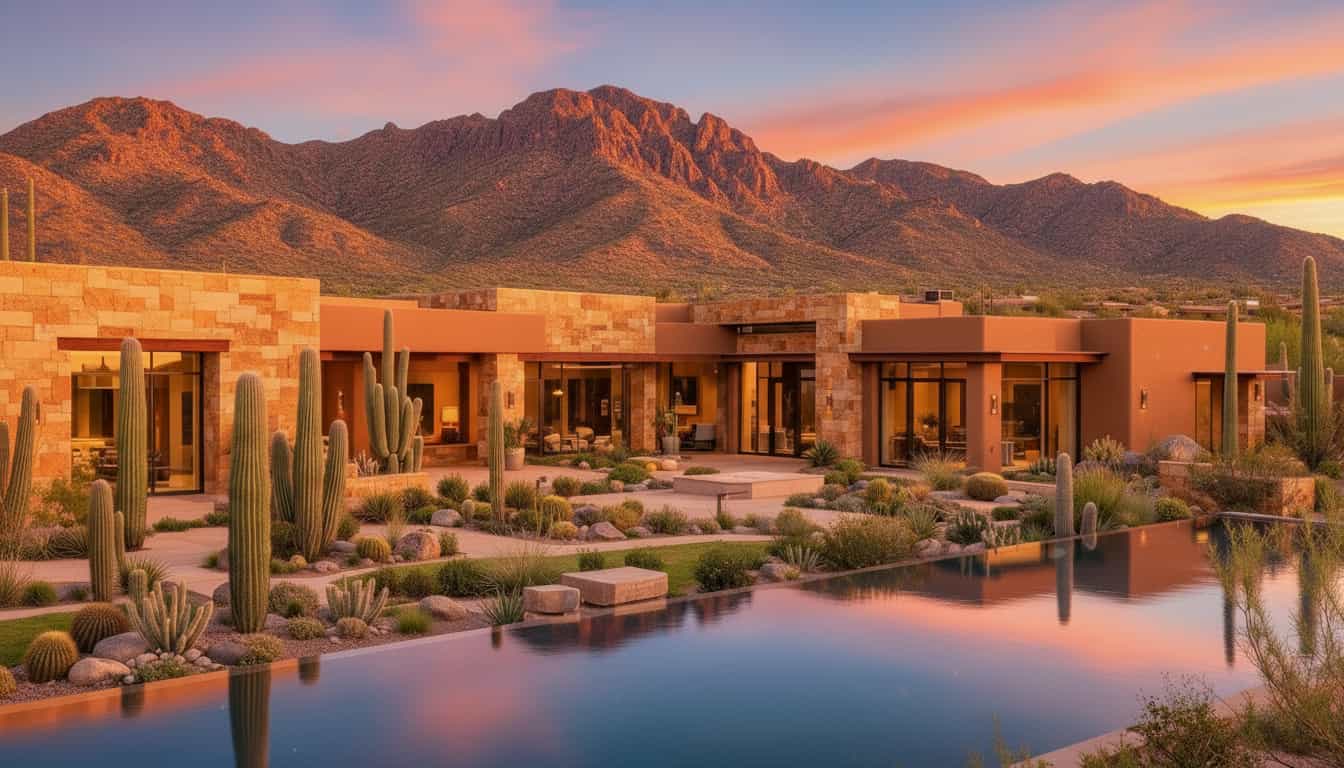
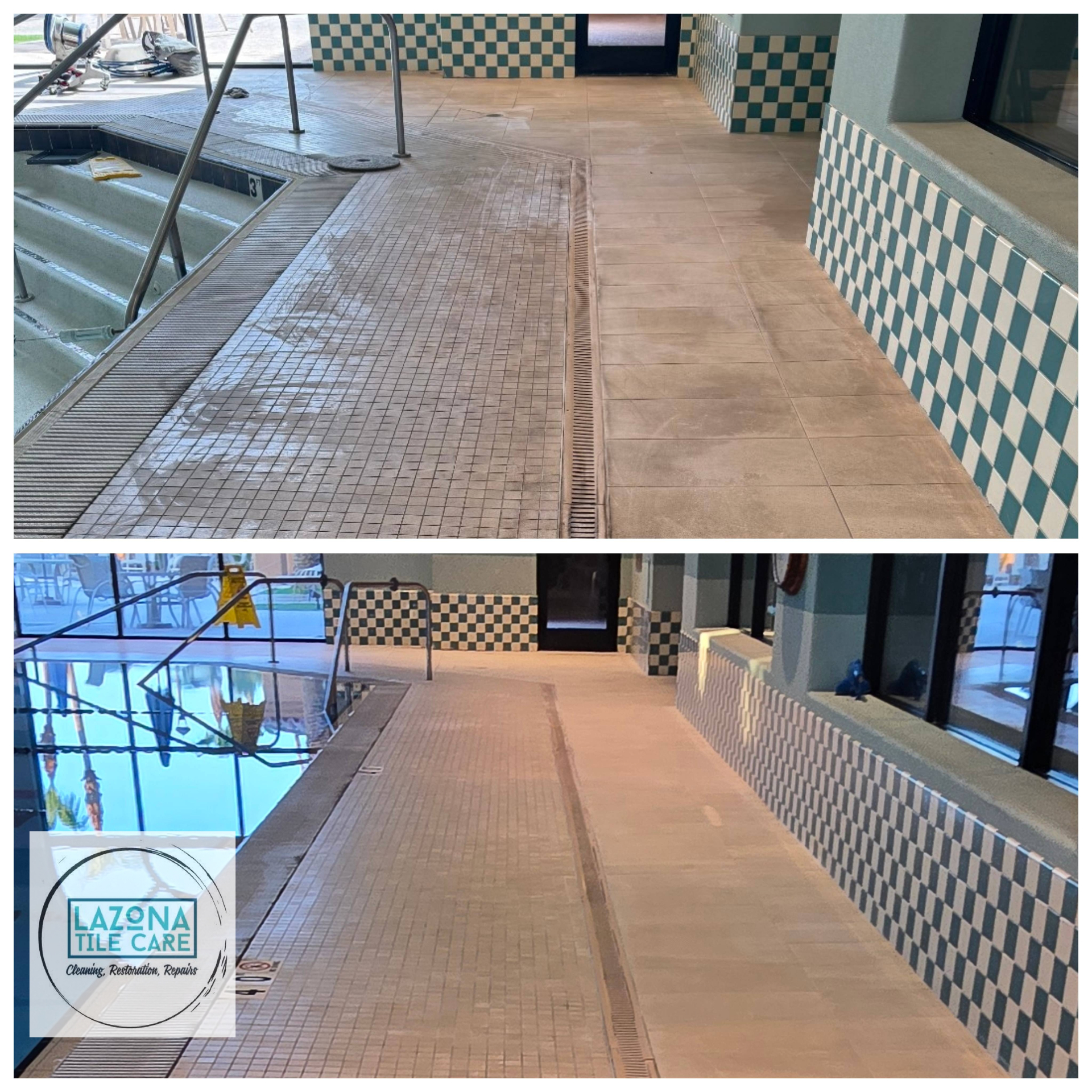
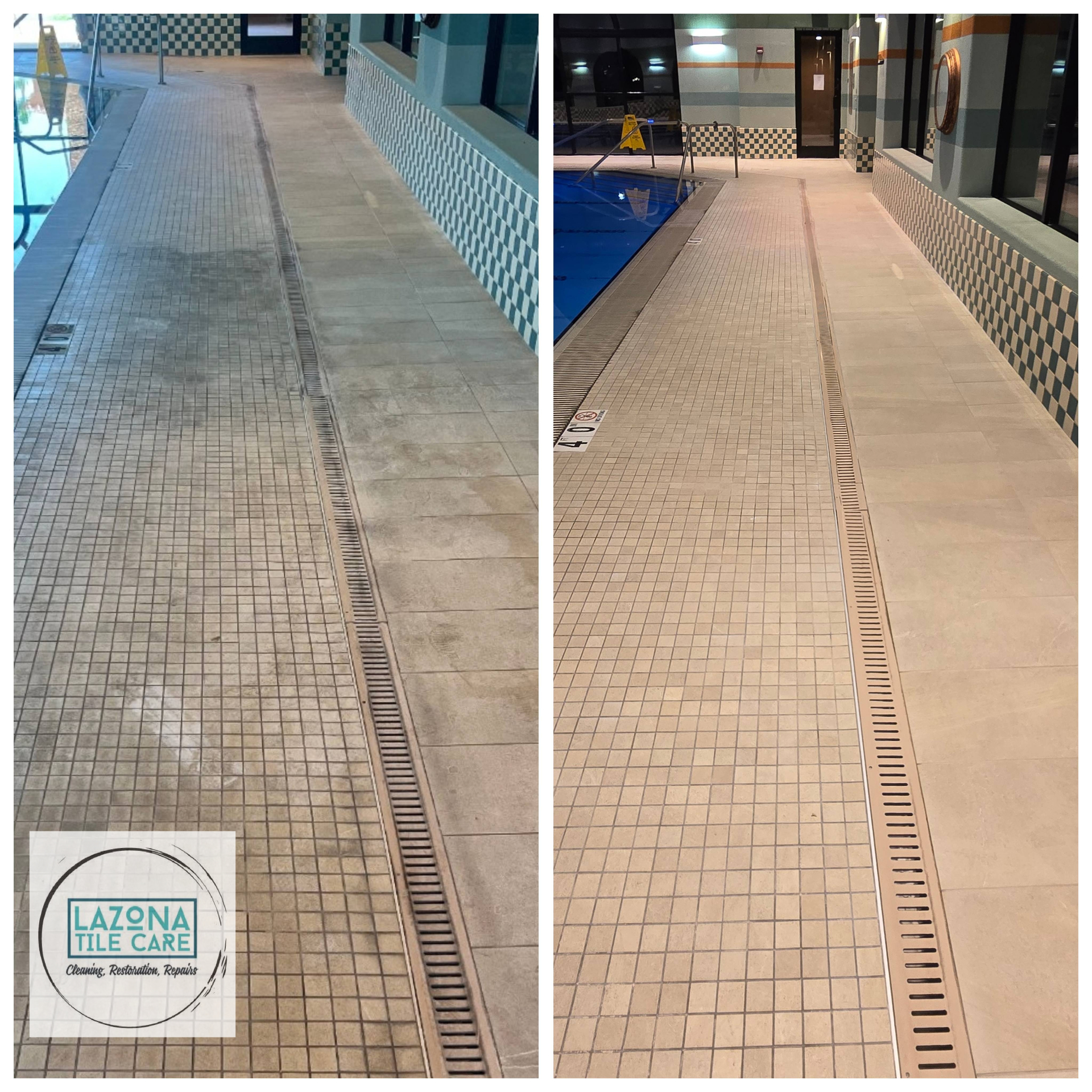
Your pool deck looks nothing like it did when you moved in. Those once-pristine pavers are now covered in white haze. That beautiful porcelain tile has developed a chalky film that won't scrub off. And the travertine coping? It's pitting, flaking, and turning an ugly gray-green. Welcome to Arizona pool ownership, where the sun and water wage a relentless war against every outdoor surface you own.
The Perfect Storm: Why Arizona Destroys Pool Decks Faster Than Anywhere Else
Arizona homeowners face a unique double threat that accelerates pool deck deterioration far beyond what homeowners in other states experience. Understanding these forces is the first step to protecting your investment.
Arizona's UV Radiation: More Intense Than You Realize
Phoenix receives over 299 days of sunshine annually, but it's not just the quantity of sun that matters, it's the intensity. At our elevation and latitude, UV radiation is 30-40% stronger than coastal cities. This intense UV exposure doesn't just fade colors; it fundamentally degrades the molecular structure of sealers, grout, and even the tile itself.
- UV breaks down polymer chains in sealers, causing them to fail 2-3x faster than manufacturer estimates
- Intense solar heating creates thermal cycling that cracks grout and loosens tile adhesive
- Daily temperature swings of 40°F+ cause expansion and contraction stress fractures
- Reflected UV off pool water intensifies exposure on coping and waterline tile
- Prolonged UV exposure causes porcelain glaze degradation, leading to increased porosity
Most sealer manufacturers base their '5-year protection' claims on testing in moderate climates. In Arizona, expect 18-24 months of effective protection at best. Planning for more frequent resealing is essential for outdoor surfaces.
Arizona's Hard Water: The Invisible Destroyer
Arizona has some of the hardest water in the United States, measuring 15-25 grains per gallon in most Phoenix-area cities (compared to the national average of 3-7 gpg). Every drop of pool splash, irrigation overspray, and rainfall runoff deposits calcium, magnesium, and other minerals onto your surfaces.
This mineral content creates multiple problems that compound over time:
- White calcium scale builds up on tile, stone, and grout creating unsightly haze
- Minerals penetrate porous surfaces, becoming impossible to remove with surface cleaning
- Hard water deposits create rough textures that attract more dirt and algae
- Mineral buildup clogs the pores of sealers, preventing them from working properly
- Evaporation concentrates minerals, making pool-adjacent surfaces the worst affected
What's Really Happening to Your Pool Deck Materials
Different materials react to Arizona's conditions in different ways. Understanding your specific materials helps you protect them properly.
Porcelain Tile: The 'Indestructible' Material That Isn't
Porcelain is marketed as virtually maintenance-free and impervious to damage. In Arizona's outdoor environment, reality tells a different story. While porcelain itself is dense and non-porous, the glaze surface and grout joints are vulnerable.
- UV degradation causes glazed surfaces to become micro-porous over time, allowing stain penetration
- Hard water minerals etch into the glaze, creating permanent cloudy patches
- Thermal stress cracks appear at grout lines where expansion is restricted
- Efflorescence (white mineral migration) emerges from grout and thin-set beneath tiles
- Slip-resistant textures trap mineral deposits that become nearly impossible to remove
That 'chalky' appearance on your outdoor porcelain isn't surface dirt, it's often mineral deposits that have bonded to UV-degraded glaze. Standard pressure washing actually drives these deposits deeper into the compromised surface.
Travertine: Beautiful but High-Maintenance
Travertine is a popular choice for Arizona pool decks because it stays cool underfoot. However, its natural porosity makes it extremely vulnerable to our harsh conditions.
- Natural pits and voids trap pool water, salt, and minerals that cause spalling
- Calcium-based composition reacts with pool chemicals, causing surface erosion
- UV exposure accelerates color fading and surface breakdown
- Hard water deposits settle into textured surfaces, creating permanent staining
- Freeze-thaw cycles (yes, even in Arizona winters) cause subsurface cracking
Pavers and Cool Deck: Common Problems
Concrete pavers and Kool Deck coatings face their own Arizona-specific challenges. Pavers lose their color and develop white haze from efflorescence. Kool Deck coating breaks down under UV, developing cracks that allow water infiltration and accelerate failure.
The Mistakes That Make Everything Worse
In their attempts to maintain pool decks, Arizona homeowners often cause more damage than the elements themselves.
Pressure Washing Without Proper Technique
High-pressure washing seems like the obvious solution for dirty pool decks. But improper technique causes serious damage:
- Excessive pressure erodes grout joints, requiring costly repair or replacement
- Water forced under tiles loosens adhesive bonds, leading to hollow tiles
- High-pressure spray drives minerals deeper into porous materials
- Damaged sealers from pressure washing leave surfaces unprotected
- Aggressive cleaning opens the surface 'pores' of concrete, making it more absorbent
If your pool deck needs pressure washing, use no more than 1,500 PSI with a wide-angle tip held at least 12 inches from the surface. Better yet, use a surface cleaner attachment that maintains consistent pressure and distance.
Acidic Cleaners: The Pool Deck Killer
Muriatic acid, vinegar, and acidic 'pool tile cleaners' are commonly used to remove calcium buildup. While they dissolve the visible deposits, they simultaneously:
- Etch and dull any calcium-based stone (travertine, limestone, marble coping)
- Dissolve cement-based grout, requiring premature regrouting
- Strip sealers, leaving surfaces completely unprotected
- React with pool water chemistry, creating potential hazards
- Create surface damage that accelerates future mineral buildup
Ignoring Sealer Maintenance
Many homeowners seal their pool deck once and assume they're protected for years. In Arizona, sealer failure happens faster than you'd expect, and an unsealed surface accumulates damage exponentially faster than a properly maintained one.
The Professional Approach to Pool Deck Protection
Protecting your pool deck investment requires a systematic approach that addresses both Arizona-specific challenges.
Deep Cleaning: The Foundation of Restoration
Professional pool deck cleaning goes far beyond pressure washing. The process includes:
- Pre-treatment with pH-appropriate solutions to break mineral bonds without surface damage
- Controlled-pressure cleaning that removes deposits without eroding grout or stone
- Efflorescence treatment that addresses mineral migration from beneath surfaces
- Grout deep cleaning that extracts embedded minerals and organic growth
- Final rinse with deionized water to prevent new mineral deposits during drying
Grout Repair and Color Sealing
Damaged grout is both unsightly and a pathway for water infiltration that accelerates tile failure. Professional grout restoration includes:
- Removal of cracked, crumbling, or heavily stained grout
- Installation of new grout mixed for outdoor durability
- Color sealing that provides uniform appearance and enhanced protection
- Flexible caulk installation at expansion joints and transitions
Sealing for Arizona Conditions
Not all sealers perform equally in Arizona's conditions. For pool decks, we recommend:
- Impregnating sealers that penetrate below the surface rather than forming a film
- UV-stabilized formulations designed for high solar exposure
- Breathable sealers that allow moisture vapor escape while blocking liquid water
- Products specifically rated for pool chemical exposure
- Regular reapplication on an Arizona-appropriate schedule (typically every 18-24 months)
For the best stone and tile care products designed for Arizona conditions, visit mbstonecare.com and use code MBSTONECARE for 10% off. Their impregnating sealers and pH-neutral cleaners are formulated for exactly these challenges.
Special Considerations for Waterline Tile
Pool waterline tile faces the most extreme conditions: constant water exposure, concentrated pool chemicals, intense reflected UV, and rapid wet-dry cycles. This area typically requires the most frequent attention and often benefits from professional glass bead blasting to remove stubborn scale without damaging tile surfaces.
Maintenance Schedule for Arizona Pool Decks
Based on our experience with thousands of Arizona pool decks, here's a realistic maintenance schedule:
- Weekly: Sweep or blow debris to prevent staining and scratching
- Monthly: Rinse with garden hose to prevent mineral concentration
- Quarterly: Spot clean any developing stains with pH-neutral cleaner
- Annually: Professional deep cleaning and sealer inspection
- Every 18-24 months: Professional sealer reapplication
- Every 3-5 years: Comprehensive restoration including grout repair and color sealing
Cost of Neglect vs. Cost of Maintenance
Arizona homeowners often delay pool deck maintenance, viewing it as an expense rather than an investment. Here's what that delay really costs:
- Minor mineral buildup (first 1-2 years): Professional cleaning removes deposits easily
- Moderate buildup (2-4 years): Requires intensive cleaning, possible grout repair - 2-3x cost
- Severe buildup (4+ years): May require mechanical removal, extensive grout replacement, stone honing - 5-10x cost
- Neglected to failure: Full replacement often required - 20-50x the cost of regular maintenance
"We regularly see pool decks that would have cost $800 to maintain annually now requiring $15,000+ in restoration. The math always favors prevention over repair."
Protecting Your Pool Deck Investment
Your pool deck is a significant investment that enhances both your property value and quality of life. Arizona's harsh conditions don't have to destroy that investment, but they do require respect and appropriate maintenance.
The combination of intense UV radiation and exceptionally hard water creates challenges that generic maintenance advice from other regions simply doesn't address. By understanding these specific challenges and implementing Arizona-appropriate care, your pool deck can remain beautiful and functional for decades rather than deteriorating within years.
Whether you're dealing with existing damage or want to prevent future problems, professional assessment is the first step. Our team understands Arizona conditions because we've restored thousands of pool decks across the Valley, and we know exactly what it takes to protect them.